AI-generated image, not a photograph of this plant. Real plants look different depending on light, soil, temperature and age.
CommelinaceaeCommon in stores
Giant White Inch Plant
Tradescantia albiflora 'Albovittata'
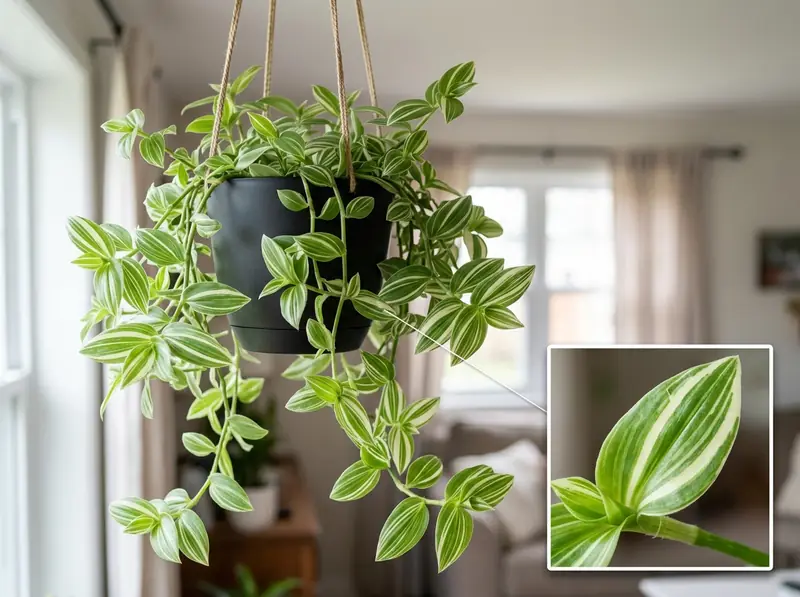
Giant White Inch Plant is a trailing Tradescantia with fresh green leaves striped in creamy white, and it looks best in a hanging basket or on a shelf. It grows quickly and is easy to keep going from cuttings. Steady bright, indirect light keeps the stripes sharp, and regular trimming keeps it full.
Pets: not yet checked
💡
Saving is free with a KinClub account, and it works here and in the KinClub app. Sign up free
🪴 Care profile
Light
Bright, indirect lightLow → direct sun
Water
Moderate wateringAbout every 7 days
Difficulty
EasyTricky → easy
Coldest it tolerates
50°F
Humidity
Medium
Mature size
SmallSmall → tree-size
Growth rate
Fast
How common
CommonRare → everywhere
Plant family
Commelinaceae
🐾 Pets and toxicity
Cats and dogs: not yet checked
Not yet checked against ASPCA — don't assume it's safe for pets.
No toxicity source on record for this plant yet. If a pet eats any houseplant, call your vet or an animal poison helpline.
🌿 How to care for Giant White Inch Plant
Light
Give it bright, indirect light, such as a spot near an east or north window or a few feet back from a south window. The white-striped leaves need this brightness to keep their variegation, but they scorch easily in hot midday sun.
Watering
Water when the top inch of soil has dried, usually about once a week in summer. Water until it drains from the bottom, then empty the saucer. Water less often in winter, when growth slows.
Soil
Use a standard, well-draining houseplant potting mix. Adding a handful of perlite to a few handfuls of mix keeps it from staying soggy. The pot must have drainage holes.
Feeding
From spring to early autumn, feed every 3 to 4 weeks with a balanced houseplant fertilizer diluted to half the label strength. Do not feed in winter.
Repotting
Repot every year or two in spring, when roots fill the pot or grow out of the drainage holes. Go up only one pot size, or divide the plant and refresh the soil. Older plants get leggy, so replacing them with cuttings often works better.
Propagation
Take 3 to 4 inch stem cuttings just below a node and strip the lowest leaves. Root them in water or moist soil, which takes 1 to 2 weeks. Plant several cuttings in one pot for a full look.
Common problems
Leggy, sparse stems: move to brighter light, pinch back the tips and root the trimmings.
Stripes fading to plain green: the light is too dim, so move it somewhere brighter and trim off all-green stems.
Brown, crispy leaf tips: water more regularly and avoid hot, dry drafts from heaters or vents.
Bleached or scorched patches: move it out of direct midday sun.
Soft, rotting stems at the base: overwatering. Cut off healthy tips to re-root and discard the rotten parts.
Tiny webs and stippled leaves: spider mites. Rinse the plant, then spray with insecticidal soap every 5 to 7 days.

 AI-generated
 AI-generated
 AI-generated
 AI-generated
 AI-generated