
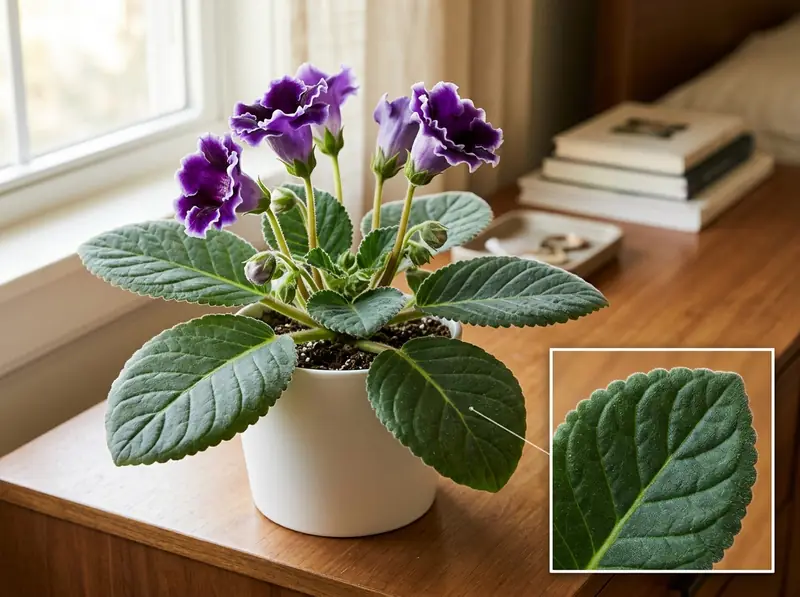
 AI-generated
Gloxinia
Sinningia speciosa
Also known as Violet Slipper Gloxinia, Bright Eyes
Gloxinia is a compact flowering plant with velvety leaves and large, bell-shaped blooms in purple, red, pink or white. It grows from a tuber and blooms for several weeks in spring and summer. It then goes dormant for a few months before sprouting again. Give it bright, indirect light, evenly moist soil and warmth.
Saving is free with a KinClub account, and it works here and in the KinClub app. Sign up free
Care profile
- Light
- Bright, indirect lightLow → direct sun
- Water
- Keep moistAbout every 5 days
- Difficulty
- ModerateTricky → easy
- Coldest it tolerates
- 60°F
- Humidity
- Medium to high
- Mature size
- SmallSmall → tree-size
- Growth rate
- Moderate
- How common
- CommonRare → everywhere
- Plant family
- Gesneriaceae
Pets and toxicity
Non-toxic to cats
Listed as non-toxic to cats by the ASPCA.
Non-toxic to dogs
Listed as non-toxic to dogs by the ASPCA.
Source: ASPCA toxic and non-toxic plants. If a pet eats any houseplant, call your vet or an animal poison helpline.
How to care for Gloxinia
Light
Give bright, indirect light, such as near an east window or a few feet back from a south or west window. Direct midday sun scorches the leaves. Under grow lights, about 12 hours a day works well.
Watering
Keep the soil lightly and evenly damp while it grows and blooms, usually every 4-6 days, when the top half inch feels dry. Use lukewarm water and avoid wetting the leaves or the tuber crown. Empty the saucer after 15 minutes.
Soil
Use a light, airy, well-draining mix, such as African violet potting mix with extra perlite (about 1 part perlite to 3 parts mix). Use a shallow pot with drainage holes.
Feeding
Feed every 2 weeks during growth and bloom with a high-phosphorus houseplant fertilizer at quarter to half strength. Stop feeding when the flowers fade and the leaves begin to yellow.
Repotting
After dormancy, when new shoots appear in late winter or spring, repot the tuber into fresh mix. Set it with the top just at or slightly below the soil surface. Choose a pot about 1-2 inches wider than the tuber.
Propagation
Take leaf cuttings with 1 inch of stalk and insert them in damp, light mix under a clear cover in bright light. Small tubers form in 4-8 weeks. You can also divide large tubers, leaving a shoot on each piece, or grow from seed.
Common problems
- Leaves turn yellow and die back after flowering: this is normal dormancy. Stop watering, keep the pot dry and cool (about 55-60°F) for 2-3 months, then resume watering when sprouts appear.
- Buds drop or blast before opening: usually caused by cold drafts, dry air or uneven watering. Keep the plant warm and the soil evenly moist.
- Pale rings or spots on leaves: caused by cold water or sun through wet leaves. Use lukewarm water and keep leaves dry.
- Gray fuzzy mold on flowers or leaves (botrytis): remove affected parts, improve air circulation and reduce humidity around the plant.
- Tuber or stem rot: caused by soggy soil. Let the soil dry slightly and improve drainage. Cut off any soft tissue, and repot if the tuber is firm.
Similar plants
Same light needs and difficulty.
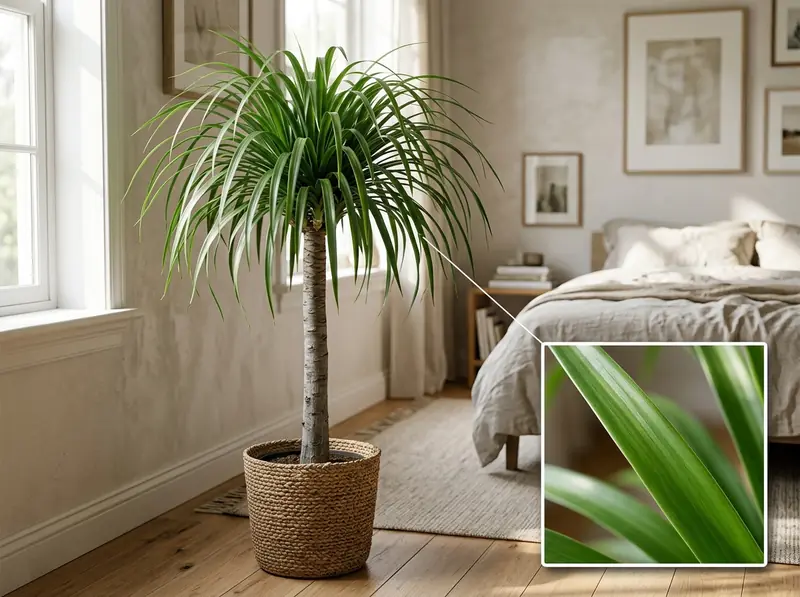 AI-generated
Umbrella Dracaena
Dracaena umbraculifera
- Medium to bright, indirect light
- Moderate watering
Toxic to cats and dogs AI-generated
 AI-generated
 AI-generated