
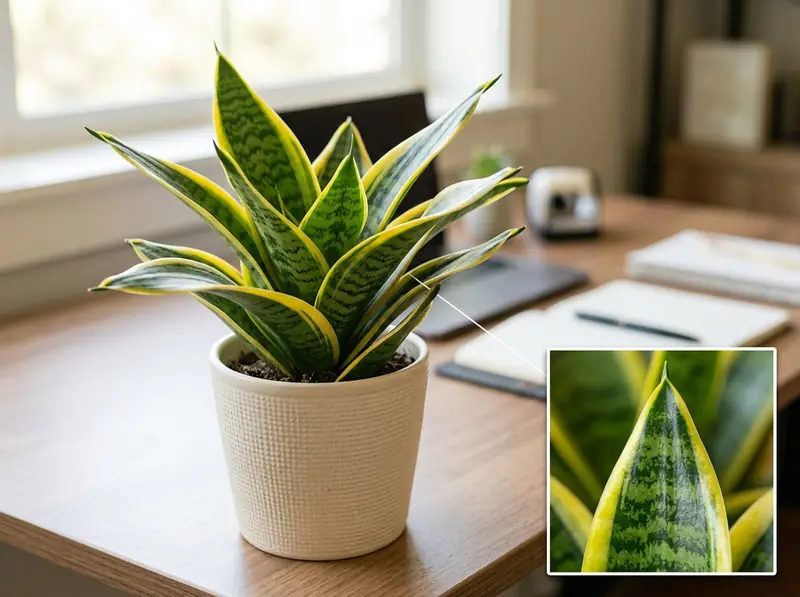
 AI-generated
Golden Bird's Nest Snake Plant
Dracaena trifasciata 'Golden Hahnii'
Golden Bird's Nest is a compact, slow-growing snake plant that forms a low rosette of short, wide leaves edged in golden yellow. It stays under about a foot tall, so it suits a desk, shelf or windowsill. Give it brighter light than plain snake plants to keep the gold, and water only when the soil is completely dry.
Saving is free with a KinClub account, and it works here and in the KinClub app. Sign up free
Care profile
- Light
- Medium lightLow → direct sun
- Water
- Let it dry outAbout every 18 days
- Difficulty
- EasyTricky → easy
- Coldest it tolerates
- 50°F
- Humidity
- Low
- Mature size
- SmallSmall → tree-size
- Growth rate
- Slow
- How common
- CommonRare → everywhere
- Plant family
- Asparagaceae
Pets and toxicity
Toxic to cats
Keep away from cats. Call your vet or a pet poison helpline if a cat chews it.
Toxic to dogs
Keep away from dogs. Call your vet or a pet poison helpline if a dog chews it.
Source: ASPCA toxic and non-toxic plants. If a pet eats any houseplant, call your vet or an animal poison helpline.
How to care for Golden Bird's Nest Snake Plant
Light
Does best in medium to bright indirect light, which keeps the yellow leaf edges vivid. It tolerates lower light for a while, but growth slows and the gold bands fade toward green; gentle morning sun is fine.
Watering
Water thoroughly, then let the soil dry out completely, about every 2 to 3 weeks in summer. In winter or low light, water only every 4 to 6 weeks, or when the pot feels light.
Soil
Use a gritty, fast-draining mix such as cactus and succulent soil, with extra perlite or coarse sand. Choose a pot with drainage holes; unglazed terracotta helps the soil dry faster.
Feeding
Feed with a balanced houseplant fertilizer at half strength about once a month in spring and summer. Do not feed in fall and winter.
Repotting
Repot only every 2 to 4 years, when roots crowd the pot or push it out of shape. Go up just 1 to 2 inches in pot size, and use a heavy, shallow pot because the plant is short and wide.
Propagation
Divide the plant at the roots, separating pups that have their own roots, and pot each one in gritty mix. Division keeps the yellow edges; leaf cuttings usually root as plain green plants and lose the gold bands.
Common problems
- Mushy, yellowing leaves at the base: this is rot from overwatering. Unpot, cut away soft roots and leaves, and repot in dry gritty mix.
- Brown, crispy leaf tips: usually from long drought or fluoride in the water. Water deeply when dry and trim the tips.
- Leaves splaying open or flopping: often from low light or overwatering. Move to brighter light and water less.
- Cottony white clusters between leaves: mealybugs. Dab with cotton swabs dipped in rubbing alcohol and repeat weekly.
Similar plants
Same light needs and difficulty.
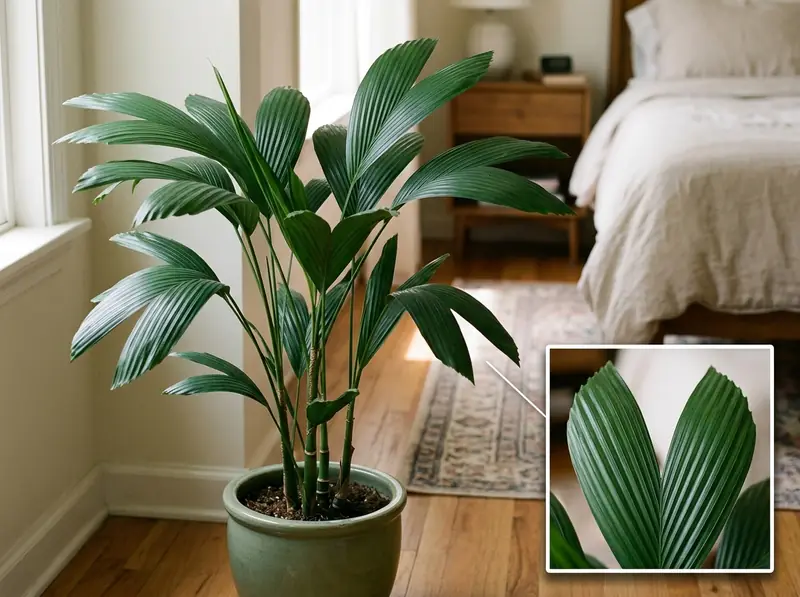 AI-generated
Ernest Augustus Palm
Chamaedorea ernesti-augusti
- Low to medium light
- Moderate watering
Pets: not yet checked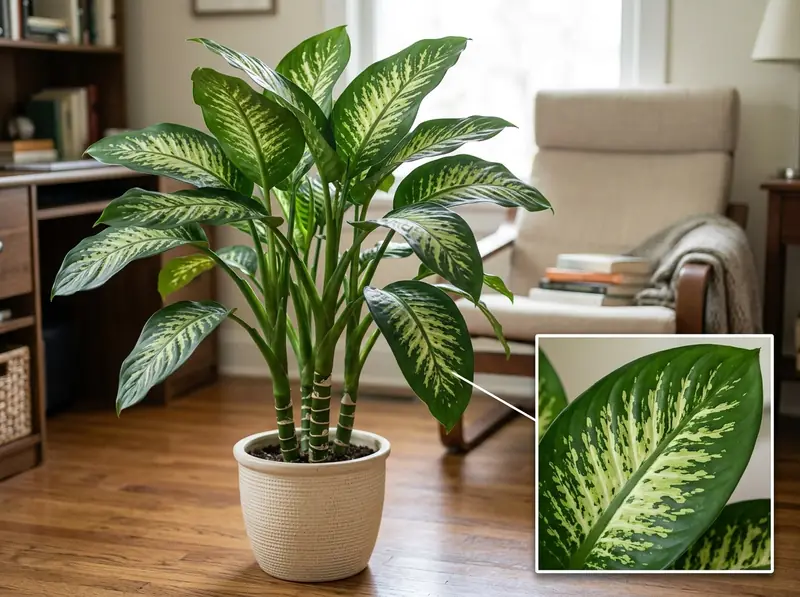 AI-generated
Giant Dumb Cane
Dieffenbachia amoena
- Medium to bright, indirect light
- Moderate watering
Toxic to cats and dogs AI-generated
 AI-generated