
 AI-generated
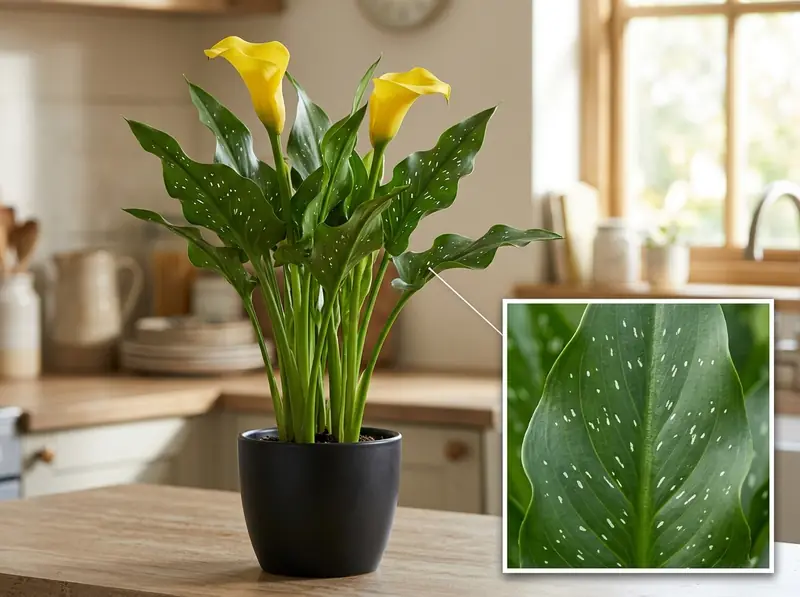
Golden Calla Lily
Zantedeschia elliottiana
Golden calla lily is a tuberous plant grown for its bright yellow, funnel-shaped blooms, often with silver-speckled arrow-shaped leaves. It grows and flowers for several months, then needs a dry winter rest. Keep it in bright light with evenly moist but never soggy soil, and it will reward you with flowers in spring and summer.
Saving is free with a KinClub account, and it works here and in the KinClub app. Sign up free
Care profile
- Light
- Bright, indirect lightLow → direct sun
- Water
- Moderate to moist wateringAbout every 5 days
- Difficulty
- ModerateTricky → easy
- Coldest it tolerates
- 50°F
- Humidity
- Medium
- Mature size
- MediumSmall → tree-size
- Growth rate
- Moderate to fast
- How common
- EnthusiastRare → everywhere
- Plant family
- Araceae
Pets and toxicity
Cats and dogs: not yet checked
Not yet checked against ASPCA — don't assume it's safe for pets.
No toxicity source on record for this plant yet. If a pet eats any houseplant, call your vet or an animal poison helpline.
How to care for Golden Calla Lily
Light
Give bright light with some gentle direct morning sun, such as an east or bright south window with a sheer curtain. Avoid hot midday sun, which scorches leaves and fades the flowers.
Watering
While growing and in bloom, water when the top inch of soil feels dry, about every 4-7 days, until water runs from the drainage holes. Empty the saucer, and never leave the tuber sitting in water.
Soil
Use a well-draining, slightly acidic potting mix with plenty of organic matter, such as peat-free potting soil with about a quarter perlite. The pot must have drainage holes.
Feeding
Feed every 2-3 weeks during active growth with a balanced liquid fertilizer at half strength. Switch to a high-potassium (bloom) fertilizer once buds show. Stop feeding when the leaves begin to die back.
Repotting
Repot the tuber each year when dormancy ends, in late winter or spring. Plant it 1-2 inches deep with the growing points facing up, in a pot 6-8 inches wide with fresh mix.
Propagation
Divide the tuber in the dormant season, making sure each piece has at least one growing point (eye). Let the cut surfaces dry for a day before replanting. Seed is possible but slow.
Common problems
- Yellow leaves with mushy stems: overwatering or tuber rot; cut back watering, and repot into fresh dry mix, trimming any soft tuber tissue.
- No flowers: usually too little light or no rest period; give brighter light and a 2-3 month dry dormancy each year.
- Leaves yellowing and dying in fall: normal dormancy; stop watering and store the tuber dry and cool.
- Stippled or webbed leaves: spider mites in dry air; rinse the foliage and wipe leaves, and raise humidity.
- Floppy stems: too little light or too much nitrogen fertilizer; move to a brighter spot and use a bloom feed.
Similar plants
Same light needs and difficulty.
 AI-generated
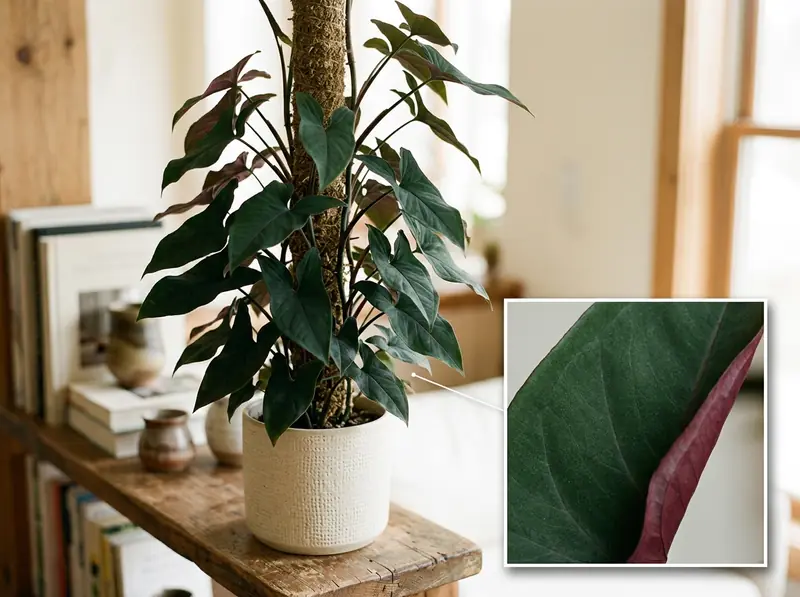
Llano Carti Road Syngonium
Syngonium erythrophyllum 'Llano Carti Road'
- Bright, indirect light
- Moderate watering
Pets: not yet checked AI-generated
 AI-generated
 AI-generated