
 AI-generated
Golden Jewel Orchid
Anoectochilus roxburghii
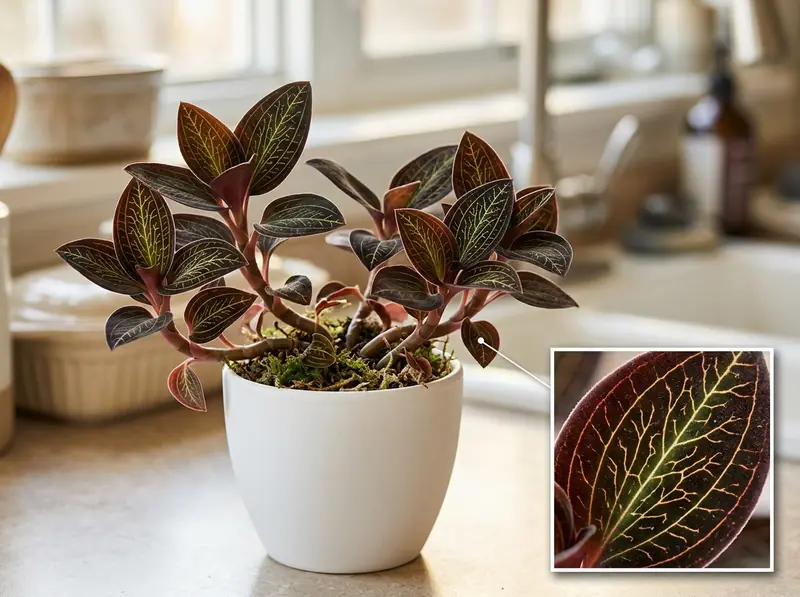
Golden jewel orchid is grown for its velvety dark leaves with glowing gold veins, not its small flowers. It is a low-growing plant that needs constant humidity and gentle light. A terrarium suits it far better than an open shelf.
Saving is free with a KinClub account, and it works here and in the KinClub app. Sign up free
Care profile
- Light
- Low to medium lightLow → direct sun
- Water
- Keep moistAbout every 5 days
- Difficulty
- Moderate to challengingTricky → easy
- Coldest it tolerates
- 55°F
- Humidity
- High
- Mature size
- SmallSmall → tree-size
- Growth rate
- Slow
- How common
- EnthusiastRare → everywhere
- Plant family
- Orchidaceae
Pets and toxicity
Cats and dogs: not yet checked
Not yet checked against ASPCA — don't assume it's safe for pets.
No toxicity source on record for this plant yet. If a pet eats any houseplant, call your vet or an animal poison helpline.
How to care for Golden Jewel Orchid
Light
Give it low to medium filtered light, such as a north window or a spot well back from an east one. Direct sun burns the thin velvety leaves quickly.
Watering
Keep the mix evenly damp, checking every 4 to 6 days and watering when the surface starts to dry. Use rainwater or distilled water and avoid wetting the leaves.
Soil
Use a fine, moisture-holding mix of sphagnum moss, perlite, and fine bark, in a pot with drainage.
Feeding
Feed lightly with orchid fertilizer at quarter strength every 3 to 4 weeks in the growing season.
Repotting
Repot every year or two in spring, handling the brittle stems with care.
Propagation
Cut stems into sections with at least two nodes and lay or plant them in damp sphagnum moss.
Common problems
- Dry air curls and crisps leaves; keep humidity above 60 percent in a terrarium.
- Rot from soggy mix causes mushy stems; use a loose mix and avoid standing water.
- Aphids or mealybugs on tender growth can be wiped off with a damp cloth.
More plants to explore
 AI-generated
 AI-generated
 AI-generated
 AI-generated