
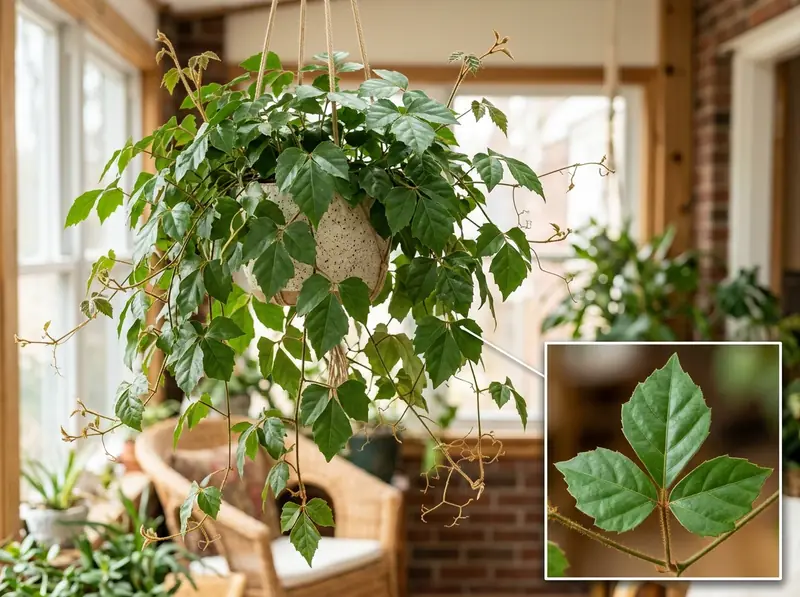
 AI-generated
Grape Ivy
Cissus rhombifolia
Also known as Venezuela treebine
Grape ivy is a fast-growing, glossy-leaved climbing vine with three-part leaflets that looks good in a hanging basket or trained up a trellis. It is forgiving and tolerates average home conditions and moderate light. Keep the soil lightly moist but not soggy, and prune regularly to keep it full.
Saving is free with a KinClub account, and it works here and in the KinClub app. Sign up free
Care profile
- Light
- Medium lightLow → direct sun
- Water
- Moderate wateringAbout every 7 days
- Difficulty
- EasyTricky → easy
- Coldest it tolerates
- 50°F
- Humidity
- Medium
- Mature size
- LargeSmall → tree-size
- Growth rate
- Fast
- How common
- Very commonRare → everywhere
- Plant family
- Vitaceae
Pets and toxicity
Non-toxic to cats
Listed as non-toxic to cats by the ASPCA.
Non-toxic to dogs
Listed as non-toxic to dogs by the ASPCA.
Source: ASPCA toxic and non-toxic plants. If a pet eats any houseplant, call your vet or an animal poison helpline.
How to care for Grape Ivy
Light
Give it bright, indirect light, or moderate light a few feet back from a window. It tolerates lower light than many vines, but avoid hot direct sun, which scorches the leaves.
Watering
Water thoroughly when the top inch or two of soil is dry, usually about every 7 days in spring and summer. Let excess drain away, and water less often in winter, roughly every 10 to 14 days.
Soil
Use an ordinary well-draining potting mix. Adding a handful of perlite per few quarts helps prevent soggy soil. The pot must have drainage holes.
Feeding
Feed every 4 weeks in spring and summer with a balanced liquid houseplant fertilizer at half the label strength. Skip feeding in fall and winter.
Repotting
Repot every 1 to 2 years in spring, moving up only 1 to 2 inches in pot diameter. A plant kept in the same pot can be refreshed with new soil and a trim.
Propagation
Take 4 to 6 inch stem cuttings with at least one node and a leaf. Root them in water or moist potting mix in 2 to 4 weeks, and plant several per pot for a fuller look.
Common problems
- Brown, crispy leaf edges: usually dry air or underwatering, so water more consistently and keep it away from heaters and vents.
- Yellow leaves and dropping: often overwatering, so let the soil dry more between waterings and check drainage.
- Leggy, sparse vines: too little light or no pruning, so move it brighter and pinch or trim the tips.
- White cottony spots or fine webbing: mealybugs or spider mites, so wipe leaves with soapy water or rubbing alcohol on a cloth and rinse, repeating weekly.
- Powdery white coating on leaves: mildew from stagnant, damp air, so improve airflow and avoid wetting the leaves late in the day.
Similar plants
Same light needs and difficulty.
 AI-generated
 AI-generated
 AI-generated
 AI-generated