
 AI-generated
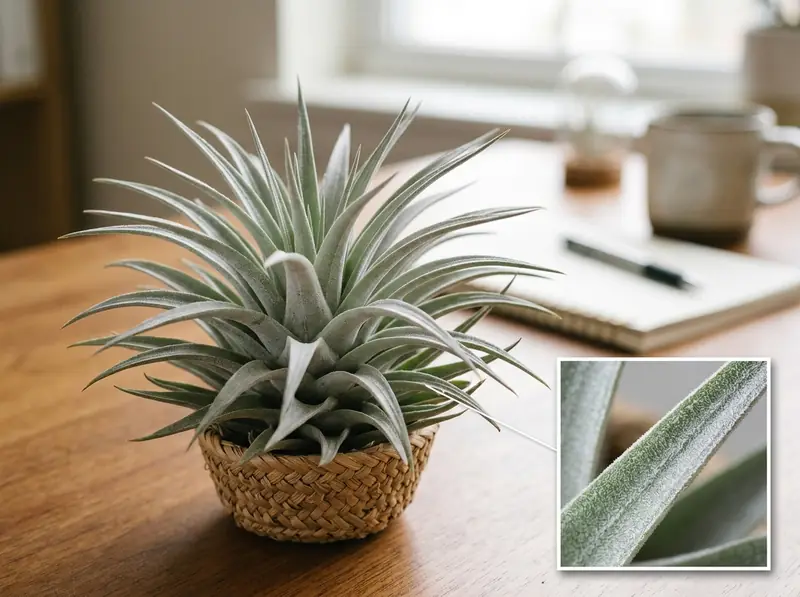
Harrisii Air Plant
Tillandsia harrisii
A stiff, silvery air plant with a compact, fuzzy rosette and a spiky look. It handles dry air well and needs only an occasional soak and good airflow.
Saving is free with a KinClub account, and it works here and in the KinClub app. Sign up free
Care profile
- Light
- Bright, indirect lightLow → direct sun
- Water
- Dry to moderate wateringAbout every 10 days
- Difficulty
- Easy to moderateTricky → easy
- Coldest it tolerates
- 45°F
- Humidity
- Low to medium
- Mature size
- SmallSmall → tree-size
- Growth rate
- Slow
- How common
- CommonRare → everywhere
- Plant family
- Bromeliaceae
Pets and toxicity
Cats and dogs: not yet checked
Not yet checked against ASPCA — don't assume it's safe for pets.
No toxicity source on record for this plant yet. If a pet eats any houseplant, call your vet or an animal poison helpline.
How to care for Harrisii Air Plant
Light
Likes bright indirect light, such as an east or south window with a sheer curtain. The thick silver fuzz tolerates strong light, but midday sun through glass can scorch it.
Watering
Soak for 20-30 minutes about every 10 days in the growing season, less in winter. Shake out the center and let it dry upside down in 4 hours.
Soil
No soil required. Mount it on cork, wood, or a hanger, or rest it on a dish, with plenty of air movement.
Feeding
Feed monthly in spring and summer with a bromeliad or air plant fertilizer at quarter strength in the soak water.
Repotting
Never repot. Offsets form at the base after it blooms and can be separated when a third the size of the parent.
Propagation
Pups appear slowly after flowering; separate when they are a third of the parent size. Growth is slow.
Common problems
- Rot at the center: water trapped in the rosette. Shake out and dry upside down every time.
- Brown, curling leaves: underwatering or dry air. Soak for longer and more often.
- Scale or mealybugs: dab with alcohol on a cotton swab and isolate.
Similar plants
Same light needs and difficulty.
 AI-generated
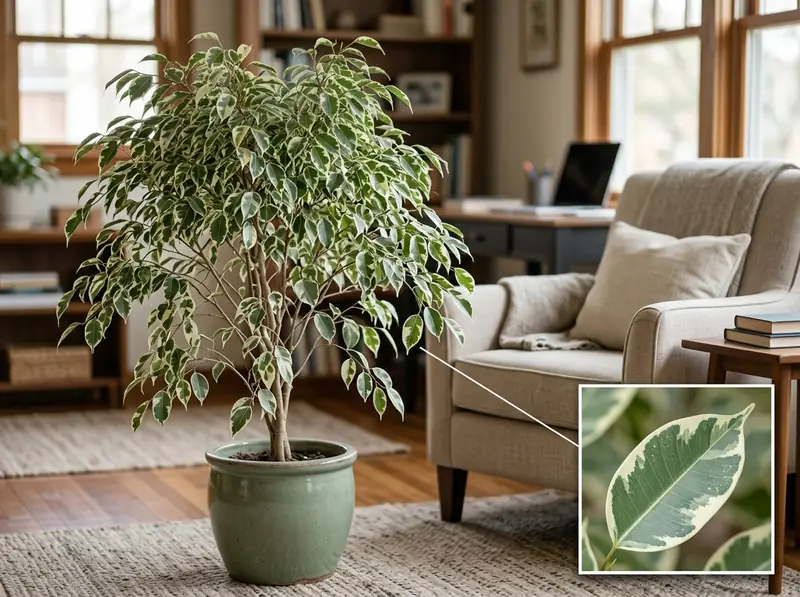
Variegated Weeping Fig
Ficus benjamina 'Variegata'
- Bright, indirect light
- Moderate watering
Toxic to cats and dogs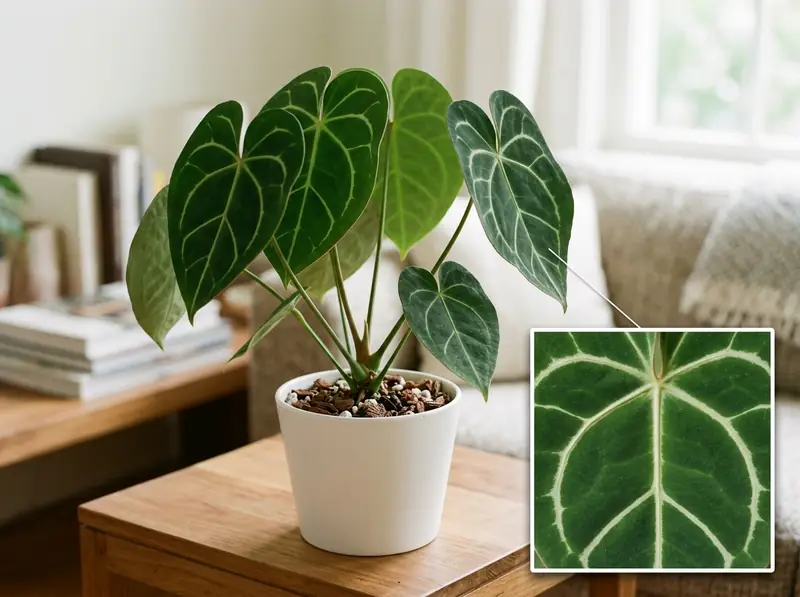 AI-generated
Velvet Cardboard Anthurium
Anthurium clarinervium
- Bright, indirect light
- Moderate watering
Pets: not yet checked AI-generated
 AI-generated