
 AI-generated
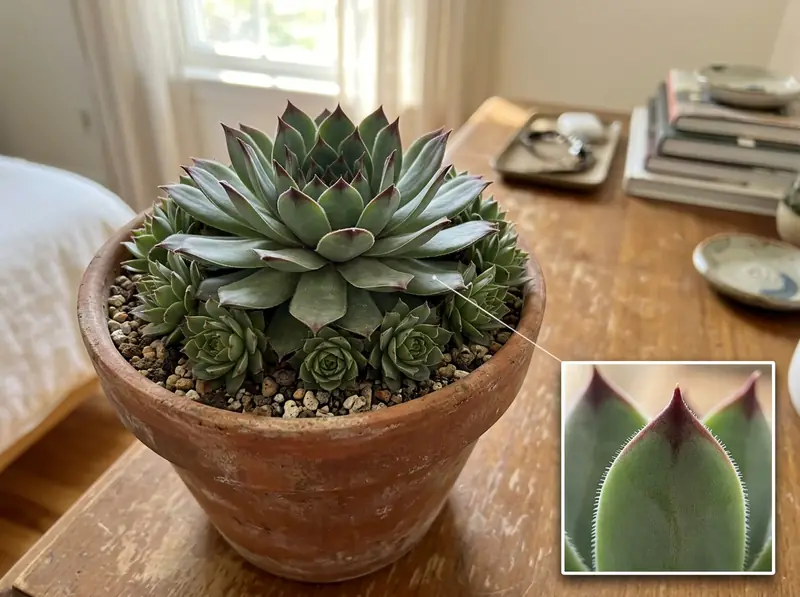
Hens and Chicks
Sempervivum tectorum
Hens and chicks is a tough little succulent that forms tidy rosettes and spreads by producing small offsets around the parent. It needs plenty of direct sun, gritty fast-draining soil and very little water. It does best with a cool winter rest and is easy to share by removing the chicks.
Saving is free with a KinClub account, and it works here and in the KinClub app. Sign up free
Care profile
- Light
- Direct sunLow → direct sun
- Water
- Let it dry outAbout every 14 days
- Difficulty
- EasyTricky → easy
- Coldest it tolerates
- 30°F
- Humidity
- Low
- Mature size
- SmallSmall → tree-size
- Growth rate
- Moderate
- How common
- Very commonRare → everywhere
- Plant family
- Crassulaceae
Pets and toxicity
Cats and dogs: not yet checked
Not yet checked against ASPCA — don't assume it's safe for pets.
No toxicity source on record for this plant yet. If a pet eats any houseplant, call your vet or an animal poison helpline.
How to care for Hens and Chicks
Light
Give at least 4-6 hours of direct sun, ideally from a south or west window. Outdoors in full sun is best in summer.
Watering
Soak thoroughly, then let the soil dry out completely before watering again, about every 2 weeks in summer. In winter water only once every 4-6 weeks, or less if kept cool.
Soil
Use a gritty cactus or succulent mix, with extra perlite or coarse sand added. The pot must have drainage holes.
Feeding
Feed lightly, if at all: a half-strength balanced fertilizer once or twice in spring and summer is plenty.
Repotting
Repot every 2-3 years or when offsets crowd the pot, in spring. Use a shallow, wide pot since roots are shallow.
Propagation
Gently twist off the small offsets (chicks) that have a few roots, let the cut end dry a day, and set them on dry gritty mix. Water lightly after a week or two.
Common problems
- Stretching and flattening of the rosette: move it to a sunnier window or add a grow light.
- Mushy, translucent lower leaves: stop watering, repot into dry gritty mix and remove rotted parts.
- Mealybugs in the leaf bases: dab with rubbing alcohol on a cotton swab and repeat weekly.
- Mother rosette dies after flowering: this is normal, so remove it and let the chicks fill in.
Similar plants
Same light needs and difficulty.
 AI-generated
 AI-generated
 AI-generated
 AI-generated