
 AI-generated
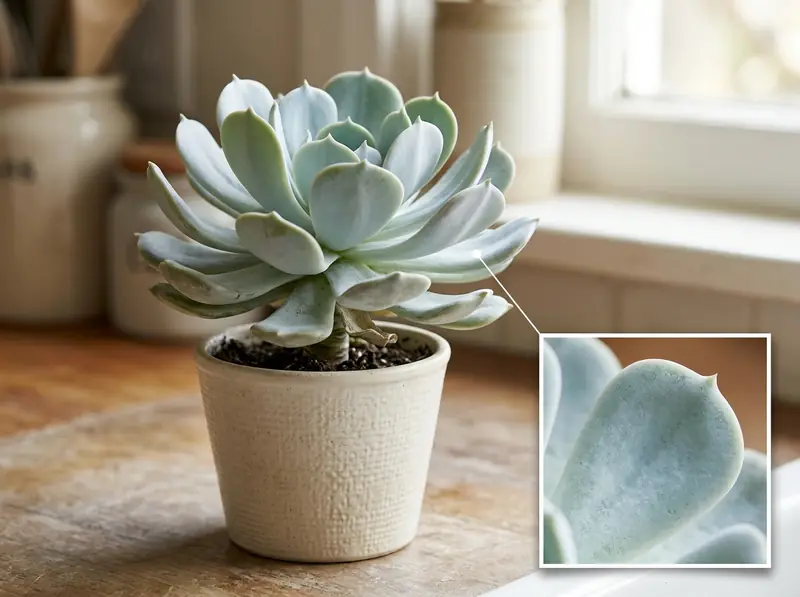
Runyon's Echeveria
Echeveria runyonii
Runyon's echeveria has pale blue-green, spoon-shaped leaves that curl upward in a loose rosette, and older plants develop a short stem. It is easy and quick to propagate, and a good first echeveria.
Saving is free with a KinClub account, and it works here and in the KinClub app. Sign up free
Care profile
- Light
- Direct sunLow → direct sun
- Water
- Let it dry outAbout every 14 days
- Difficulty
- EasyTricky → easy
- Coldest it tolerates
- 40°F
- Humidity
- Low
- Mature size
- SmallSmall → tree-size
- Growth rate
- Moderate
- How common
- EnthusiastRare → everywhere
- Plant family
- Crassulaceae
Pets and toxicity
Cats and dogs: not yet checked
Not yet checked against ASPCA — don't assume it's safe for pets.
Source: ASPCA toxic and non-toxic plants. If a pet eats any houseplant, call your vet or an animal poison helpline.
How to care for Runyon's Echeveria
Light
Needs bright light, ideally 4 to 6 hours of direct sun from a south or west window. Without it the rosette stretches and loses its color. Acclimate to stronger sun gradually to avoid sunburn.
Watering
Soak the soil thoroughly, then wait until it is completely dry, about every 2 weeks in summer and every 3 to 4 weeks in winter. Water the soil, not the rosette.
Soil
A gritty cactus mix, or potting soil blended with half perlite or pumice. Use a terracotta pot with a drainage hole.
Feeding
Feed 2 or 3 times in spring and summer with a diluted cactus fertilizer. Do not feed in winter.
Repotting
Repot every 1 to 2 years in spring when offsets crowd the pot. Let the soil stay dry for a few days afterward.
Propagation
Twist off a healthy lower leaf, let it callus for 2 or 3 days, and lay it on dry gritty mix. Roots and a tiny rosette form in 3 to 6 weeks. Offsets also pot up easily.
Common problems
- Stretched, pale growth (etiolation) is from too little light: move it to a sunnier window.
- Soft, translucent lower leaves are from overwatering: let the soil dry fully and water less.
- Mealybugs hide between the leaves: dab with rubbing alcohol on a cotton swab.
- Leaves stack on a growing stem over time: behead and replant a leggy plant to restart a compact rosette.
Similar plants
Same light needs and difficulty.
 AI-generated
 AI-generated
 AI-generated
 AI-generated