
 AI-generated
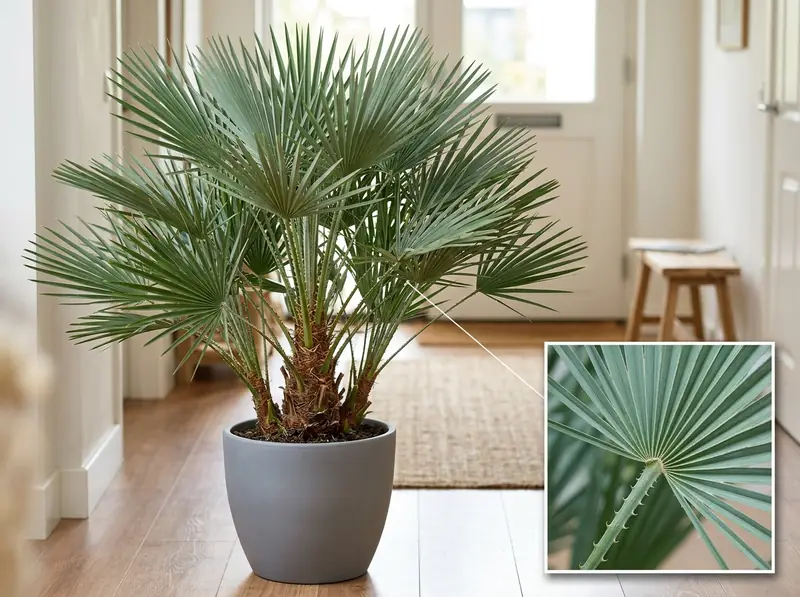
Mediterranean Fan Palm
Chamaerops humilis
Mediterranean fan palm is a slow-growing, clumping palm with stiff blue-green fan-shaped fronds and is one of the hardiest palms for indoors. It wants lots of sun, a pot that drains fast and a cool winter rest. It is forgiving of dry air and occasional missed waterings but dislikes soggy soil and low light.
Saving is free with a KinClub account, and it works here and in the KinClub app. Sign up free
Care profile
- Light
- Direct sunLow → direct sun
- Water
- Let it dry outAbout every 10 days
- Difficulty
- EasyTricky → easy
- Coldest it tolerates
- 30°F
- Humidity
- Low
- Mature size
- LargeSmall → tree-size
- Growth rate
- Slow
- How common
- CommonRare → everywhere
- Plant family
- Arecaceae
Pets and toxicity
Cats and dogs: not yet checked
Not yet checked against ASPCA — don't assume it's safe for pets.
No toxicity source on record for this plant yet. If a pet eats any houseplant, call your vet or an animal poison helpline.
How to care for Mediterranean Fan Palm
Light
Give it as much light as you can: several hours of direct sun in a south or west window is ideal. Indoors it also does well in a very bright spot, and in summer it can go outside gradually acclimated to sun.
Watering
Water deeply when the top 2 inches of soil are dry, roughly every 7-14 days in the growing season, until water drains out. In winter, water only every 3-4 weeks and never leave the pot standing in water.
Soil
Use a fast-draining mix, such as regular potting soil with about one-third perlite or coarse sand added. A terracotta or pot with large drainage holes helps the soil dry evenly.
Feeding
Feed with a balanced or palm fertilizer at half strength every 4-6 weeks from spring to late summer. Do not feed in fall and winter.
Repotting
Repot only every 2-3 years in spring when roots fill the pot, going up just 2 inches in diameter. It dislikes root disturbance, so handle the rootball gently.
Propagation
Propagate by dividing offsets (suckers) from the base in spring, making sure each has its own roots, or by seed, which is slow and can take months to germinate. Division is the more practical choice for home growers.
Common problems
- Brown leaf tips: caused by dry soil, salt buildup or fluoride in tap water; water thoroughly, flush the soil occasionally and use filtered water if needed.
- Yellowing lower fronds with soft base: overwatering or poor drainage; let the soil dry out and repot in a gritty mix if the roots are rotting.
- Spider mites (fine webbing, stippled leaflets): wipe fronds, rinse the plant in the shower and repeat weekly until clear.
- Floppy, pale new growth: too little light; move to a sunnier window.
- Brown scale bumps on stems: scrape off or wipe with rubbing alcohol on a cotton swab and repeat weekly.
Similar plants
Same light needs and difficulty.
 AI-generated
 AI-generated
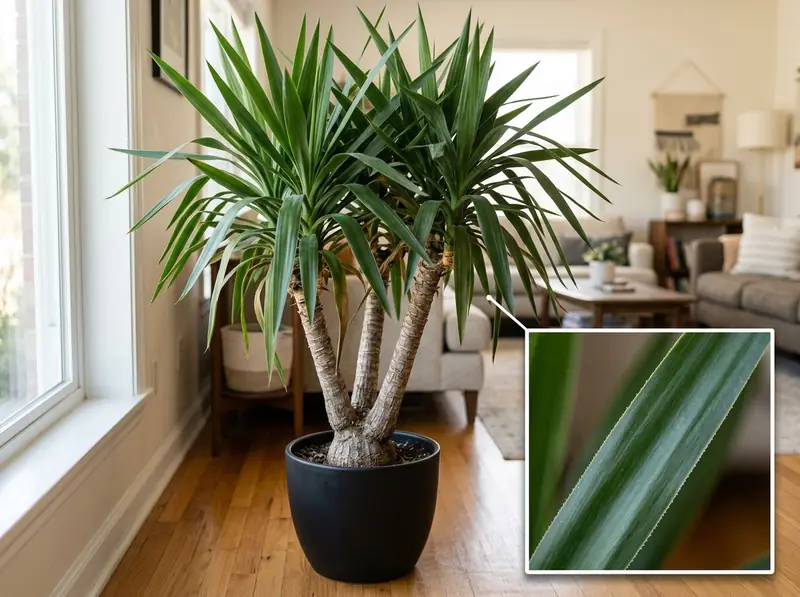
Spineless Yucca
Yucca elephantipes
- Bright, indirect to direct sun
- Let it dry out
Toxic to cats and dogs AI-generated
 AI-generated