
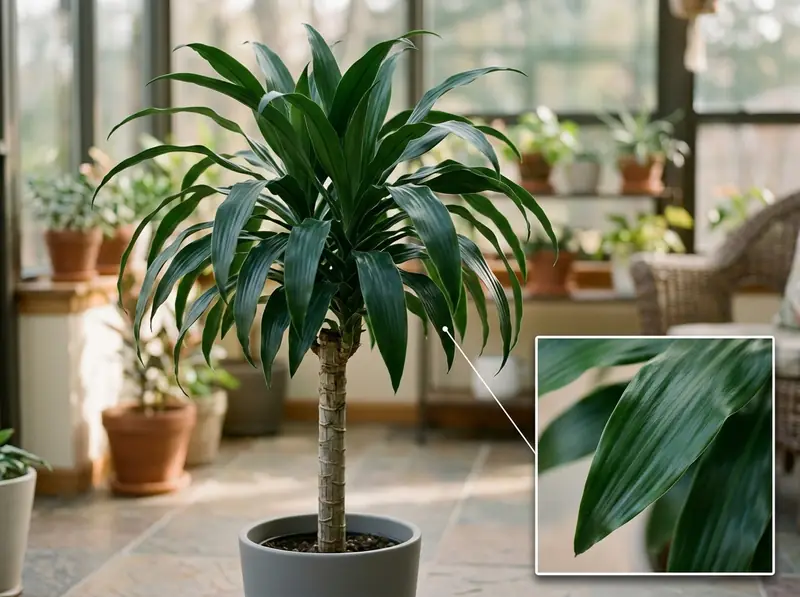
 AI-generated
Janet Craig Dracaena
Dracaena deremensis
Also known as Corn Plant, Cornstalk Plant, Dragon Tree, Ribbon Plant, Striped Dracaena, warneckii, Janet Craig Plant, Warneckei Dracaena
Janet Craig is a tough, slow-growing dracaena with glossy, deep green arching leaves on a sturdy cane. It is one of the best choices for low-light rooms and tolerates some neglect. Water only when the top inch or two is dry, and use filtered water if the leaf tips brown.
Saving is free with a KinClub account, and it works here and in the KinClub app. Sign up free
Care profile
- Light
- Low lightLow → direct sun
- Water
- Dry to moderate wateringAbout every 10 days
- Difficulty
- EasyTricky → easy
- Coldest it tolerates
- 55°F
- Humidity
- Low to medium
- Mature size
- Large to tree-sizeSmall → tree-size
- Growth rate
- Slow
- How common
- Very commonRare → everywhere
- Plant family
- Asparagaceae
Pets and toxicity
Toxic to cats
Keep away from cats. Call your vet or a pet poison helpline if a cat chews it.
Toxic to dogs
Keep away from dogs. Call your vet or a pet poison helpline if a dog chews it.
Source: ASPCA toxic and non-toxic plants. If a pet eats any houseplant, call your vet or an animal poison helpline.
How to care for Janet Craig Dracaena
Light
Does well in low to medium light, such as a spot several feet from a window or in a dim office. Avoid direct sun, which scorches the dark green leaves.
Watering
Water when the top 1-2 inches of soil are dry, about every 10-14 days, and pour out excess from the saucer. Water less in winter, letting the soil dry a bit deeper.
Soil
Use an ordinary well-draining potting mix, ideally with some perlite added. The pot must have drainage holes.
Feeding
Feed with a balanced houseplant fertilizer at half strength about once a month in spring and summer. Skip feeding in fall and winter, since excess fertilizer salts brown the leaf tips.
Repotting
Repot every 2-3 years in spring, going up only 1-2 inches in pot diameter. It is slow growing and happy to be a little rootbound.
Propagation
Cut a cane section or a leafy top and root it in water or moist potting mix in a warm spot. Cane pieces about 4-6 inches long, kept upright, root in several weeks.
Common problems
- Brown leaf tips: usually from fluoride or salts in tap water, dry soil or over-fertilizing; use filtered or distilled water and trim the browned tips.
- Yellow lower leaves: often overwatering or normal aging; let the soil dry more between waterings and remove old leaves.
- Spider mite webbing and stippling: wipe leaves, rinse the plant, and treat with insecticidal soap weekly until clear.
- Leaning or bare, leggy canes: light is too low or the plant is top-heavy; rotate it regularly and prune the top to encourage branching.
Similar plants
Same light needs and difficulty.
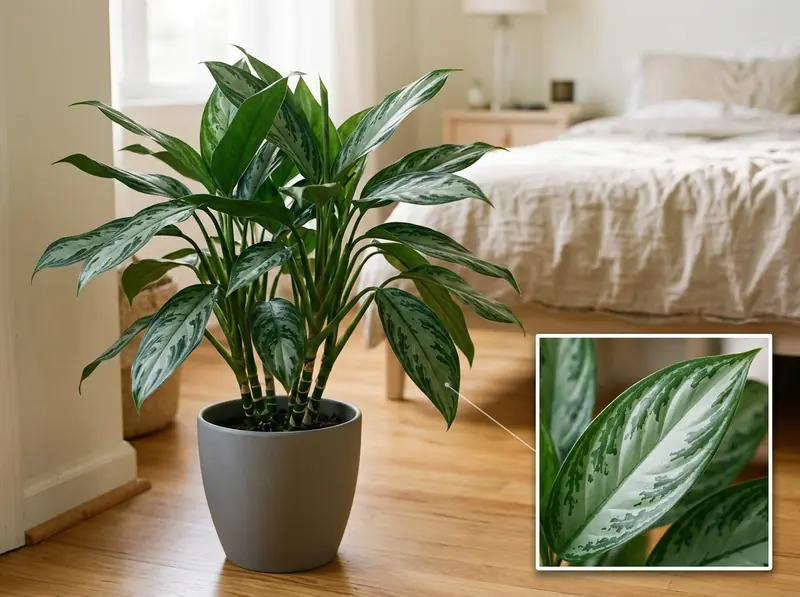 AI-generated
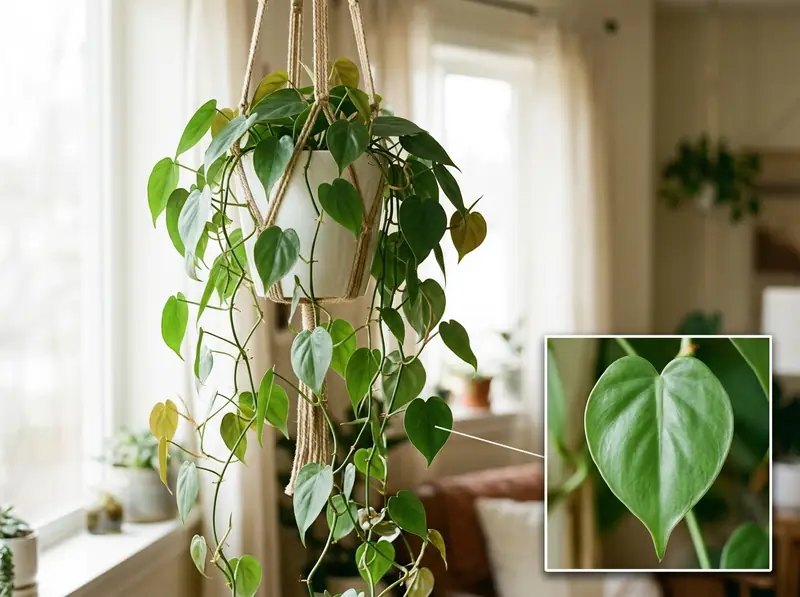 AI-generated
Heartleaf Philodendron
Philodendron hederaceum
- Low to medium light
- Moderate watering
Toxic to cats and dogs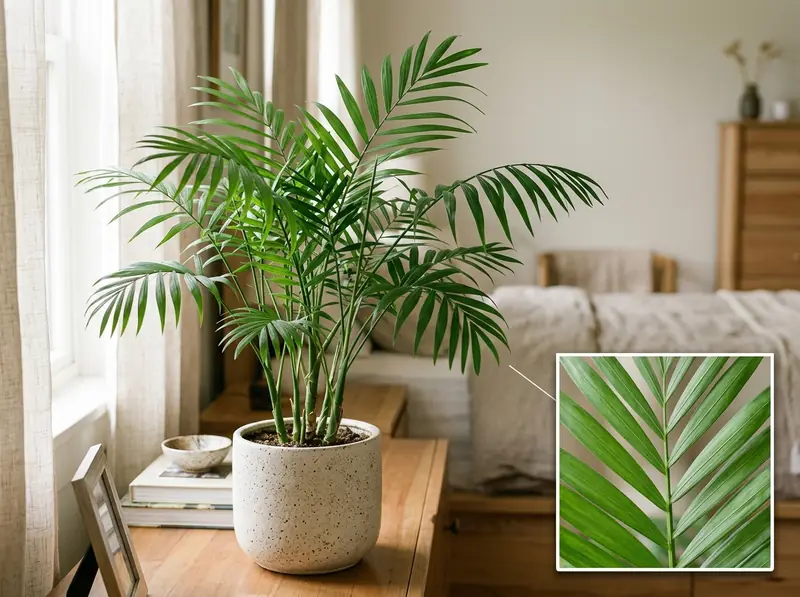 AI-generated
 AI-generated
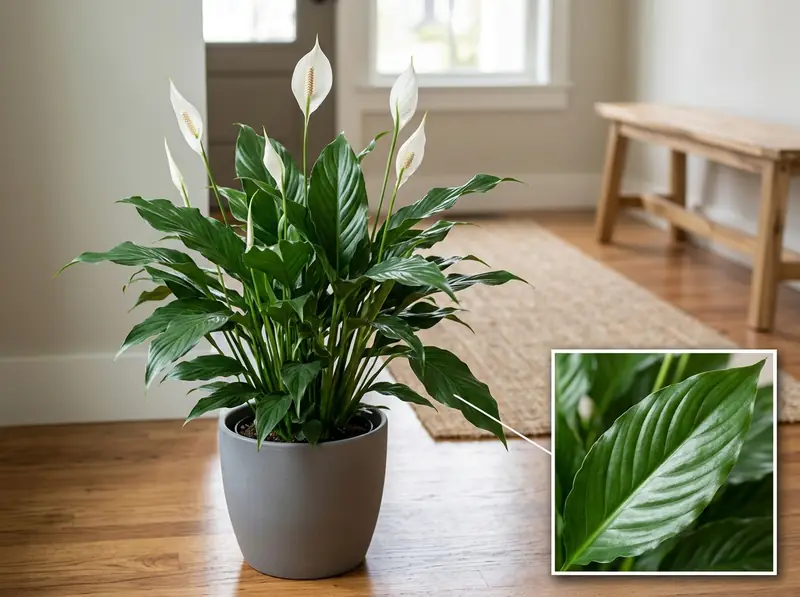
Peace Lily
Spathiphyllum wallisii
- Low to medium light
- Moderate to moist watering
Toxic to cats and dogs