
 AI-generated
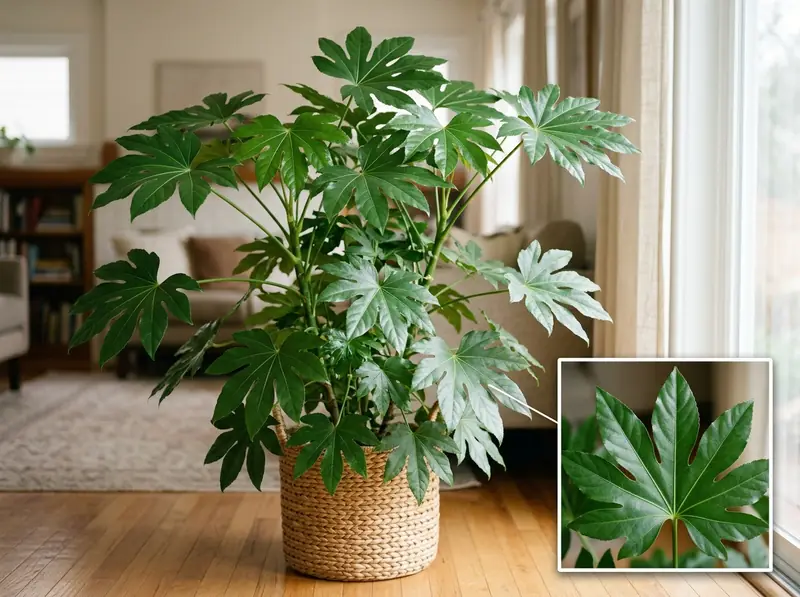
Japanese Aralia
Fatsia japonica
Also known as Figleaf Palm, Formosa rice tree, Glossy-leaved paper plant, Big-leaf paper plant
Japanese aralia is a bold, fast-growing shrub with glossy, hand-shaped leaves up to a foot across. It prefers cool, bright rooms with no direct hot sun and steady moisture, and it does poorly in warm, dry air. With the right spot it grows into a large, bushy floor plant that can be pruned to size.
Saving is free with a KinClub account, and it works here and in the KinClub app. Sign up free
Care profile
- Light
- Bright, indirect lightLow → direct sun
- Water
- Moderate wateringAbout every 7 days
- Difficulty
- Easy to moderateTricky → easy
- Coldest it tolerates
- 40°F
- Humidity
- Medium
- Mature size
- LargeSmall → tree-size
- Growth rate
- Fast
- How common
- Very commonRare → everywhere
- Plant family
- Araliaceae
Pets and toxicity
Non-toxic to cats
Listed as non-toxic to cats by the ASPCA.
Non-toxic to dogs
Listed as non-toxic to dogs by the ASPCA.
Source: ASPCA toxic and non-toxic plants. If a pet eats any houseplant, call your vet or an animal poison helpline.
How to care for Japanese Aralia
Light
Give bright indirect light or light shade, such as near an east or north window or a few feet back from a south one. Avoid hot midday sun, which scorches the big leaves.
Watering
Water thoroughly when the top inch of soil feels dry, roughly weekly in spring and summer, then let excess drain away. Water less often in winter, but never let the root ball dry out completely.
Soil
Use an ordinary peat- or coir-based potting mix with some perlite or bark added for drainage. The pot must have drainage holes.
Feeding
Feed every 2-4 weeks from spring to late summer with a balanced liquid houseplant fertilizer at half the label strength. Stop feeding in fall and winter.
Repotting
Repot every 1-2 years in spring into a pot 2 inches wider, as young plants grow quickly. Once it is in a large pot, refresh the top few inches of soil each year instead.
Propagation
Take 4-6 inch stem tip cuttings in spring or early summer, dip in rooting hormone, and root in moist mix with warmth and humidity. It can be slow and inconsistent, so take several cuttings. Seed and air layering are other options.
Common problems
- Drooping leaves: check the soil first; water if dry, or let it dry out and improve drainage if soggy.
- Brown, crispy leaf edges: usually dry air or hot, dry conditions. Move away from heaters and mist or use a humidifier.
- Leggy growth: too little light. Move to a brighter spot and prune stems back in spring.
- Webbing and stippled leaves: spider mites. Rinse the leaves, including undersides, and treat with insecticidal soap weekly until clear.
- Sticky residue and bumps on stems: scale insects. Wipe off with rubbing-alcohol-dipped swabs and repeat treatment.
Similar plants
Same light needs and difficulty.
 AI-generated
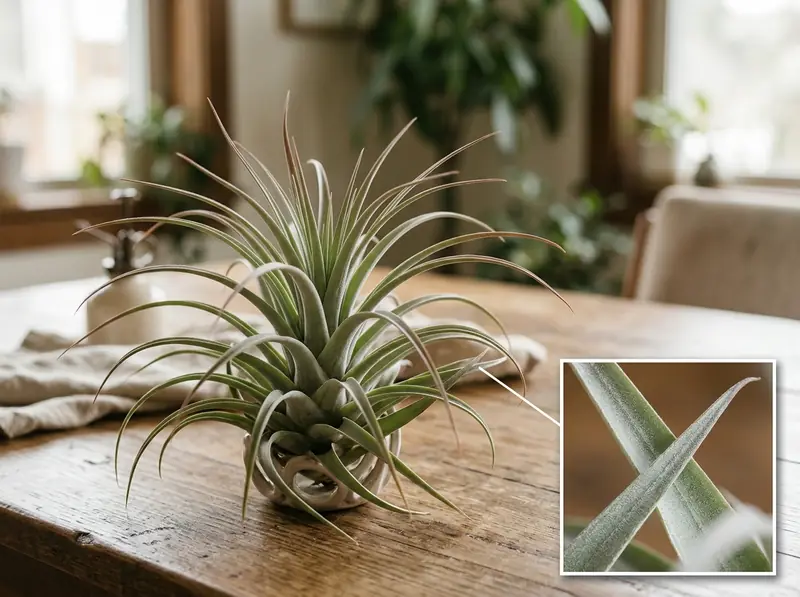
Geminiflora Air Plant
Tillandsia geminiflora
- Bright, indirect light
- Dry to moderate watering
Pets: not yet checked AI-generated
 AI-generated
 AI-generated