
 AI-generated
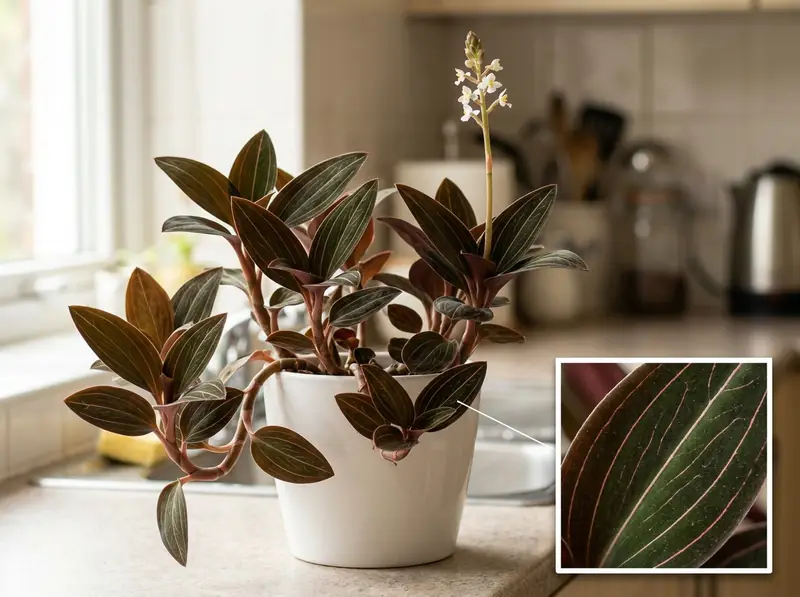
Jewel Orchid
Ludisia discolor
Also known as Golden Lace Orchid, Tiger Orchid, Haemaria discolor
Jewel orchid is grown for its dark, velvety leaves with pinkish or silvery veins, rather than for its small white flowers in winter. It is one of the easiest orchids for beginners and does well in low to bright-shade light. Keep the mix lightly moist but never soggy and keep it out of direct sun.
Saving is free with a KinClub account, and it works here and in the KinClub app. Sign up free
Care profile
- Light
- Low lightLow → direct sun
- Water
- Moderate to moist wateringAbout every 7 days
- Difficulty
- EasyTricky → easy
- Coldest it tolerates
- 60°F
- Humidity
- Medium to high
- Mature size
- SmallSmall → tree-size
- Growth rate
- Slow to moderate
- How common
- CommonRare → everywhere
- Plant family
- Orchidaceae
Pets and toxicity
Non-toxic to cats
Listed as non-toxic to cats by the ASPCA.
Non-toxic to dogs
Listed as non-toxic to dogs by the ASPCA.
Source: ASPCA toxic and non-toxic plants. If a pet eats any houseplant, call your vet or an animal poison helpline.
How to care for Jewel Orchid
Light
Give it bright shade to low light, such as an east window or a spot a few feet back from a north or west window. Avoid direct sun, which scorches the leaves.
Watering
Water when the top half inch to inch of mix feels dry, about every 7 days in the growing season, and less in winter. Water the mix rather than the stems, and let excess drain away.
Soil
Use a loose, airy mix, such as orchid bark blended with peat-free potting soil, perlite and some sphagnum moss. The pot must have drainage holes.
Feeding
Feed every 3-4 weeks in spring and summer with a balanced fertilizer diluted to quarter or half strength. Stop or reduce feeding in winter.
Repotting
Repot every 2-3 years in spring, or when the creeping stems crowd the pot edge. Choose a wide, shallow pot and set the stems just below the surface of the mix.
Propagation
Cut a stem section with 2-3 nodes and lay it on moist sphagnum moss or a light mix, or root it in water. New roots and shoots form at the nodes within a few weeks.
Common problems
- Mushy, rotting stems: overwatering or dense soil. Cut off the rotted parts, let cuttings dry a few hours, then replant them in fresh, airy mix.
- Brown leaf tips: dry air or irregular watering. Keep the mix evenly slightly moist and group the plant with others or use a pebble tray.
- No flowers: usually too little light or no cooler nights in autumn. Give brighter indirect light and slightly cooler nights (about 60-65°F) in fall.
- Leggy, sparse growth: low light or an old plant. Move it to brighter shade and trim the stems to encourage branching.
Similar plants
Same light needs and difficulty.
 AI-generated
 AI-generated
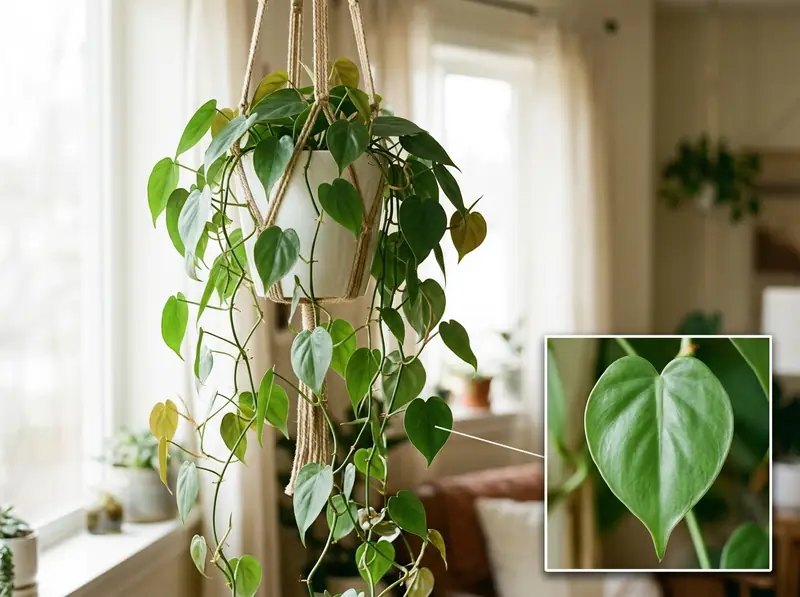
Heartleaf Philodendron
Philodendron hederaceum
- Low to medium light
- Moderate watering
Toxic to cats and dogs AI-generated
 AI-generated
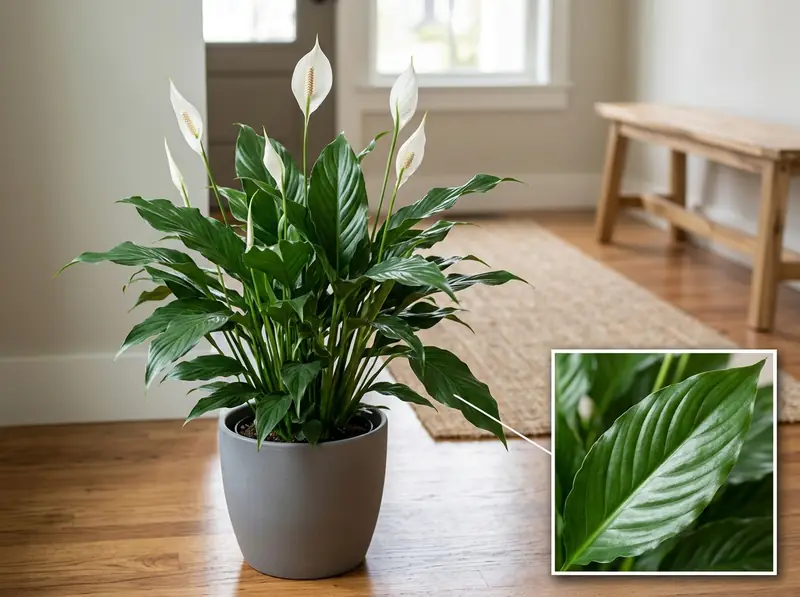
Peace Lily
Spathiphyllum wallisii
- Low to medium light
- Moderate to moist watering
Toxic to cats and dogs