AI-generated image, not a photograph of this plant. Real plants look different depending on light, soil, temperature and age.
ApocynaceaeEnthusiast in stores
Kudu Lily
Pachypodium saundersii
Kudu lily is a slow-growing succulent from southern Africa with a swollen, bottle-shaped base, glossy leaves and, with enough sun, white and pink-striped flowers in summer. It needs lots of direct sun, gritty soil and very sparing water. It often drops leaves in winter, which is normal rest.
Pets: not yet checked
💡
Saving is free with a KinClub account, and it works here and in the KinClub app. Sign up free
🪴 Care profile
Light
Direct sunLow → direct sun
Water
Let it dry outAbout every 14 days
Difficulty
ModerateTricky → easy
Coldest it tolerates
50°F
Humidity
Low
Mature size
MediumSmall → tree-size
Growth rate
Slow
How common
EnthusiastRare → everywhere
Plant family
Apocynaceae
🐾 Pets and toxicity
Cats and dogs: not yet checked
Not yet checked against ASPCA — don't assume it's safe for pets.
No toxicity source on record for this plant yet. If a pet eats any houseplant, call your vet or an animal poison helpline.
🌿 How to care for Kudu Lily
Light
Give it several hours of direct sun, such as a south or west window. Increase sun gradually after winter to avoid leaf scorch.
Watering
During spring and summer, soak thoroughly, then let the soil dry out completely before watering again, about every 2 weeks. In winter, when it may drop leaves, water only a few tablespoons once a month or not at all.
Soil
Use a gritty cactus or succulent mix, ideally with extra pumice or perlite (about half grit). Use a pot with drainage holes, preferably unglazed clay.
Feeding
Feed with a half-strength cactus or balanced fertilizer about once a month in spring and summer. Do not feed in autumn or winter.
Repotting
Repot every 2 to 3 years in spring, only into a pot 1 to 2 inches wider, as it resents root disturbance. Keep the caudex at the same soil level and let the roots dry a few days before watering.
Propagation
It is mainly grown from seed, which is slow and needs warmth and a gritty mix. Cuttings are unreliable, so buying a plant is easiest.
Common problems
Caudex rot from overwatering: stop watering, unpot and cut away soft tissue, let it callus dry for a week, and repot in fresh gritty mix.
Leaf drop in winter: usually normal dormancy in cooler, dim conditions, so reduce water and wait for spring growth.
Leggy, weak growth: move to a sunnier spot, as it needs direct light to stay compact.
Mealybugs in leaf joints: dab with cotton swabs dipped in rubbing alcohol and repeat weekly until clear.

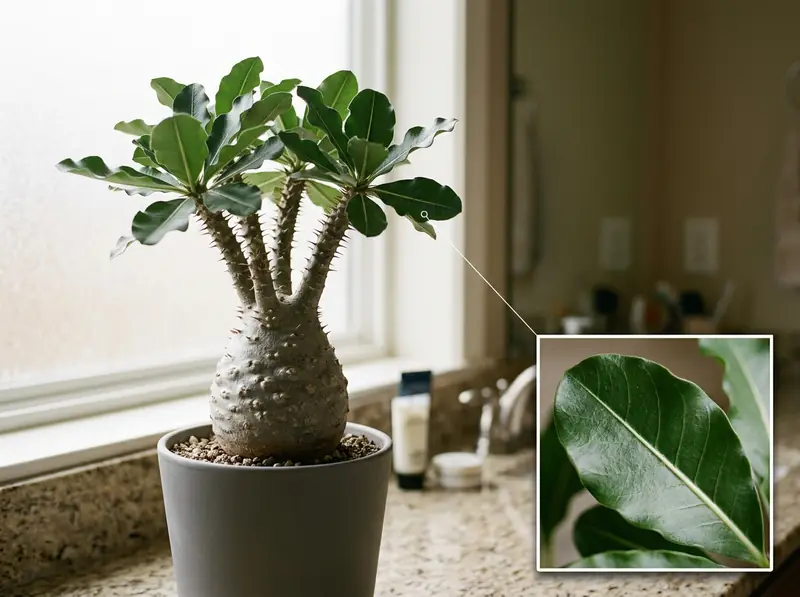 AI-generated
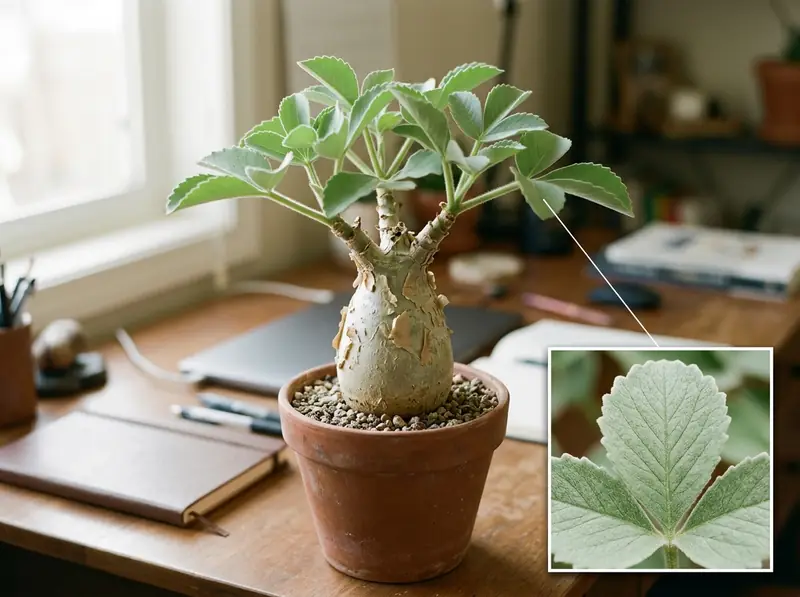 AI-generated
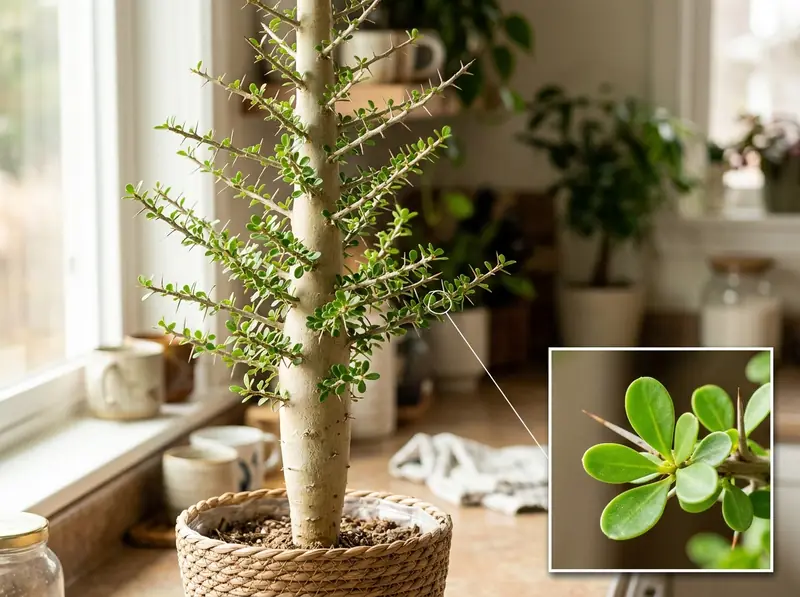 AI-generated
 AI-generated
 AI-generated