
 AI-generated
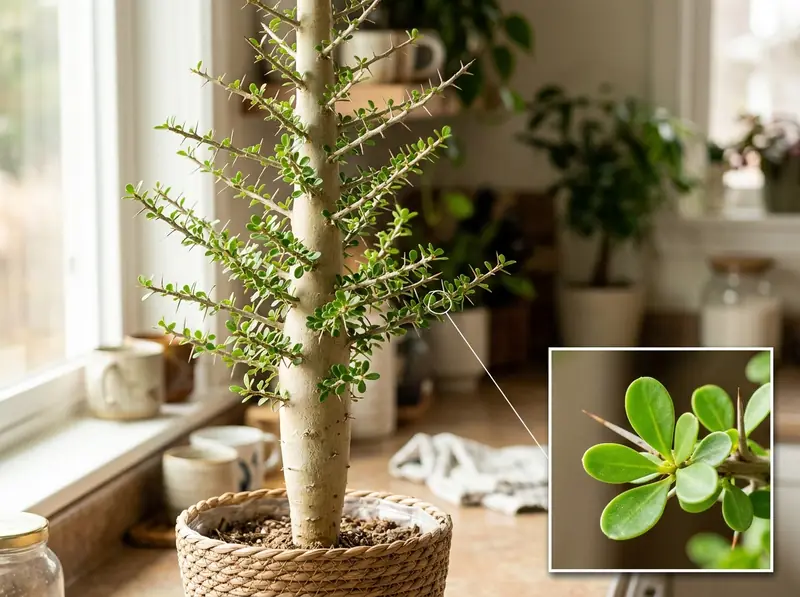
Boojum Tree
Fouquieria columnaris
The boojum tree is a bizarre, slow-growing Baja California native with a tapering, upside-down-carrot trunk and spiny branches that leaf out after rain. Indoors it needs maximum sun, very little water and patience.
Saving is free with a KinClub account, and it works here and in the KinClub app. Sign up free
Care profile
- Light
- Direct sunLow → direct sun
- Water
- Let it dry outAbout every 21 days
- Difficulty
- Moderate to challengingTricky → easy
- Coldest it tolerates
- 40°F
- Humidity
- Low
- Mature size
- MediumSmall → tree-size
- Growth rate
- Slow
- How common
- RareRare → everywhere
- Plant family
- Fouquieriaceae
Pets and toxicity
Cats and dogs: not yet checked
Not yet checked against ASPCA — don't assume it's safe for pets.
No toxicity source on record for this plant yet. If a pet eats any houseplant, call your vet or an animal poison helpline.
How to care for Boojum Tree
Light
Needs the brightest spot you have, with 6 or more hours of direct sun, such as an unobstructed south window. With less light it grows thin and drops leaves, though the slim leaves are normal to shed in winter.
Watering
Water deeply during the growing season only when the soil has dried completely, roughly every 3 weeks. Keep it almost dry in winter dormancy; wet cold soil causes rot.
Soil
Use a very sharp mix of about 1 part potting soil to 2 parts pumice, grit or coarse sand, in a deep terracotta pot with a drainage hole.
Feeding
Feed a cactus fertilizer at half strength once a month in spring and summer only. Never feed a dormant plant.
Repotting
Repot every 3 to 4 years in spring into a deep pot just a bit larger. It is very slow and prefers a snug pot.
Propagation
Mostly grown from seed, which is slow; cuttings from the stem and branches are rarely successful. Buying an established plant is far more practical.
Common problems
- Leaf drop in winter is dormancy; reduce water to a minimum and keep it bright.
- Soft trunk base signals root rot from too much water; it is hard to reverse, so prevention matters.
- Spindly growth means too little light; move to a south window or add a grow light.
- Mealybugs can lurk in branch joints; dab them with rubbing alcohol.
Similar plants
Same light needs and difficulty.
 AI-generated
 AI-generated
 AI-generated
 AI-generated