
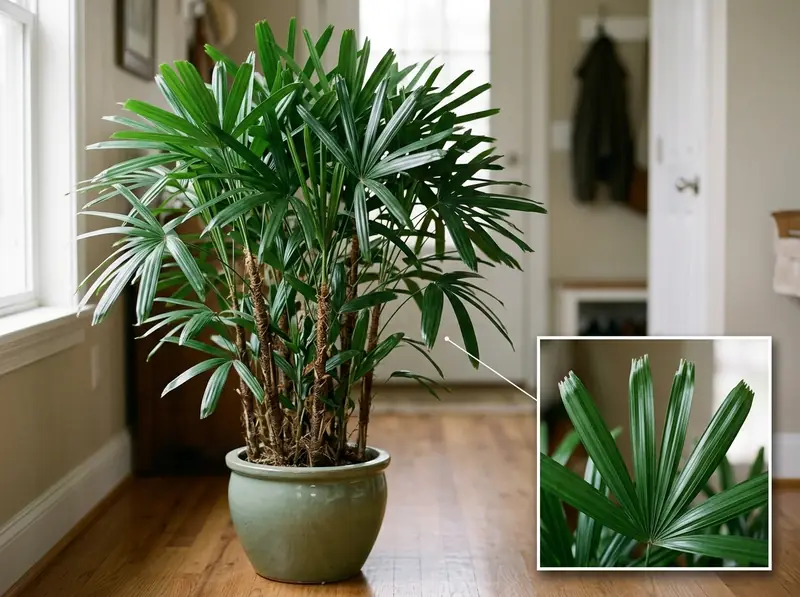
 AI-generated
Lady Palm
Rhapis excelsa
Also known as Fan Tufted Palm, Rhapis flabelliformis
Lady Palm is a tough, slow-growing clumping palm with glossy, fan-shaped leaves on bamboo-like canes. It copes well with dim to medium light and average home conditions, making it a good long-lived floor plant. Water when the top inch or two is dry and be patient, as new canes appear slowly.
Saving is free with a KinClub account, and it works here and in the KinClub app. Sign up free
Care profile
- Light
- Low to medium lightLow → direct sun
- Water
- Moderate wateringAbout every 10 days
- Difficulty
- EasyTricky → easy
- Coldest it tolerates
- 35°F
- Humidity
- Medium
- Mature size
- LargeSmall → tree-size
- Growth rate
- Slow
- How common
- Very commonRare → everywhere
- Plant family
- Arecaceae
Pets and toxicity
Non-toxic to cats
Listed as non-toxic to cats by the ASPCA.
Non-toxic to dogs
Listed as non-toxic to dogs by the ASPCA.
Source: ASPCA toxic and non-toxic plants. If a pet eats any houseplant, call your vet or an animal poison helpline.
How to care for Lady Palm
Light
Give it medium to bright indirect light, such as a few feet from an east or north window. Avoid direct midday sun, which scorches the leaves, though it tolerates fairly dim rooms.
Watering
Water thoroughly when the top 1-2 inches of soil feel dry, usually every 7-14 days in the growing season, and let excess drain away. Water less in winter, and use filtered or rainwater if the leaf tips brown from tap water minerals.
Soil
Use a well-draining, peat- or bark-based potting mix, such as an ordinary houseplant mix with a handful of perlite or coarse sand added. The pot must have drainage holes.
Feeding
Feed every 4-6 weeks from spring to late summer with a balanced liquid fertilizer at half strength. Skip feeding in fall and winter.
Repotting
Repot only every 3-4 years or when roots crowd the pot, since it likes being slightly rootbound. Move up just one pot size in spring, handling the fleshy roots gently.
Propagation
Divide the clump in spring by cutting off a section with several canes and its own roots, then pot it up separately. Keep it evenly damp and warm while it re-establishes; it may sulk for a few months.
Common problems
- Brown leaf tips: caused by dry soil, fluoride or salts in tap water, or low humidity; water evenly, use filtered water, and trim the brown edges.
- Yellowing lower leaves: often overwatering or poor drainage; let the soil dry more between waterings and check the roots.
- Spider mites (fine webbing, stippled leaves): rinse the fans and wipe them, then treat with insecticidal soap weekly.
- Scale (brown bumps on stems and leaf undersides): scrape off or dab with rubbing alcohol, then spray with horticultural oil.
- Bleached or scorched patches: too much direct sun; move it back from the window.
Similar plants
Same light needs and difficulty.
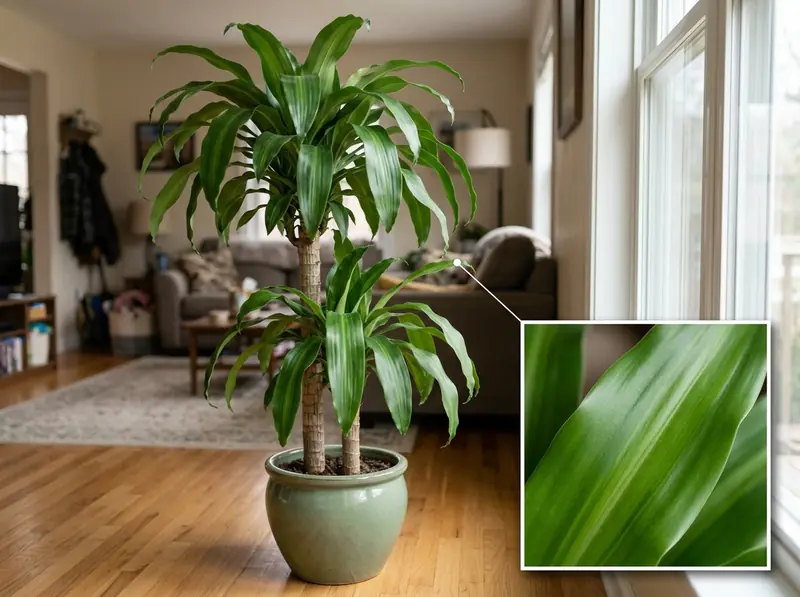 AI-generated
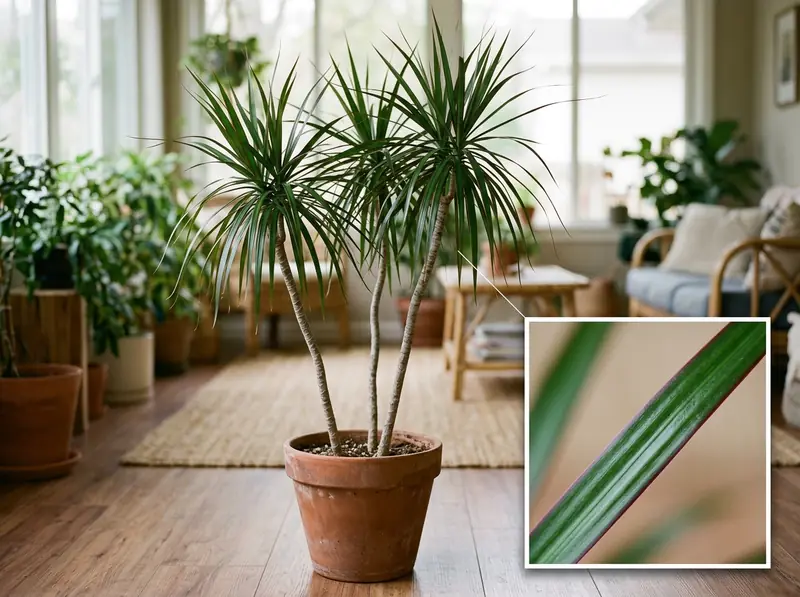 AI-generated
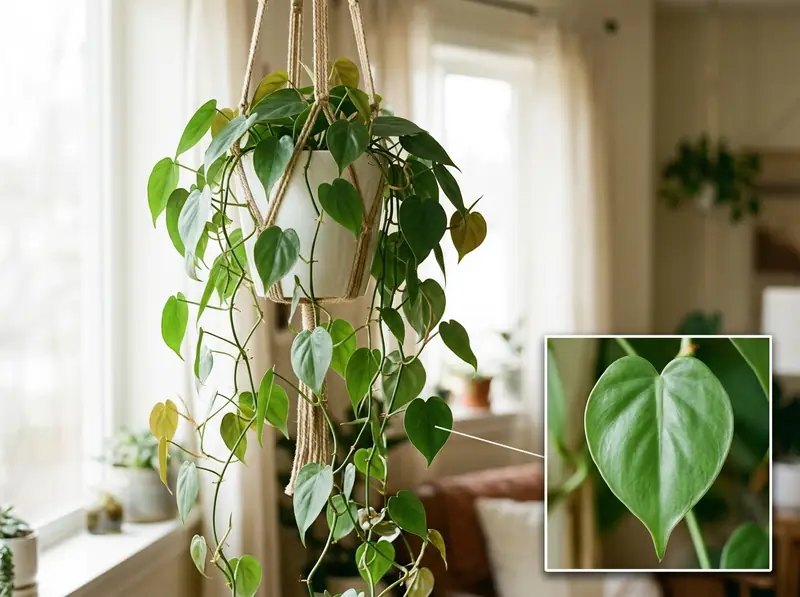 AI-generated
Heartleaf Philodendron
Philodendron hederaceum
- Low to medium light
- Moderate watering
Toxic to cats and dogs AI-generated