
 AI-generated
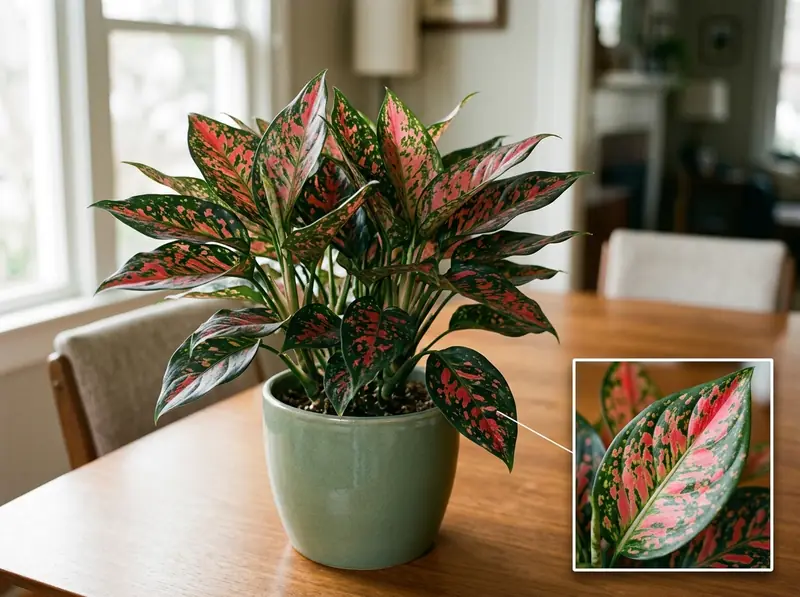
Lady Valentine Aglaonema
Aglaonema 'Lady Valentine'
Lady Valentine is a compact, slow-growing Aglaonema with dark green leaves splashed with bright pink and red. It is forgiving of ordinary home conditions and suits beginners. Give it filtered light, water only when the top couple of inches of soil are dry, and keep it warm and out of drafts.
Saving is free with a KinClub account, and it works here and in the KinClub app. Sign up free
Care profile
- Light
- Medium lightLow → direct sun
- Water
- Moderate wateringAbout every 10 days
- Difficulty
- EasyTricky → easy
- Coldest it tolerates
- 60°F
- Humidity
- Medium
- Mature size
- MediumSmall → tree-size
- Growth rate
- Slow
- How common
- EnthusiastRare → everywhere
Pets and toxicity
Cats and dogs: not yet checked
Not yet checked against ASPCA — don't assume it's safe for pets.
No toxicity source on record for this plant yet. If a pet eats any houseplant, call your vet or an animal poison helpline.
How to care for Lady Valentine Aglaonema
Light
Give it medium to bright indirect light, such as a few feet back from an east or north window. It tolerates lower light, but the pink and red colouring is best with brighter filtered light. Avoid direct midday sun.
Watering
Water thoroughly when the top inch or two of soil is dry, usually every 7 to 14 days in the growing season, and empty the saucer after watering. Water less often in winter and never let the pot sit in water.
Soil
Use a peat-based or coco-based houseplant mix with added perlite or bark, about one part amendment to three parts mix. The pot must have drainage holes.
Feeding
Feed every 4 to 6 weeks in spring and summer with a balanced houseplant fertilizer at half the label strength. Do not feed in winter.
Repotting
Repot every 2 to 3 years in spring, moving up only one pot size (1 to 2 inches wider). It flowers and grows well when slightly root-bound.
Propagation
Divide the clump at repotting, making sure each section has roots and several stems. Stem cuttings with a few nodes can also root in water or moist mix, but they are slow.
Common problems
- Brown leaf tips: usually dry air, fluoride or salts in tap water, or irregular watering. Use filtered or rainwater and water consistently.
- Yellowing lower leaves: usually overwatering or poor drainage. Let the soil dry more between waterings and check the roots for rot.
- Faded colour and green new growth: not enough light. Move it somewhere brighter without direct sun.
- Curling leaves and brown edges in winter: cold drafts below about 60°F. Move it away from cold windows and vents.
- Cottony white bugs at leaf joints are mealybugs. Wipe them off with rubbing alcohol on a cotton swab and repeat weekly.
Similar plants
Same light needs and difficulty.
 AI-generated
 AI-generated
 AI-generated
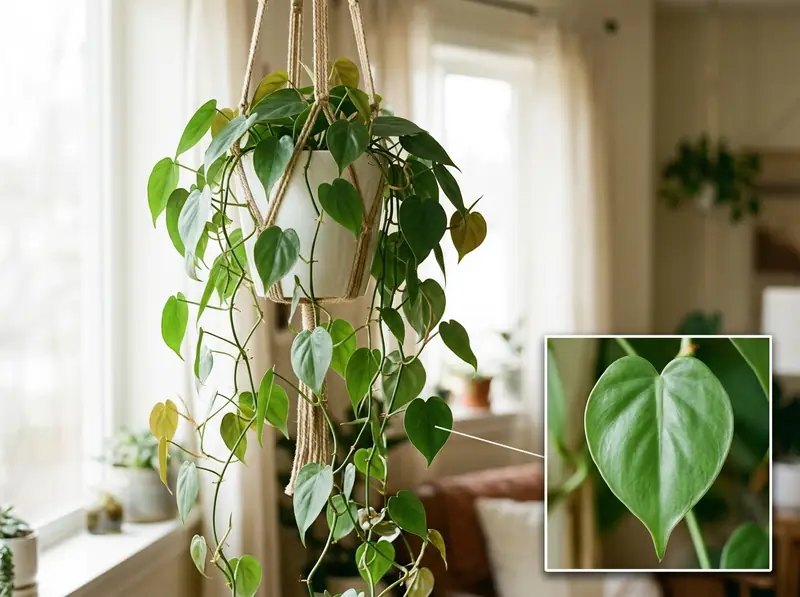
Heartleaf Philodendron
Philodendron hederaceum
- Low to medium light
- Moderate watering
Toxic to cats and dogs AI-generated