
 AI-generated
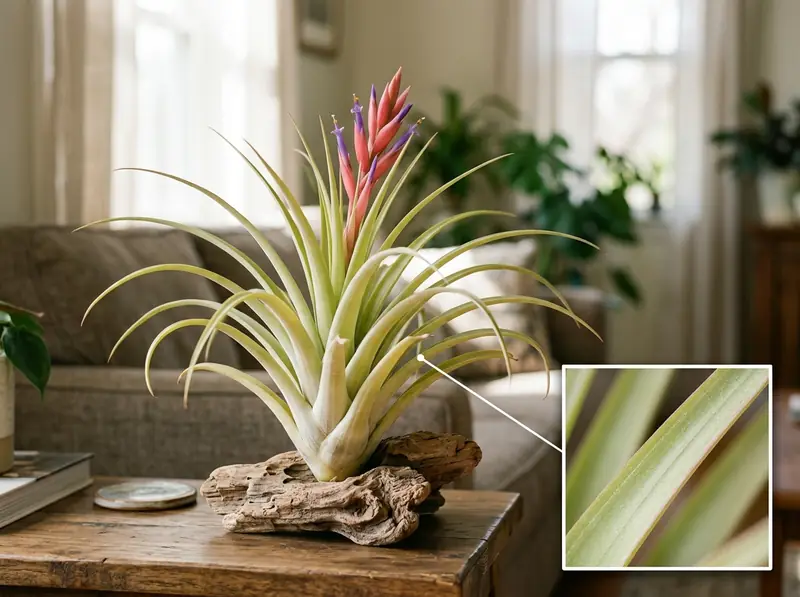
Leiboldiana Air Plant
Tillandsia leiboldiana
Tillandsia leiboldiana is a silvery-green, tank-style air plant from Central America, with a wide rosette of arching leaves. It needs no soil and does best on a mount or in an open holder with good airflow. It is easy if you water weekly and let it dry fully afterward, and mature plants may show a pink bloom spike.
Saving is free with a KinClub account, and it works here and in the KinClub app. Sign up free
Care profile
- Light
- Bright, indirect lightLow → direct sun
- Water
- Let it dry outAbout every 7 days
- Difficulty
- Easy to moderateTricky → easy
- Coldest it tolerates
- 45°F
- Humidity
- Medium to high
- Mature size
- SmallSmall → tree-size
- Growth rate
- Slow
- How common
- EnthusiastRare → everywhere
- Plant family
- Bromeliaceae
Pets and toxicity
Cats and dogs: not yet checked
Not yet checked against ASPCA — don't assume it's safe for pets.
No toxicity source on record for this plant yet. If a pet eats any houseplant, call your vet or an animal poison helpline.
How to care for Leiboldiana Air Plant
Light
Give bright, indirect light, such as a spot near an east or south-facing window with a sheer curtain. Gentle morning sun is fine, but avoid hot midday sun through glass.
Watering
Soak in room-temperature water for 15-20 minutes or rinse thoroughly about once a week, more often in hot dry rooms and less in winter. Shake out water from the center of the rosette and let the plant dry within 4 hours.
Soil
It needs no soil, because it is an epiphyte that absorbs water through its leaves. Mount it on bark, driftwood or a shelf, or set it loosely in an open holder so air circulates around it.
Feeding
Feed once a month in the growing season with a bromeliad or air plant fertilizer diluted to 1/4 strength, added to the soaking water. Skip feeding in winter.
Repotting
Repotting is not needed. Move it to a bigger mount only if it outgrows its holder, and never bury the base in potting mix or it will rot.
Propagation
Separate pups when they reach about one-third to half the size of the mother plant, by twisting or cutting them off at the base. Seed is slow and rarely done at home.
Common problems
- Brown, mushy center: caused by trapped water. Shake the plant after watering and dry it in good airflow.
- Crispy, curled leaves: the plant is dehydrated. Soak it for 30 minutes and then water more often.
- Pale, scorched leaves: too much direct sun. Move it back from the window or add a sheer curtain.
- White cottony bits or brown bumps on the leaves: mealybugs or scale. Dab them with alcohol on a cotton swab and isolate the plant.
- No pups or bloom after a long time: the plant may be short of light or feeding. Brighten its spot and feed monthly in spring and summer.
Similar plants
Same light needs and difficulty.
 AI-generated
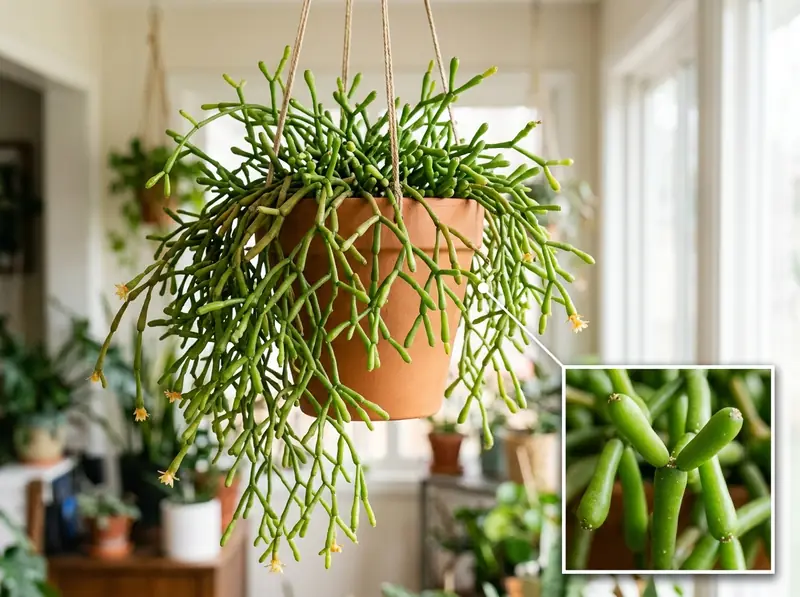
Dancing Bones Cactus
Rhipsalis salicornioides
- Bright, indirect light
- Moderate watering
Pets: not yet checked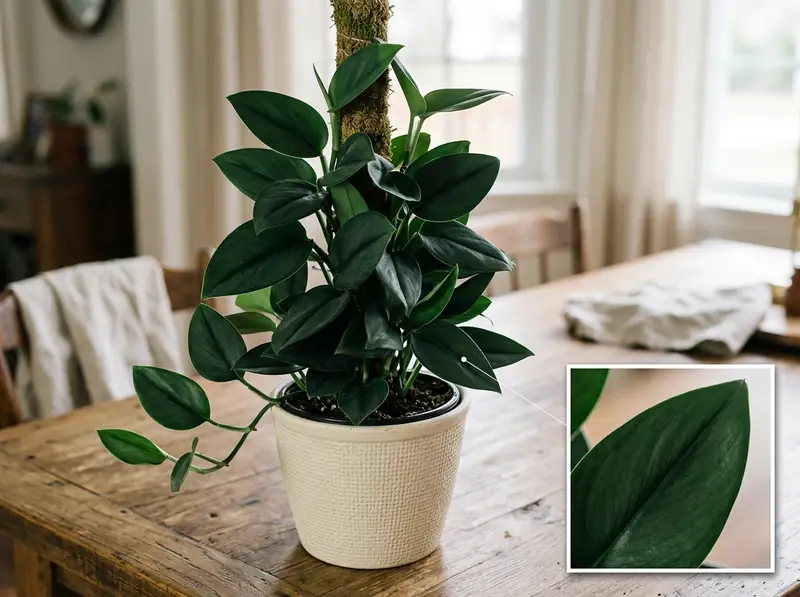 AI-generated
Dark Form Scindapsus
Scindapsus treubii 'Dark Form'
- Bright, indirect light
- Dry to moderate watering
Toxic to cats and dogs AI-generated
Chinese Money Plant
Pilea peperomioides
- Bright, indirect light
- Dry to moderate watering
Pets: not yet checked AI-generated
Christmas Cactus
Schlumbergera × buckleyi
- Bright, indirect light
- Moderate watering
Pets: not yet checked