
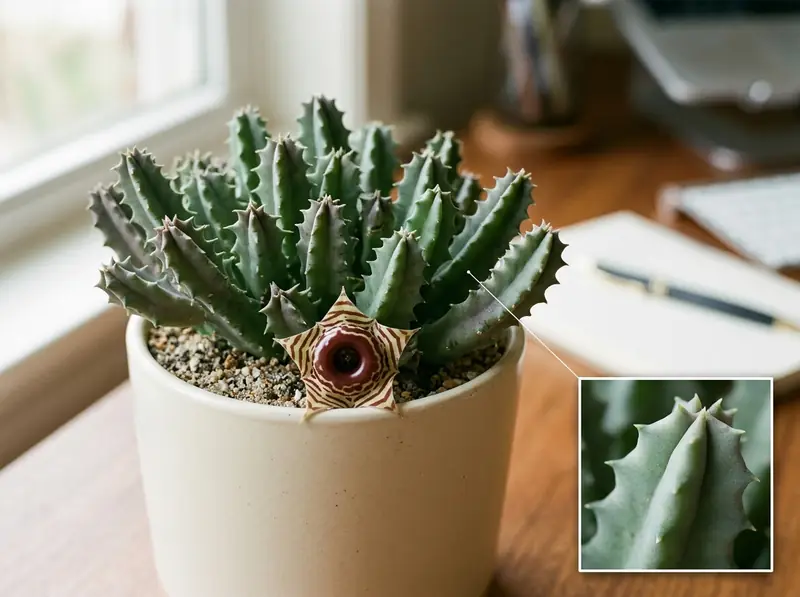
 AI-generated
Lifesaver Plant
Huernia zebrina
Lifesaver plant is a small, clumping succulent from southern Africa with angular, spineless green stems and striking striped, doughnut-shaped flowers in summer. It is easy if you keep it in bright light, use gritty soil, and let it dry out fully between waterings. Overwatering is the main way to lose it.
Saving is free with a KinClub account, and it works here and in the KinClub app. Sign up free
Care profile
- Light
- Bright, indirect lightLow → direct sun
- Water
- Let it dry outAbout every 18 days
- Difficulty
- EasyTricky → easy
- Coldest it tolerates
- 50°F
- Humidity
- Low
- Mature size
- SmallSmall → tree-size
- Growth rate
- Moderate
- How common
- EnthusiastRare → everywhere
- Plant family
- Apocynaceae
Pets and toxicity
Cats and dogs: not yet checked
Not yet checked against ASPCA — don't assume it's safe for pets.
No toxicity source on record for this plant yet. If a pet eats any houseplant, call your vet or an animal poison helpline.
How to care for Lifesaver Plant
Light
Give it bright light, including a few hours of gentle morning or late-afternoon sun from an east or west window. Shade it from harsh midday summer sun, which can scorch the stems.
Watering
Soak thoroughly, then let the soil dry out completely before watering again, about every 2-3 weeks in summer. In winter water only about once a month or less, just enough to keep stems from shriveling.
Soil
Use a gritty cactus and succulent mix, ideally with extra perlite or pumice (about one-third by volume). The pot must have a drainage hole.
Feeding
Feed with a cactus fertilizer diluted to half strength once a month from spring through summer. Do not feed in autumn and winter.
Repotting
Repot every 2-3 years in spring, only when the clump fills the pot, using a shallow pot just one size larger. Wait a week after repotting before watering.
Propagation
Cut a healthy stem in spring or summer, let the cut end callus for 3-7 days, then set it in dry gritty mix. Water lightly once roots form after a few weeks. Division of clumps also works.
Common problems
- Stem rot from overwatering: cut away soft tissue to clean, firm green, let it callus, and replant in fresh dry mix.
- No flowers: usually too little light or no cool, dry winter rest; move to a brighter spot and cut back winter watering.
- Mealybugs in the stem crevices: dab with cotton swabs dipped in rubbing alcohol and repeat weekly until gone.
- Shriveled stems: check roots; if healthy, soak the pot thoroughly, and if rotted, take cuttings from firm stems.
Similar plants
Same light needs and difficulty.
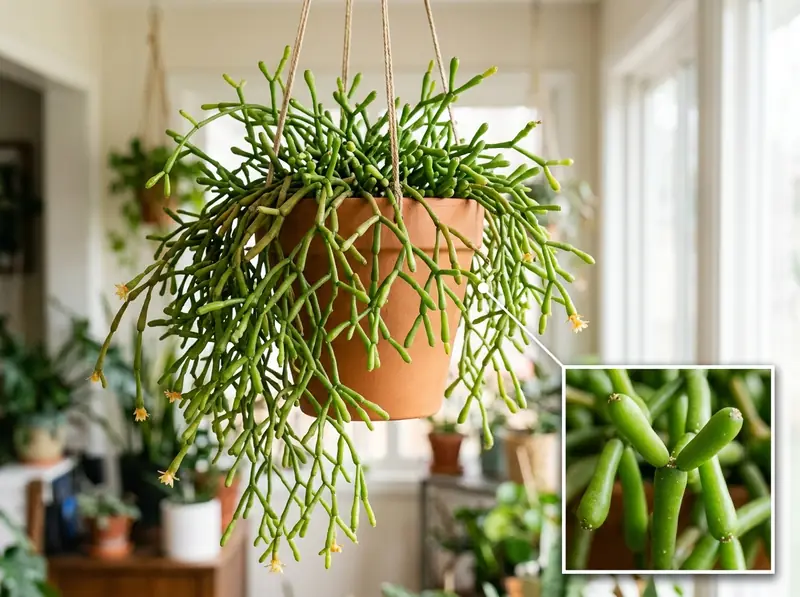 AI-generated
Dancing Bones Cactus
Rhipsalis salicornioides
- Bright, indirect light
- Moderate watering
Pets: not yet checked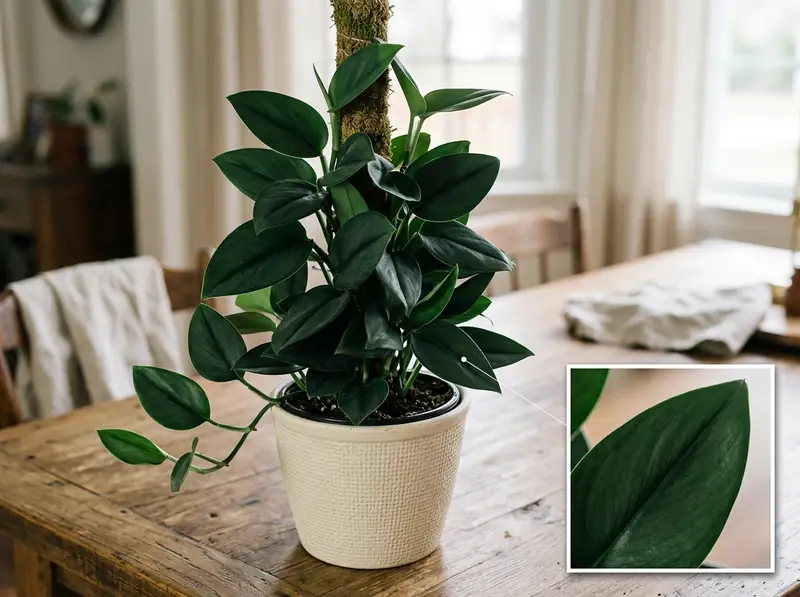 AI-generated
Dark Form Scindapsus
Scindapsus treubii 'Dark Form'
- Bright, indirect light
- Dry to moderate watering
Toxic to cats and dogs AI-generated
Chinese Money Plant
Pilea peperomioides
- Bright, indirect light
- Dry to moderate watering
Pets: not yet checked AI-generated
Christmas Cactus
Schlumbergera × buckleyi
- Bright, indirect light
- Moderate watering
Pets: not yet checked