
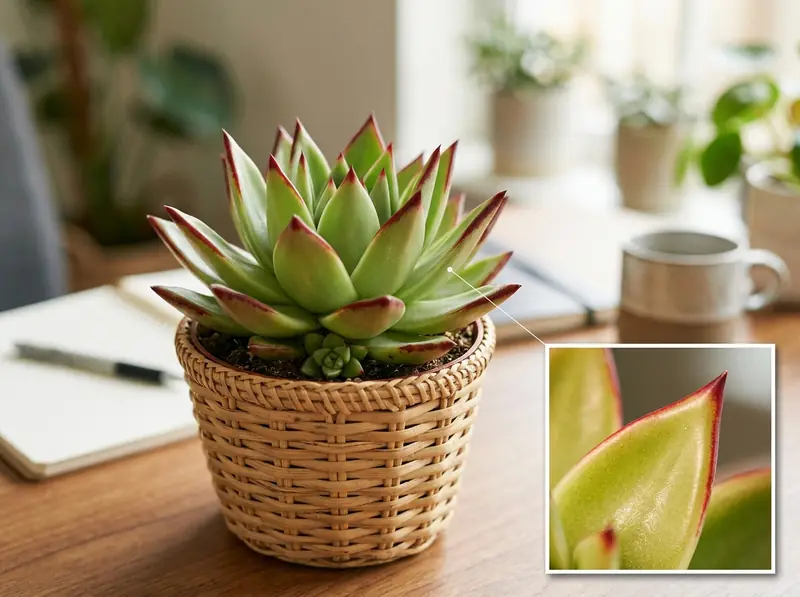
 AI-generated
Lipstick Echeveria
Echeveria agavoides
Also known as Echeveria corderoyi, Echeveria obscura, Echeveria yuccoides
Lipstick Echeveria is a compact, slow-growing succulent rosette of firm, pointed green leaves edged in red. It needs lots of direct sun and very little water, which makes it easy for beginners who resist overwatering. It slowly produces pups around the base that can be grown on as new plants.
Saving is free with a KinClub account, and it works here and in the KinClub app. Sign up free
Care profile
- Light
- Direct sunLow → direct sun
- Water
- Let it dry outAbout every 14 days
- Difficulty
- EasyTricky → easy
- Coldest it tolerates
- 30°F
- Humidity
- Low
- Mature size
- SmallSmall → tree-size
- Growth rate
- Slow
- How common
- Very commonRare → everywhere
- Plant family
- Crassulaceae
Pets and toxicity
Cats and dogs: not yet checked
Not yet checked against ASPCA — don't assume it's safe for pets.
Source: ASPCA toxic and non-toxic plants. If a pet eats any houseplant, call your vet or an animal poison helpline.
How to care for Lipstick Echeveria
Light
Give it at least 4-6 hours of direct sun, such as a south or west window. Bright light keeps the rosette tight and brings out the red leaf tips; introduce new strong sun gradually to avoid scorch.
Watering
Soak thoroughly, then let the soil dry out completely before watering again, about every 10-14 days in summer. In winter water only every 3-5 weeks, just enough to keep the leaves from wrinkling.
Soil
Use a gritty cactus or succulent mix, ideally with extra pumice or coarse sand (about half of the mix). The pot must have a drainage hole.
Feeding
Feed with a diluted cactus fertilizer at quarter to half strength once a month in spring and summer. Do not feed in fall and winter.
Repotting
Repot every 2-3 years in spring, only when it has outgrown its pot, into one just 1-2 inches wider. Let the roots dry for a few days before watering afterward.
Propagation
Remove offsets (pups) with a bit of stem, let the cut dry for a few days, then pot in dry gritty mix. Leaf propagation is possible but slower and less reliable for this species.
Common problems
- Stretched, pale growth: move to a sunnier window or add a grow light, and cut off and re-root the rosette if needed.
- Mushy, translucent leaves or a black stem base: stop watering, unpot, cut away rotted tissue, and re-root the healthy top in dry mix.
- Mealybugs in leaf bases: dab with a cotton swab dipped in rubbing alcohol and repeat weekly until gone.
- Dry, crispy lower leaves: this is normal aging; gently pull them off to prevent pests and rot.
Similar plants
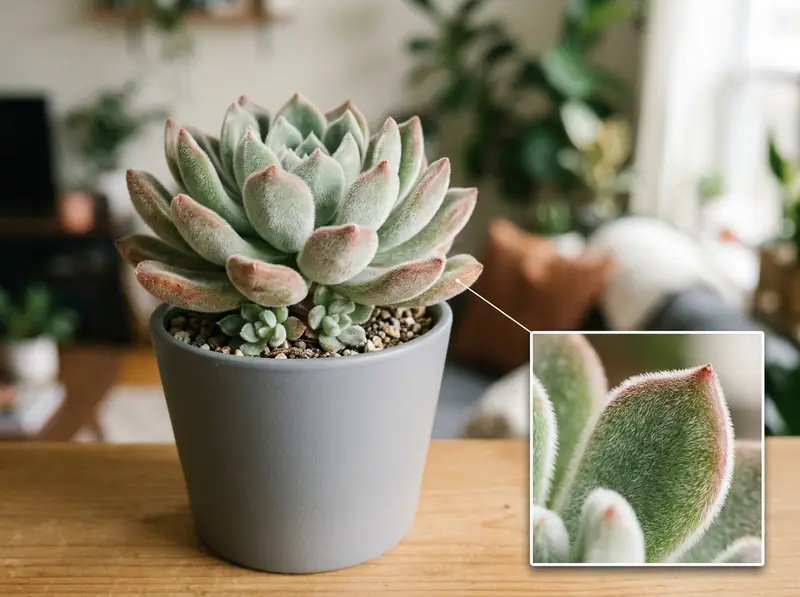
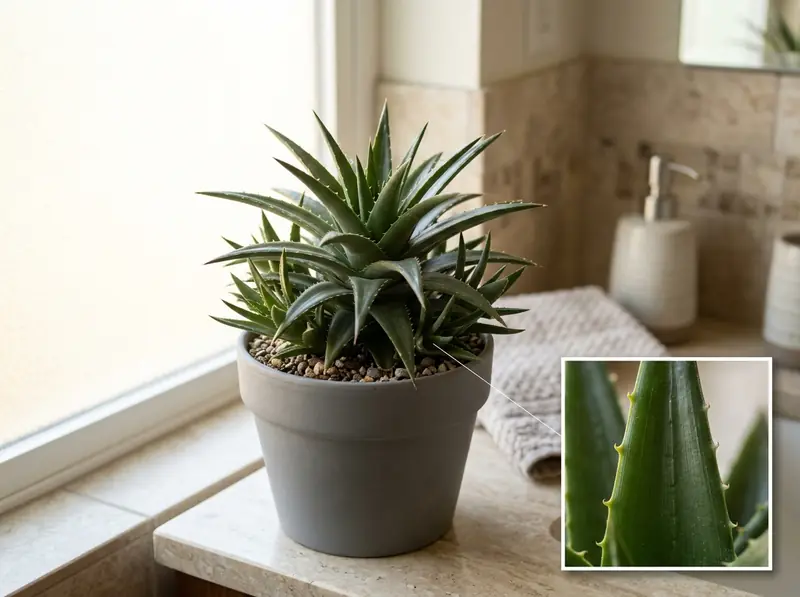
Same light needs and difficulty.
 AI-generated
 AI-generated
 AI-generated
 AI-generated