
 AI-generated
Living Stones
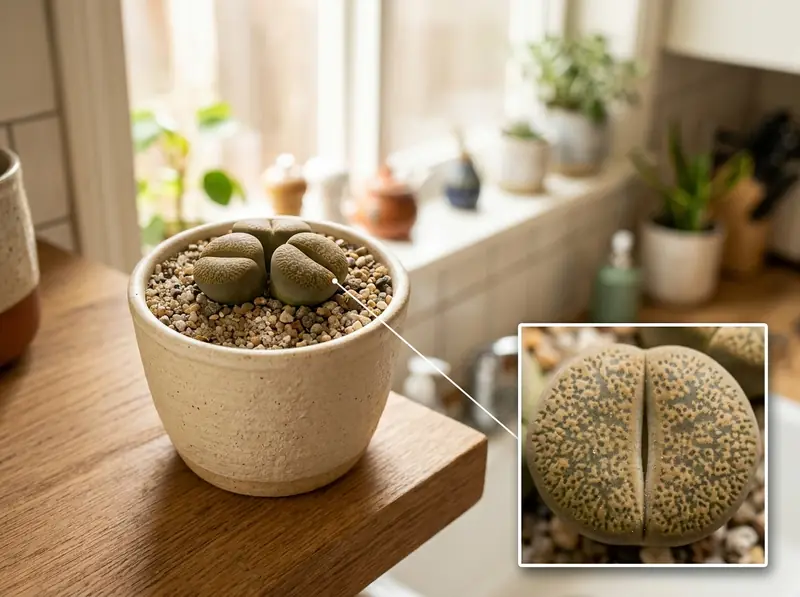
Lithops lesliei
Lithops lesliei is a small South African succulent that looks like a pebble, with two fused leaves and a slit from which flowers and new leaves emerge. It needs lots of sun, gritty soil, and very little water, and a schedule that follows its seasons instead of the calendar. Overwatering is the main risk, so beginners often do better by watering less than they think they should.
Saving is free with a KinClub account, and it works here and in the KinClub app. Sign up free
Care profile
- Light
- Direct sunLow → direct sun
- Water
- Let it dry outAbout every 14 days
- Difficulty
- ModerateTricky → easy
- Coldest it tolerates
- 40°F
- Humidity
- Low
- Mature size
- SmallSmall → tree-size
- Growth rate
- Slow
- How common
- EnthusiastRare → everywhere
- Plant family
- Aizoaceae
Pets and toxicity
Cats and dogs: not yet checked
Not yet checked against ASPCA — don't assume it's safe for pets.
No toxicity source on record for this plant yet. If a pet eats any houseplant, call your vet or an animal poison helpline.
How to care for Living Stones
Light
Give at least 4-6 hours of direct sun, such as an unshaded south- or west-facing window. Add a grow light if the window is weaker, and move plants into stronger sun gradually.
Watering
Water thoroughly only during the fall to early winter growth period, roughly every 2-3 weeks, once the soil is fully dry. Do not water in winter while the old leaves are splitting and being replaced, or in the hot summer dormancy. Water only if the bodies are severely wrinkled.
Soil
Use a very gritty mix of about 70-80% mineral material, such as pumice, coarse sand, or grit, with a little cactus mix or compost. Use a shallow pot with drainage holes.
Feeding
Feeding is usually not needed. If you want to, give a quarter-strength cactus fertiliser once or twice during the fall growing period.
Repotting
Repot only every 2-4 years, or when the clump crowds the pot. Do it in spring or early summer during dormancy, and keep the plant at the same depth.
Propagation
Seed is the usual method. It is slow, and seedlings need steady warmth and light moisture for their first months. Mature clumps can sometimes be divided carefully, but this is risky.
Common problems
- Rot and mushy bodies: from overwatering. Remove affected plants from wet soil, let them dry out, and repot in grittier mix, though rot is often fatal.
- Splitting bodies: from watering while a new leaf pair is growing. Stop watering until the old pair is papery and dry.
- Stretched, pale plants: from too little light. Move them to a sunny window or add a grow light.
- Mealybugs in the crevice between the leaves: dab with rubbing alcohol on a cotton swab, and repeat weekly.
- Wrinkled, shrunken bodies in the growth season: water deeply once, then let the soil dry out fully.
Similar plants
Same light needs and difficulty.
 AI-generated
 AI-generated
 AI-generated
 AI-generated