
 AI-generated
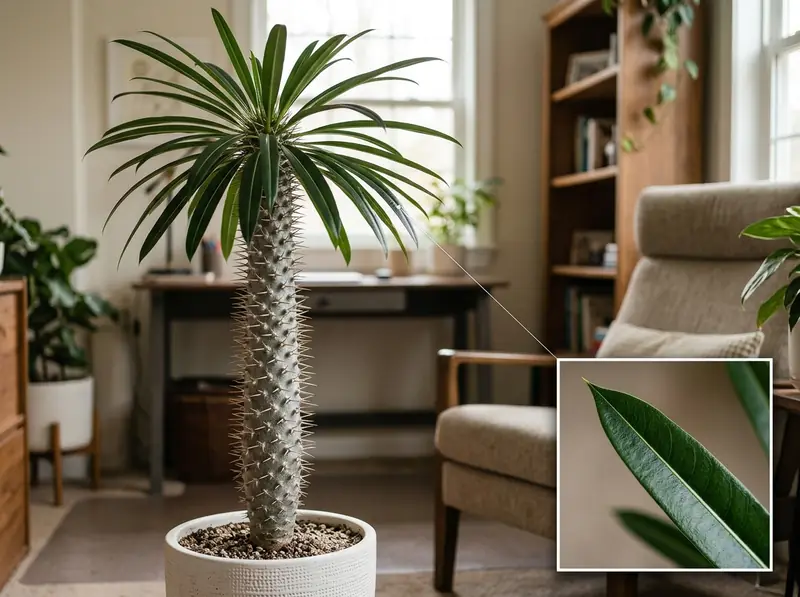
Madagascar Palm
Pachypodium lamerei
Madagascar palm is a spiny, swollen-trunked succulent topped with a tuft of narrow leaves, and it isn't a true palm. It wants lots of direct sun, gritty soil and infrequent watering, and it goes leafless in a cool, dry winter rest. Wear gloves when handling it because the trunk is covered in sharp spines.
Saving is free with a KinClub account, and it works here and in the KinClub app. Sign up free
Care profile
- Light
- Direct sunLow → direct sun
- Water
- Let it dry outAbout every 14 days
- Difficulty
- Easy to moderateTricky → easy
- Coldest it tolerates
- 50°F
- Humidity
- Low
- Mature size
- LargeSmall → tree-size
- Growth rate
- Moderate
- How common
- EnthusiastRare → everywhere
- Plant family
- Apocynaceae
Pets and toxicity
Cats and dogs: not yet checked
Not yet checked against ASPCA — don't assume it's safe for pets.
No toxicity source on record for this plant yet. If a pet eats any houseplant, call your vet or an animal poison helpline.
How to care for Madagascar Palm
Light
Give it as much bright light as possible, ideally a south- or west-facing window with at least 4-6 hours of direct sun. Introduce it to strong sun gradually to avoid leaf scorch.
Watering
In spring and summer, water thoroughly when the soil is completely dry, about every 2-3 weeks, and empty the saucer. In winter, when it is leafless or dormant, water only a little about once a month, or not at all.
Soil
Use a gritty cactus and succulent mix, ideally with extra perlite or pumice (about one-third to one-half by volume). Use a pot with drainage holes; unglazed terracotta helps the soil dry.
Feeding
Feed with a diluted cactus or balanced fertilizer at half strength about once a month from spring to late summer. Do not feed in autumn or winter.
Repotting
Repot every 2-3 years in spring, only when roots fill the pot, going up one size (1-2 inches wider). Handle the thick trunk and roots gently, and let them dry a few days before watering.
Propagation
Mostly grown from seed, which is slow and needs warmth. Cuttings of side branches are possible but unreliable and prone to rot, so most home growers buy a plant.
Common problems
- Leaf drop in winter is normal dormancy; reduce watering and wait for spring regrowth.
- Soft, mushy trunk means rot from overwatering; cut back watering, and act quickly as advanced rot is often fatal.
- Leaning or stretched growth means too little light; move to a sunnier window and rotate the pot monthly.
- Cottony white mealybugs on leaf bases or spines; dab with rubbing alcohol on a cotton swab and repeat weekly.
- Brown leaf tips or yellow lower leaves from irregular watering; water deeply but only when fully dry.
Similar plants
Same light needs and difficulty.
 AI-generated
 AI-generated
 AI-generated
 AI-generated