AI-generated image, not a photograph of this plant. Real plants look different depending on light, soil, temperature and age.
MoraceaeCommon in stores
Mistletoe Fig
Ficus deltoidea
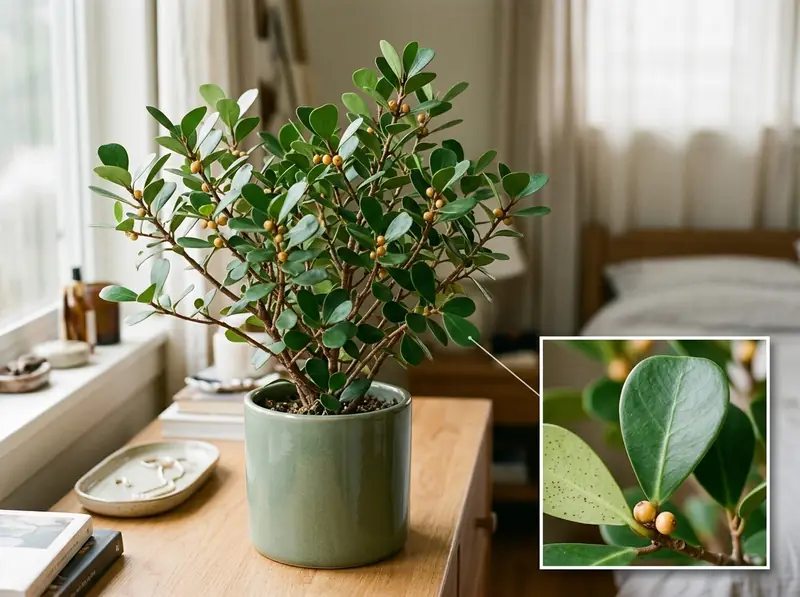
Mistletoe fig is a compact, slow-growing shrub with small, rounded, leathery leaves and tiny tan fruits that look like berries. It likes bright indirect light, steady moisture without soggy soil, and a stable spot free of drafts. It can be fussy about changes, so keep its care consistent.
Toxic to cats and dogs
💡
Saving is free with a KinClub account, and it works here and in the KinClub app. Sign up free
🪴 Care profile
Light
Bright, indirect lightLow → direct sun
Water
Moderate wateringAbout every 7 days
Difficulty
ModerateTricky → easy
Coldest it tolerates
55°F
Humidity
Medium
Mature size
Medium to largeSmall → tree-size
Growth rate
Slow
How common
CommonRare → everywhere
Plant family
Moraceae
🐾 Pets and toxicity
Toxic to cats
Keep away from cats. Call your vet or a pet poison helpline if a cat chews it.
Toxic to dogs
Keep away from dogs. Call your vet or a pet poison helpline if a dog chews it.
Give bright, indirect light, such as a spot near an east or lightly filtered south window. A couple of hours of gentle morning sun is fine, but avoid hot midday sun.
Watering
Water when the top inch of soil feels dry, about once a week in the growing season, until water drains from the bottom. Empty the saucer and water less in winter.
Soil
Use a well-draining, peat-based or coco-based potting mix with about 20 to 30 percent perlite or bark added. The pot must have drainage holes.
Feeding
Feed every 4 to 6 weeks in spring and summer with a balanced liquid houseplant fertilizer at half the label strength. Skip feeding in winter.
Repotting
Repot every 2 to 3 years in spring, only going up 1 to 2 inches in pot diameter. It grows slowly and does well slightly root-bound.
Propagation
Take 3 to 4 inch stem cuttings with a few leaves in spring or summer. Use rooting hormone, plant in moist mix, and keep warm and humid; rooting can take several weeks.
Common problems
Leaf drop after moving or a draft: keep it in a stable spot away from vents and cold windows, and it will usually regrow.
Yellow leaves from overwatering: let the soil dry in the top inch between waterings and check that the pot drains.
Brown, crispy leaf edges from dry air or missed waterings: water more consistently and raise humidity with a nearby humidifier.
Sticky residue or white cottony spots from mealybugs or scale: wipe with rubbing-alcohol-dampened cotton swabs and repeat weekly.

 AI-generated
 AI-generated
 AI-generated
 AI-generated
 AI-generated