
 AI-generated
Nummularioides Hoya
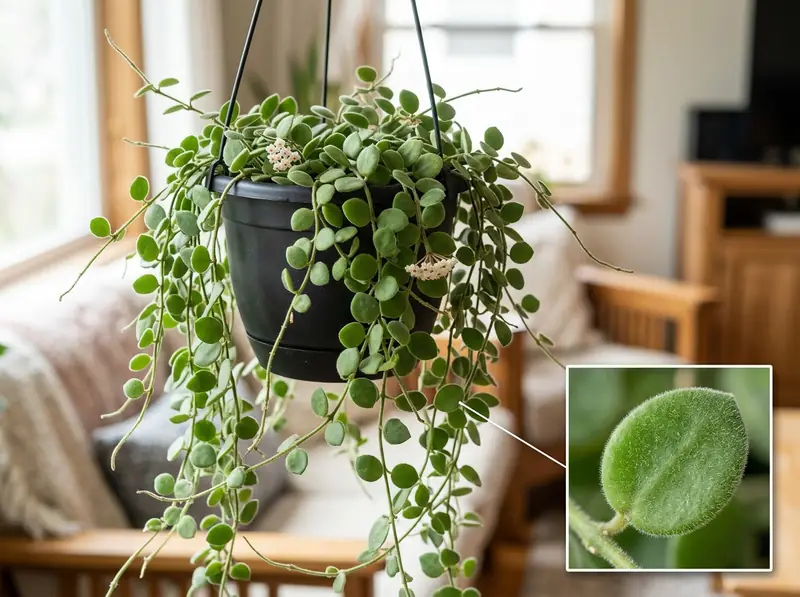
Hoya nummularioides
Hoya nummularioides is a trailing hoya with small, coin-shaped leaves and tiny clusters of flowers. It is compact enough for a hanging basket or shelf edge. Bright light and a quick-drying mix are the main requirements.
Saving is free with a KinClub account, and it works here and in the KinClub app. Sign up free
Care profile
- Light
- Bright, indirect lightLow → direct sun
- Water
- Let it dry outAbout every 10 days
- Difficulty
- EasyTricky → easy
- Coldest it tolerates
- 55°F
- Humidity
- Medium
- Mature size
- MediumSmall → tree-size
- Growth rate
- Moderate
- How common
- EnthusiastRare → everywhere
- Plant family
- Apocynaceae
Pets and toxicity
Cats and dogs: not yet checked
Not yet checked against ASPCA — don't assume it's safe for pets.
No toxicity source on record for this plant yet. If a pet eats any houseplant, call your vet or an animal poison helpline.
How to care for Nummularioides Hoya
Light
Bright, indirect light, plus gentle morning sun, keeps the tiny coin-shaped leaves compact and encourages flowers.
Watering
Water when the mix is mostly dry, about every 10 days in summer and every 2-3 weeks in winter. Thin stems and small leaves mean it is quick to rot if kept wet.
Soil
Chunky, fast-draining mix: roughly equal parts orchid bark, perlite and a little potting soil or coco coir. Roots need air around them.
Feeding
Feed every 3-4 weeks in spring and summer with a balanced fertilizer at half strength; skip it in winter. A bloom-booster with more phosphorus helps flowering.
Repotting
Repot every 2-3 years in a small pot or basket, since it likes snug roots.
Propagation
Take a 4-6 inch stem cutting with at least two nodes. Root it in water, moist perlite or sphagnum moss; roots appear in 3-6 weeks.
Common problems
- Wilting with damp soil means rot. Cut healthy tips, root them and discard the rotted stems.
- Mealybugs and aphids cluster on new growth. Rinse the plant and spray with insecticidal soap.
- Leggy growth means low light. Move it closer to a bright window.
Similar plants
Same light needs and difficulty.
 AI-generated
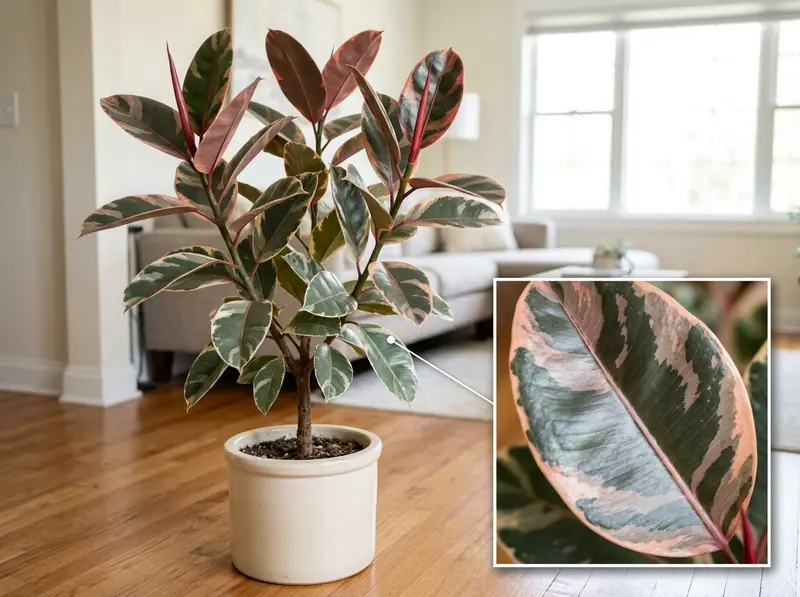
Ruby Rubber Plant
Ficus elastica 'Ruby'
- Bright, indirect light
- Moderate watering
Toxic to cats and dogs AI-generated
 AI-generated
Chinese Money Plant
Pilea peperomioides
- Bright, indirect light
- Dry to moderate watering
Pets: not yet checked AI-generated
Christmas Cactus
Schlumbergera × buckleyi
- Bright, indirect light
- Moderate watering
Pets: not yet checked