
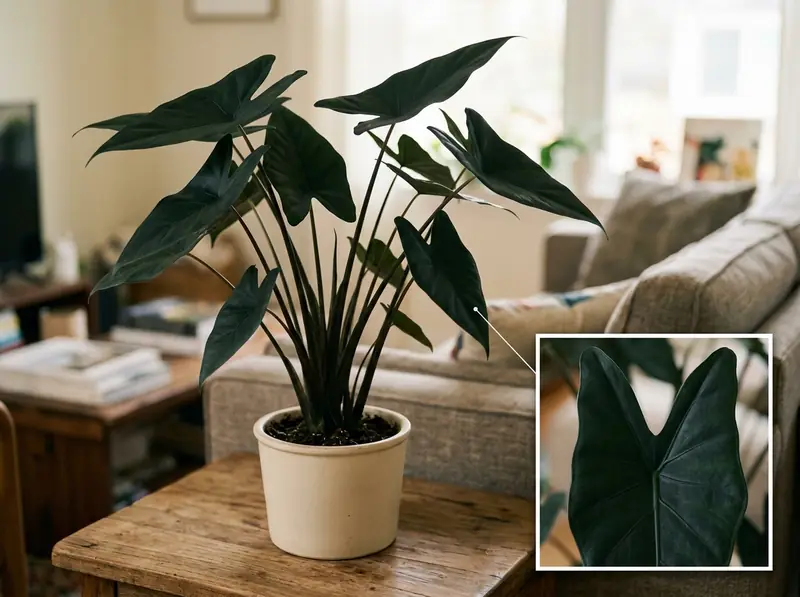
 AI-generated
Nycteris Alocasia
Alocasia nycteris
A rare, dark-leaved Alocasia species that behaves like its demanding rainforest relatives. Plan on warmth, high humidity, and bright, filtered light to keep it healthy.
Saving is free with a KinClub account, and it works here and in the KinClub app. Sign up free
Care profile
- Light
- Bright, indirect lightLow → direct sun
- Water
- Moderate to moist wateringAbout every 7 days
- Difficulty
- Moderate to challengingTricky → easy
- Coldest it tolerates
- 60°F
- Humidity
- High
- Mature size
- MediumSmall → tree-size
- Growth rate
- Slow to moderate
- How common
- EnthusiastRare → everywhere
- Plant family
- Araceae
Pets and toxicity
Toxic to cats
Keep away from cats. Call your vet or a pet poison helpline if a cat chews it.
Toxic to dogs
Keep away from dogs. Call your vet or a pet poison helpline if a dog chews it.
Source: ASPCA toxic and non-toxic plants. If a pet eats any houseplant, call your vet or an animal poison helpline.
How to care for Nycteris Alocasia
Light
Needs bright indirect light, like an east window or a spot a few feet from a brighter window. Direct sun burns the dark leaves; low light causes stretching.
Watering
Keep the mix lightly moist, watering when the top half-inch dries, about every 7 days. Never let it dry out or stand in water.
Soil
Use a chunky, airy mix of orchid bark, perlite, and coco coir or peat that holds some moisture but drains quickly.
Feeding
Feed every 3-4 weeks in spring and summer with a quarter-strength balanced fertilizer. None in winter.
Repotting
Repot yearly in spring into a slightly larger pot, dividing corms or offsets when crowded.
Propagation
Divide offsets or small corms at repotting and root them in moist sphagnum under warm, humid conditions.
Common problems
- Crispy edges: low humidity. Keep humidity above 60% with a humidifier or closed cabinet.
- Spider mites or thrips: look for stippling and silvery marks. Rinse leaves and use insecticidal soap weekly.
- Winter leaf drop: cold or dim conditions trigger dormancy. Keep above 65F and water sparingly.
Similar plants
Same light needs and difficulty.
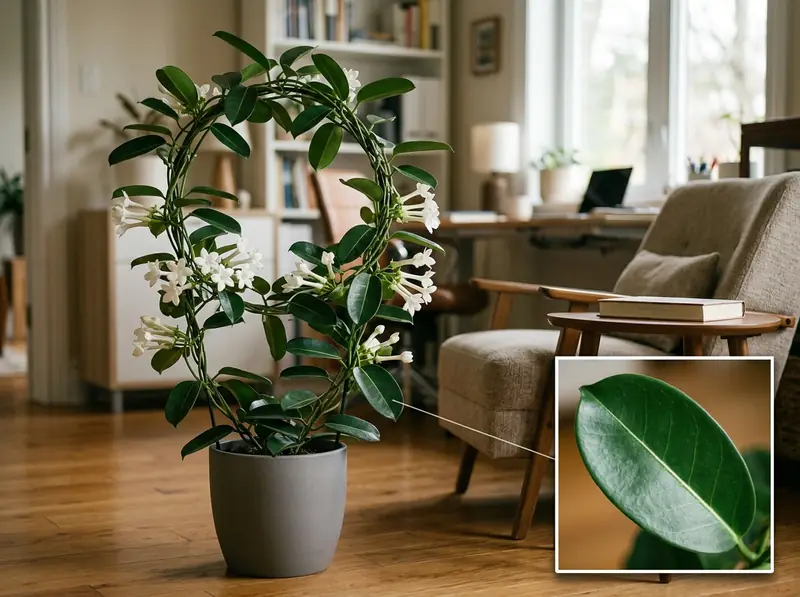 AI-generated
Madagascar Jasmine
Stephanotis floribunda
- Bright, indirect light
- Moderate watering
Non-toxic to cats and dogs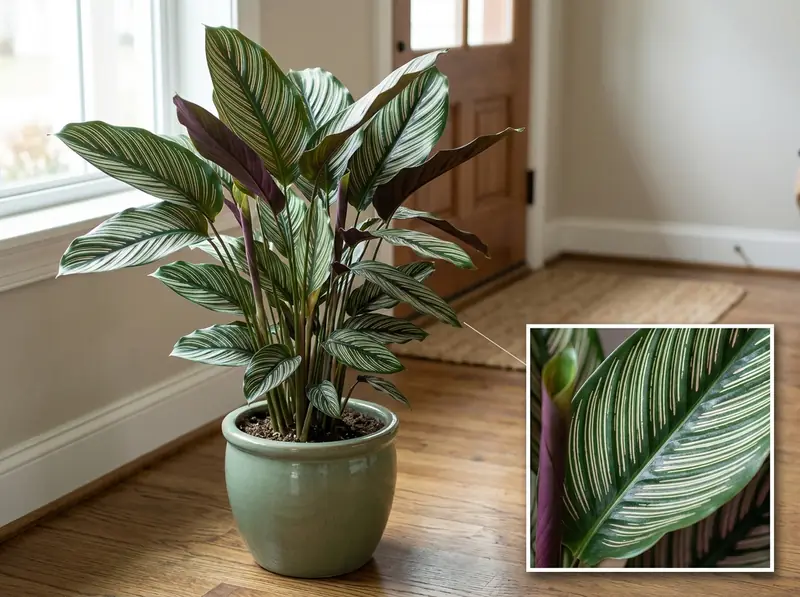 AI-generated
Majestica Calathea
Goeppertia majestica
- Medium to bright, indirect light
- Keep moist
Pets: not yet checked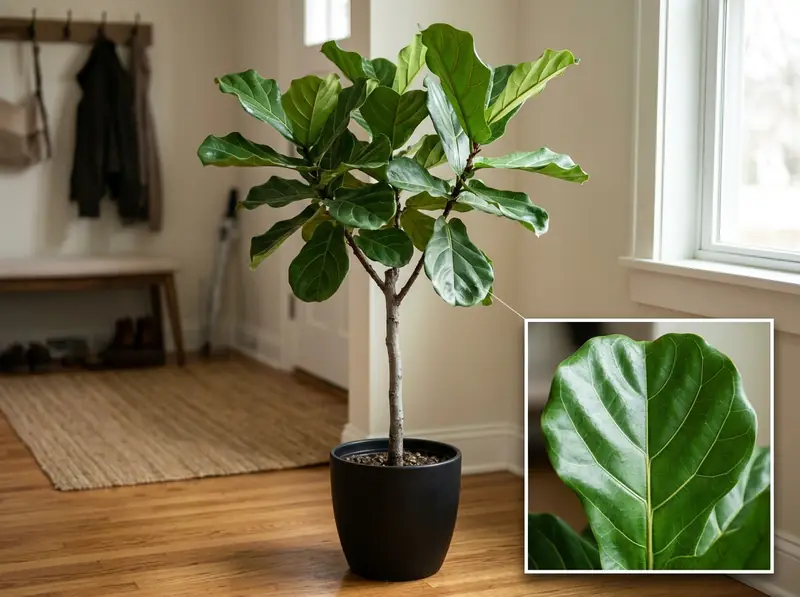 AI-generated
 AI-generated
Calathea Orbifolia
Goeppertia orbifolia
- Medium to bright, indirect light
- Keep moist
Pets: not yet checked