
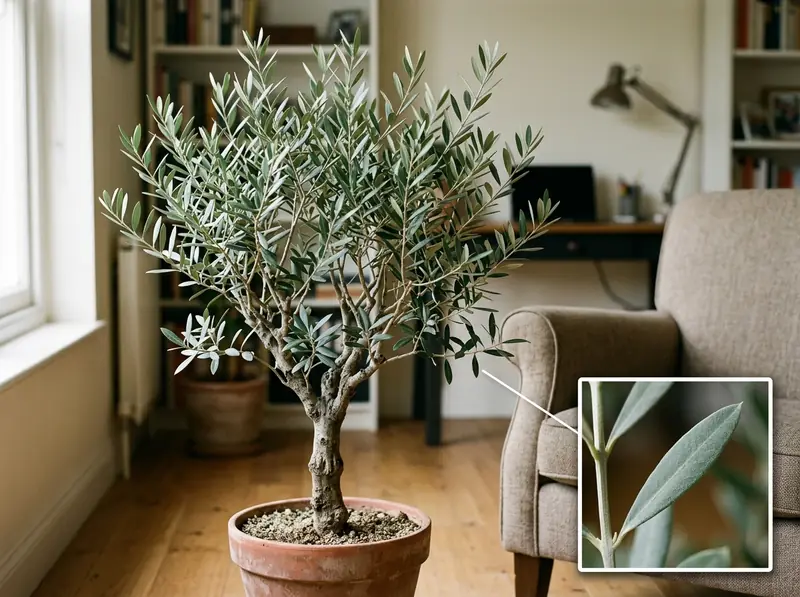
 AI-generated
Olive Tree
Olea europaea
Olive trees are silvery-leaved Mediterranean plants that can be grown as a floor-standing indoor tree. They need as much direct sun as you can give them, a gritty fast-draining soil and a dry-ish root zone. They grow slowly, do best with a cool winter rest, and often suffer leaf drop if kept too dim or too wet.
Saving is free with a KinClub account, and it works here and in the KinClub app. Sign up free
Care profile
- Light
- Direct sunLow → direct sun
- Water
- Let it dry outAbout every 14 days
- Difficulty
- ModerateTricky → easy
- Coldest it tolerates
- 30°F
- Humidity
- Low
- Mature size
- Tree-sizeSmall → tree-size
- Growth rate
- Slow
- How common
- CommonRare → everywhere
- Plant family
- Oleaceae
Pets and toxicity
Cats and dogs: not yet checked
Not yet checked against ASPCA — don't assume it's safe for pets.
No toxicity source on record for this plant yet. If a pet eats any houseplant, call your vet or an animal poison helpline.
How to care for Olive Tree
Light
Give it at least 6 hours of direct sun a day, such as in a south- or west-facing window. In winter, a grow light placed 6-12 inches above the plant for 10-12 hours a day helps if the window is weak. Move it outdoors in summer once nights stay above 50°F.
Watering
Water thoroughly until it runs out the drainage holes, then let the top 2-3 inches of soil dry out before watering again. That usually means every 10-14 days in summer and every 3-4 weeks in winter. Never leave the pot standing in water.
Soil
Use a gritty, fast-draining mix, such as cactus and succulent mix with about 25% extra perlite or coarse sand. The pot must have drainage holes.
Feeding
Feed with a balanced liquid fertilizer at half strength once a month from spring to late summer. Do not feed in autumn or winter.
Repotting
Repot every 2-3 years in spring, going up only 1-2 inches in pot diameter. A heavy terracotta pot helps keep a tall tree stable and lets the soil dry faster.
Propagation
Hard for home growers. Semi-hardwood cuttings in summer with rooting hormone, bottom heat and a humid cover root slowly and unreliably. Seed is slower still, and most people buy a plant.
Common problems
- Leaf drop after moving indoors: this is normal shock from lower light, so place it in your sunniest window and adjust the plant gradually.
- Yellow leaves and soft trunk base: this is root rot from wet soil. Let the soil dry, repot into gritty mix and trim any black, mushy roots.
- Sticky leaves and small brown bumps on stems: these are scale insects. Wipe them off with rubbing alcohol on a cotton swab, then treat with horticultural oil.
- Leggy growth and no flowers: light is too low or there was no cool winter rest. Move it to full sun and prune in spring to shape it.
- Fine webbing and stippled leaves: these are spider mites in dry, warm air. Rinse the foliage and apply insecticidal soap weekly for 3 weeks.
Similar plants
Same light needs and difficulty.
 AI-generated
 AI-generated
 AI-generated
 AI-generated