
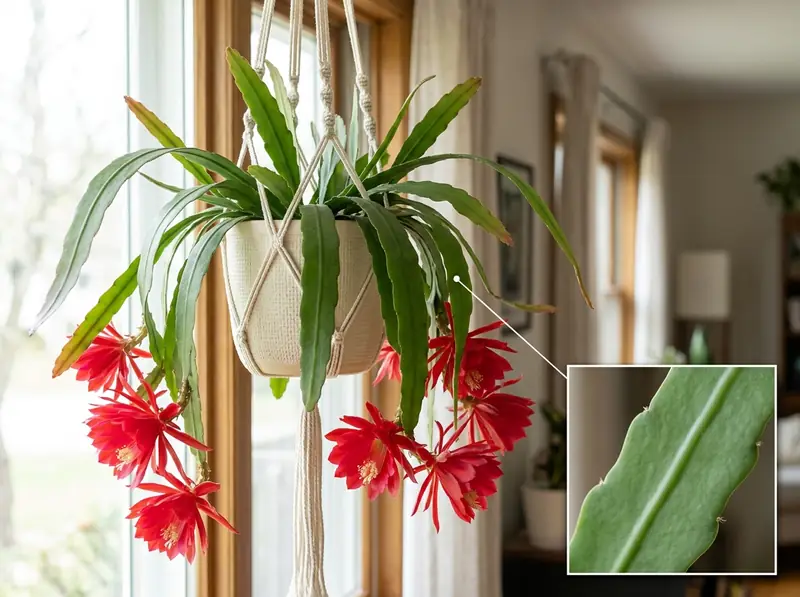
 AI-generated
Orchid Cactus
Disocactus ackermannii
A forest cactus with long, flat, arching stems and huge, showy red or pink flowers in spring. It grows on trees in the wild, so it likes bright, filtered light and airy soil. A cool winter rest brings the blooms.
Saving is free with a KinClub account, and it works here and in the KinClub app. Sign up free
Care profile
- Light
- Bright, indirect lightLow → direct sun
- Water
- Moderate wateringAbout every 10 days
- Difficulty
- ModerateTricky → easy
- Coldest it tolerates
- 45°F
- Humidity
- Medium
- Mature size
- MediumSmall → tree-size
- Growth rate
- Moderate
- How common
- EnthusiastRare → everywhere
- Plant family
- Cactaceae
Pets and toxicity
Cats and dogs: not yet checked
Not yet checked against ASPCA — don't assume it's safe for pets.
No toxicity source on record for this plant yet. If a pet eats any houseplant, call your vet or an animal poison helpline.
How to care for Orchid Cactus
Light
Needs bright, indirect light, such as near an east window or filtered south window. Direct midday sun scorches the stems, while dim rooms mean no flowers.
Watering
Water when the top inch of the mix is dry, about every 10 days in summer. In winter water only every 3 to 4 weeks, just enough to keep stems from shriveling, to encourage buds.
Soil
Use an epiphytic mix: roughly equal parts orchid bark, perlite and potting soil in a pot with drainage.
Feeding
Feed with a half-strength balanced fertilizer every 2 to 4 weeks in spring and summer; switch to low-nitrogen in late summer to favor flowers.
Repotting
Repot every 3 to 4 years after flowering, as it blooms best when slightly root-bound.
Propagation
Cut a stem section, let it callus for a few days, then plant in mix. Rooting takes a few weeks.
Common problems
- Yellow, soft stems come from overwatering. Reduce water and make sure the mix drains.
- No flowers with healthy growth usually means no cool winter rest or too little light.
- Mealybugs and scale hide on stem edges. Wipe with alcohol and treat promptly.
Similar plants
Same light needs and difficulty.
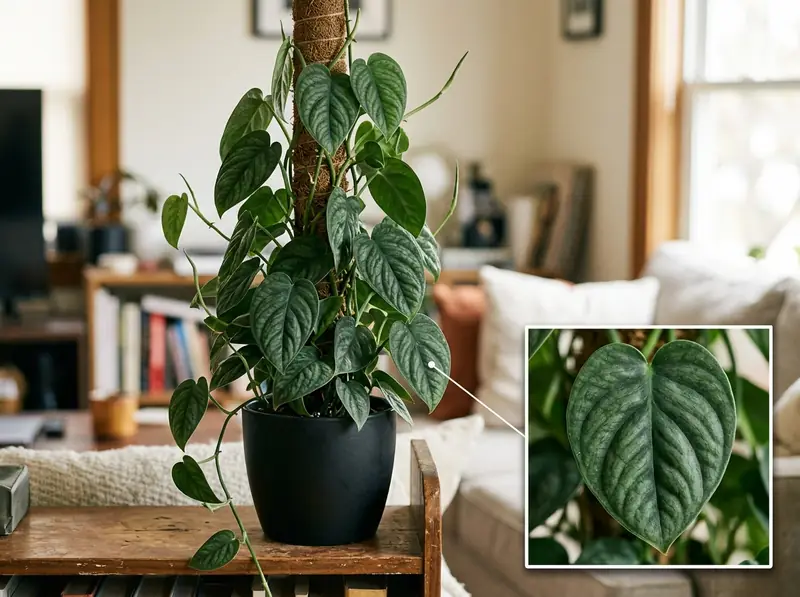 AI-generated
Mayari Scindapsus
Scindapsus mayari
- Medium to bright, indirect light
- Dry to moderate watering
Toxic to cats and dogs AI-generated
 AI-generated
 AI-generated