
 AI-generated
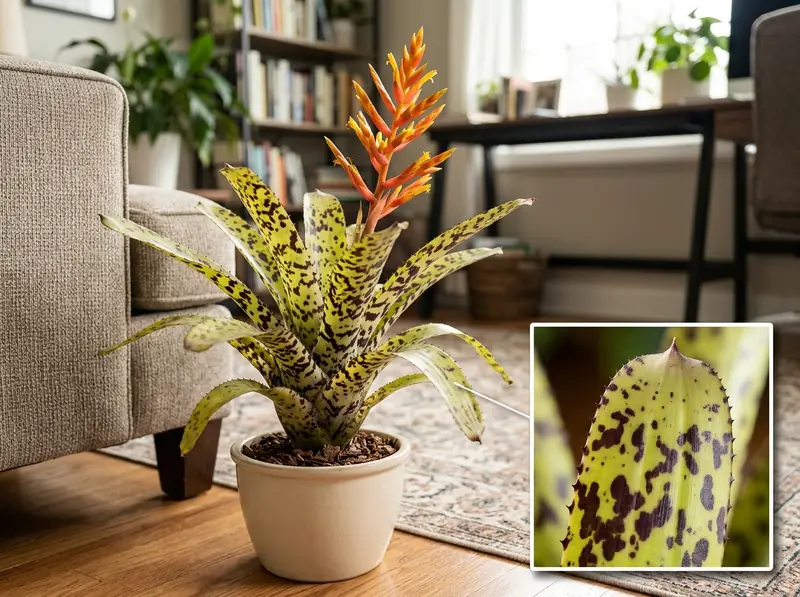
Orlandiana Bromeliad
Aechmea orlandiana
Orlandiana bromeliad is a tidy rosette of stiff, arching green leaves with bold dark leopard-like spots and a striking orange and yellow flower spike. It is forgiving in bright, indirect light, needs a little water in its central cup, and mostly likes open, fast-draining soil. After flowering, the main plant slowly fades while pups take over.
Saving is free with a KinClub account, and it works here and in the KinClub app. Sign up free
Care profile
- Light
- Bright, indirect lightLow → direct sun
- Water
- Dry to moderate wateringAbout every 7 days
- Difficulty
- EasyTricky → easy
- Coldest it tolerates
- 50°F
- Humidity
- Medium
- Mature size
- Small to mediumSmall → tree-size
- Growth rate
- Slow
- How common
- EnthusiastRare → everywhere
- Plant family
- Bromeliaceae
Pets and toxicity
Cats and dogs: not yet checked
Not yet checked against ASPCA — don't assume it's safe for pets.
No toxicity source on record for this plant yet. If a pet eats any houseplant, call your vet or an animal poison helpline.
How to care for Orlandiana Bromeliad
Light
Give bright, indirect light, such as near an east window or a few feet back from a south or west one. A little gentle morning sun is fine and helps bring out the leaf markings.
Watering
Keep the central cup about a quarter full of water and flush it every 1 to 2 weeks to keep it fresh. Water the potting mix lightly only when the top inch or two is dry, roughly every 7 to 10 days in the growing season.
Soil
Use a very open, fast-draining mix such as orchid bark blended with a little peat-based potting mix and perlite. The roots mainly anchor the plant, so the mix must never stay soggy.
Feeding
Feed in spring and summer with a balanced fertilizer diluted to quarter strength, about once a month. Apply it to the potting mix or lightly to the leaves rather than leaving it in the cup.
Repotting
Repot rarely, only when the plant is top-heavy or the pot is crowded, usually every 2 to 3 years. Choose a heavy pot only slightly wider than the old one, about 6 to 8 inches across.
Propagation
Separate pups when they are about one-third to half the size of the parent, using a clean sharp knife, and pot them in open mix. The parent plant flowers once and then slowly declines, so pups carry it on.
Common problems
- Brown, mushy center: the cup is stagnant or the mix is too wet. Flush the cup, let the mix dry, and use a faster-draining mix.
- Brown leaf tips: dry air or tap water with lots of minerals. Use rainwater or filtered water and raise humidity a bit.
- Faded leaf markings: too little light. Move it to a brighter spot without harsh midday sun.
- Small white cottony clusters or bumps on leaves: mealybugs or scale. Wipe them off with rubbing alcohol on a cotton swab and repeat weekly.
- Mother plant dying after bloom: this is normal. Let pups grow on and remove the old rosette when it is brown.
Similar plants
Same light needs and difficulty.
 AI-generated
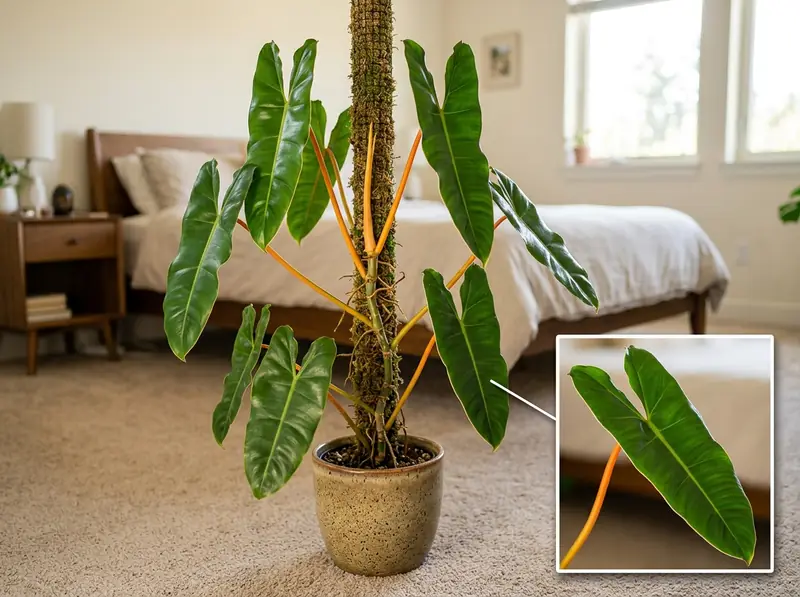
Billietiae Philodendron
Philodendron billietiae
- Bright, indirect light
- Moderate watering
Toxic to cats and dogs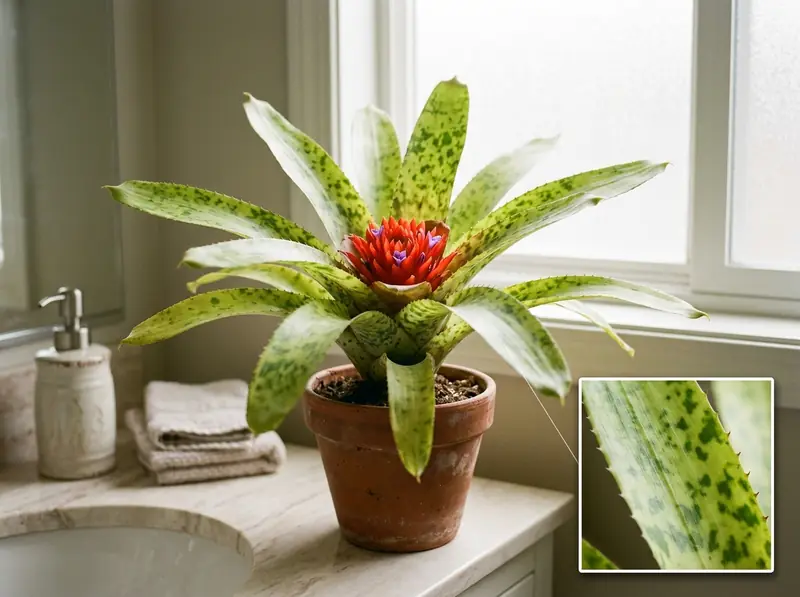 AI-generated
Bird's Nest Bromeliad
Nidularium fulgens
- Medium to bright, indirect light
- Moderate watering
Pets: not yet checked AI-generated
Chinese Money Plant
Pilea peperomioides
- Bright, indirect light
- Dry to moderate watering
Pets: not yet checked AI-generated
Christmas Cactus
Schlumbergera × buckleyi
- Bright, indirect light
- Moderate watering
Pets: not yet checked