
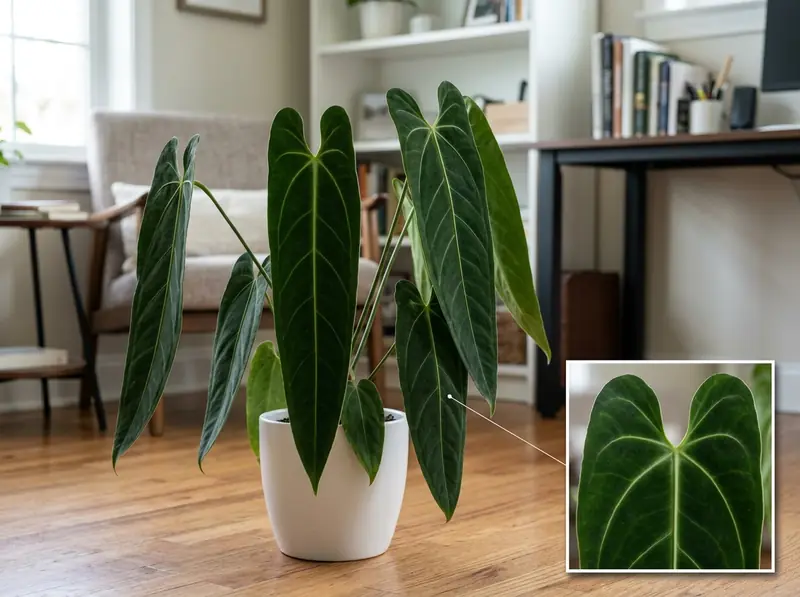
 AI-generated
Pallidiflorum Anthurium
Anthurium pallidiflorum
Pallidiflorum anthurium is a velvet-leaved species from Colombia with long, dark, heart-shaped leaves. It is a collector plant with moderately easy care once settled. Provide warmth, humidity, and an airy mix.
Saving is free with a KinClub account, and it works here and in the KinClub app. Sign up free
Care profile
- Light
- Bright, indirect lightLow → direct sun
- Water
- Moderate wateringAbout every 7 days
- Difficulty
- ModerateTricky → easy
- Coldest it tolerates
- 60°F
- Humidity
- High
- Mature size
- Medium to largeSmall → tree-size
- Growth rate
- Moderate
- How common
- EnthusiastRare → everywhere
- Plant family
- Araceae
Pets and toxicity
Cats and dogs: not yet checked
Not yet checked against ASPCA — don't assume it's safe for pets.
No toxicity source on record for this plant yet. If a pet eats any houseplant, call your vet or an animal poison helpline.
How to care for Pallidiflorum Anthurium
Light
Bright indirect light supports healthy velvet leaves. Avoid hot sun, which scorches them, and dim rooms which slow growth.
Watering
Water when the top 1 to 2 inches are dry, about weekly in summer and every 10 to 14 days in winter, letting excess drain fully.
Soil
Use a very chunky, airy mix such as orchid bark, perlite, and coco coir with a little potting soil, in a pot with drainage.
Feeding
Feed every 3 to 4 weeks in spring and summer with balanced fertilizer at half strength; skip it in winter.
Repotting
Repot every 2 years in spring, going up one pot size at most.
Propagation
Divide offsets or take stem cuttings with nodes and aerial roots in spring.
Common problems
- Dry air browns the leaf edges; keep humidity near 60 percent.
- Spider mites and thrips leave stippling; treat with insecticidal soap.
- Soggy mix causes yellowing and root rot; repot into a chunkier blend.
Similar plants
Same light needs and difficulty.
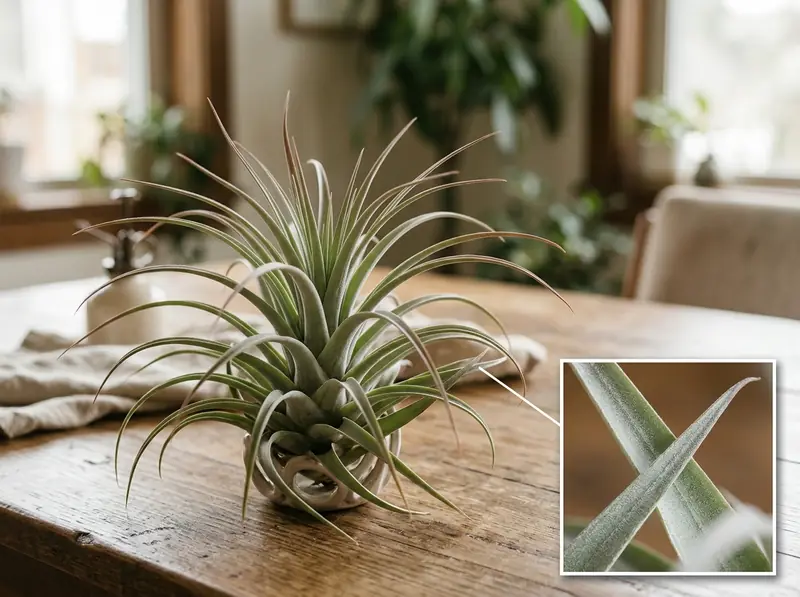 AI-generated
Geminiflora Air Plant
Tillandsia geminiflora
- Bright, indirect light
- Dry to moderate watering
Pets: not yet checked AI-generated
 AI-generated
 AI-generated