
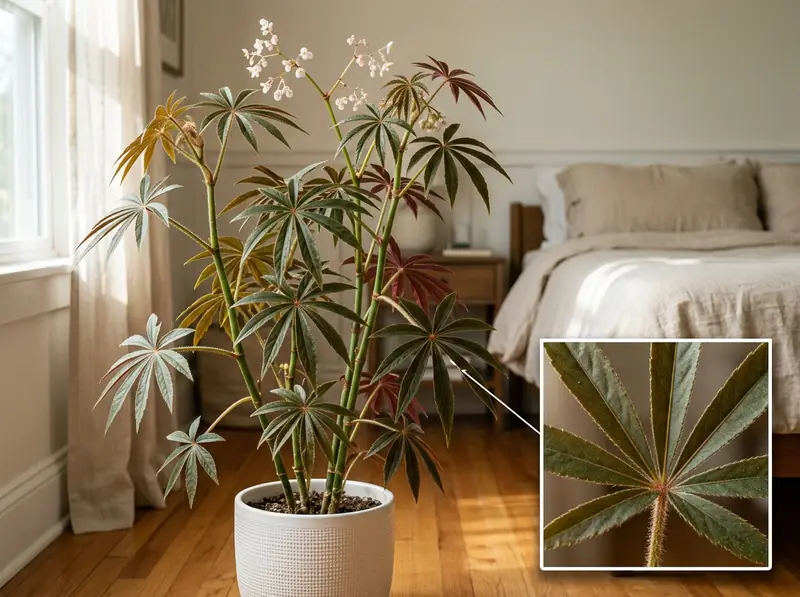
 AI-generated
Palm Leaf Begonia
Begonia luxurians
Palm leaf begonia is a fast-growing, cane-like begonia from Central America with fan-shaped leaves made of finger-like lobes, and it can reach 3 to 5 feet indoors. It wants bright, indirect light, steady moisture without sogginess, and higher humidity, and it is easily propagated from cuttings.
Saving is free with a KinClub account, and it works here and in the KinClub app. Sign up free
Care profile
- Light
- Bright, indirect lightLow → direct sun
- Water
- Moderate to moist wateringAbout every 7 days
- Difficulty
- ModerateTricky → easy
- Coldest it tolerates
- 55°F
- Humidity
- High
- Mature size
- LargeSmall → tree-size
- Growth rate
- Fast
- How common
- CommonRare → everywhere
- Plant family
- Begoniaceae
Pets and toxicity
Toxic to cats
Keep away from cats. Call your vet or a pet poison helpline if a cat chews it.
Toxic to dogs
Keep away from dogs. Call your vet or a pet poison helpline if a dog chews it.
Source: ASPCA toxic and non-toxic plants. If a pet eats any houseplant, call your vet or an animal poison helpline.
How to care for Palm Leaf Begonia
Light
Give it bright, indirect light, such as a spot near an east window or a few feet back from a south or west window. Protect it from hot midday sun, which scorches the big leaves.
Watering
Water when the top inch of soil feels dry, then let the excess drain away fully. In an average home this is about once a week in summer, less often in winter. Avoid soaking the leaves.
Soil
Use a light, airy, well-draining potting mix, such as standard houseplant mix with about one-third perlite or orchid bark added. A pot with drainage holes is essential.
Feeding
Feed every 2 to 4 weeks in spring and summer with a balanced houseplant fertilizer diluted to half strength. Stop or cut back to once every two months in winter.
Repotting
Repot every 1 to 2 years in spring into a pot only 1 to 2 inches wider, when roots fill the pot. Begonias resent being overpotted, so avoid big jumps in size.
Propagation
Take 4 to 6 inch stem cuttings with a couple of leaves and root them in water or moist perlite mix. Roots usually form within 3 to 4 weeks. Cane sections with a node also root.
Common problems
- Powdery mildew shows as a white powder on leaves: improve airflow, keep leaves dry, and remove badly affected leaves.
- Leggy, floppy stems: pinch back the tips in spring to encourage branching, and move it to brighter light.
- Crispy leaf edges: raise humidity with a pebble tray or humidifier and avoid letting the soil dry out fully.
- Stem rot at the base: usually from overwatering, so let the soil dry more between waterings and cut healthy tip cuttings to start over.
Similar plants
Same light needs and difficulty.
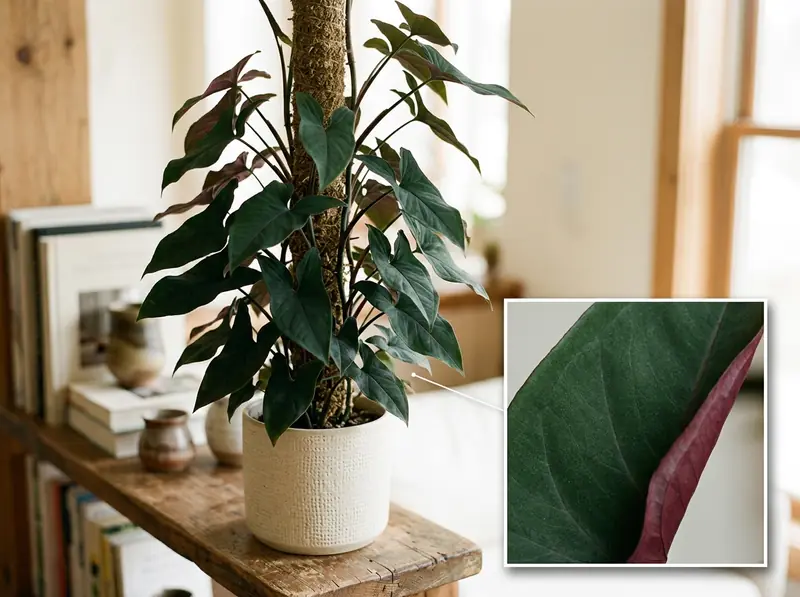 AI-generated
Llano Carti Road Syngonium
Syngonium erythrophyllum 'Llano Carti Road'
- Bright, indirect light
- Moderate watering
Pets: not yet checked AI-generated
 AI-generated
 AI-generated