
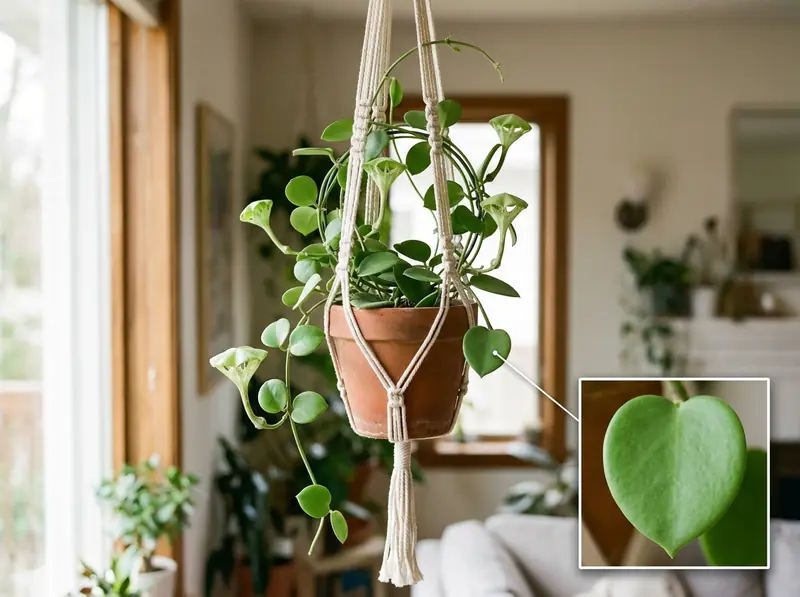
 AI-generated
Parachute Plant
Ceropegia sandersonii
A twining succulent vine from South Africa with fleshy, heart-shaped leaves and curious, umbrella-shaped green flowers that give it its name. It is easy in a bright window if it is kept on the dry side.
Saving is free with a KinClub account, and it works here and in the KinClub app. Sign up free
Care profile
- Light
- Bright, indirect lightLow → direct sun
- Water
- Let it dry outAbout every 14 days
- Difficulty
- ModerateTricky → easy
- Coldest it tolerates
- 50°F
- Humidity
- Low to medium
- Mature size
- MediumSmall → tree-size
- Growth rate
- Moderate
- How common
- EnthusiastRare → everywhere
- Plant family
- Apocynaceae
Pets and toxicity
Cats and dogs: not yet checked
Not yet checked against ASPCA — don't assume it's safe for pets.
No toxicity source on record for this plant yet. If a pet eats any houseplant, call your vet or an animal poison helpline.
How to care for Parachute Plant
Light
Bright indirect light with a few hours of gentle direct sun, such as an east or west window. Flowers form best in bright conditions.
Watering
Water thoroughly only when the mix is dry throughout, about every 2 weeks in summer and every 4 to 5 weeks in winter.
Soil
Use a gritty, fast-draining cactus mix with added perlite or pumice.
Feeding
Feed with a half-strength balanced fertilizer monthly during spring and summer, and not in winter.
Repotting
Repot every 2 to 3 years in spring into a pot only slightly larger, since it flowers best a little snug.
Propagation
Root stem cuttings of 4 to 6 inches in gritty mix after letting the cut end dry for a day, or pot the aerial tubers.
Common problems
- No flowers: too little light or too much water. Move to brighter light and let the soil dry fully between waterings.
- Yellow, soft stems: rot from wet soil. Cut away damage and repot in fresh gritty mix.
- White cottony clusters at leaf joints: mealybugs. Dab with alcohol on a cotton swab and repeat weekly.
Similar plants
Same light needs and difficulty.
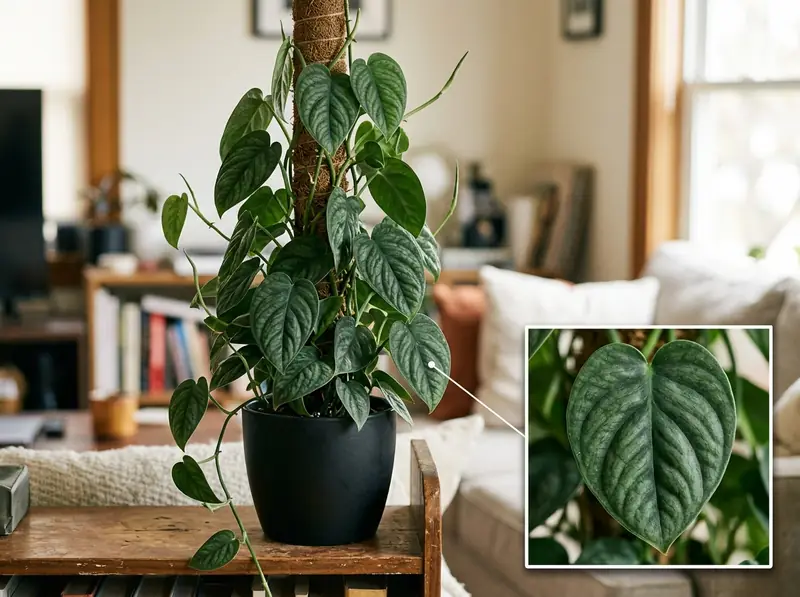 AI-generated
Mayari Scindapsus
Scindapsus mayari
- Medium to bright, indirect light
- Dry to moderate watering
Toxic to cats and dogs AI-generated
 AI-generated
 AI-generated