
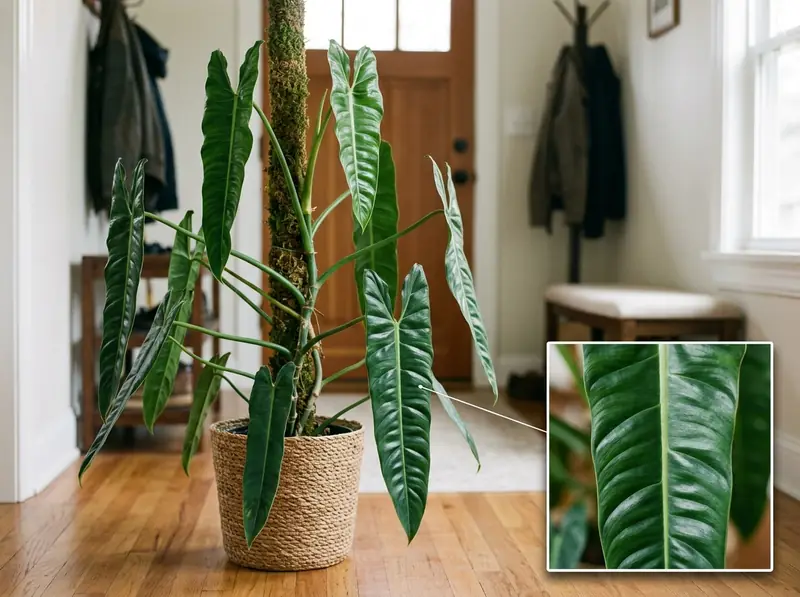
 AI-generated
Patriciae Philodendron
Philodendron patriciae
Philodendron patriciae is a climbing aroid with long, narrow, glossy, sword-shaped leaves on stout stems that can reach 3 feet or more indoors. It does best in bright, indirect light, an airy mix, and a moss pole to climb. Moderate humidity and watering when the top inch or two dries out keep it healthy.
Saving is free with a KinClub account, and it works here and in the KinClub app. Sign up free
Care profile
- Light
- Bright, indirect lightLow → direct sun
- Water
- Moderate wateringAbout every 8 days
- Difficulty
- ModerateTricky → easy
- Coldest it tolerates
- 60°F
- Humidity
- Medium to high
- Mature size
- LargeSmall → tree-size
- Growth rate
- Slow to moderate
- How common
- EnthusiastRare → everywhere
- Plant family
- Araceae
Pets and toxicity
Toxic to cats
Keep away from cats. Call your vet or a pet poison helpline if a cat chews it.
Toxic to dogs
Keep away from dogs. Call your vet or a pet poison helpline if a dog chews it.
Source: ASPCA toxic and non-toxic plants. If a pet eats any houseplant, call your vet or an animal poison helpline.
How to care for Patriciae Philodendron
Light
Give it bright, indirect light, such as a few feet from an east window or a bright spot back from a south or west window. It tolerates medium light but grows slowly and leggy. Avoid direct midday sun, which scorches the long leaves.
Watering
Water thoroughly when the top 1-2 inches of soil feel dry, usually every 7-10 days in the growing season, and let excess drain away. Water less often in winter, when the soil dries more slowly.
Soil
Use a chunky, airy aroid mix: about two parts standard potting mix to one part orchid bark and one part perlite. The mix should drain fast but hold a little moisture.
Feeding
Feed every 4 weeks in spring and summer with a balanced liquid houseplant fertilizer at half the label strength. Skip feeding in fall and winter.
Repotting
Repot every 1-2 years in spring, going up only 1-2 inches in pot diameter, when roots circle the pot or poke from the drainage holes. Add a moss pole at the same time.
Propagation
Take a stem cutting with at least one node and a leaf, and root it in water or moist sphagnum moss in warm, bright light. Roots usually form in 3-5 weeks, then pot up in aroid mix.
Common problems
- Yellow lower leaves: usually overwatering or soggy soil. Let the top 2 inches dry out and check that the pot drains freely.
- Brown, crispy leaf tips: dry air or irregular watering. Water more consistently and group it with other plants or use a humidifier.
- Small, widely spaced new leaves: too little light or no support to climb. Move to brighter light and add a moss pole.
- Fine webbing or stippled leaves: spider mites. Wipe leaves, rinse the plant, and treat with insecticidal soap weekly for 3-4 weeks.
Similar plants
Same light needs and difficulty.
 AI-generated
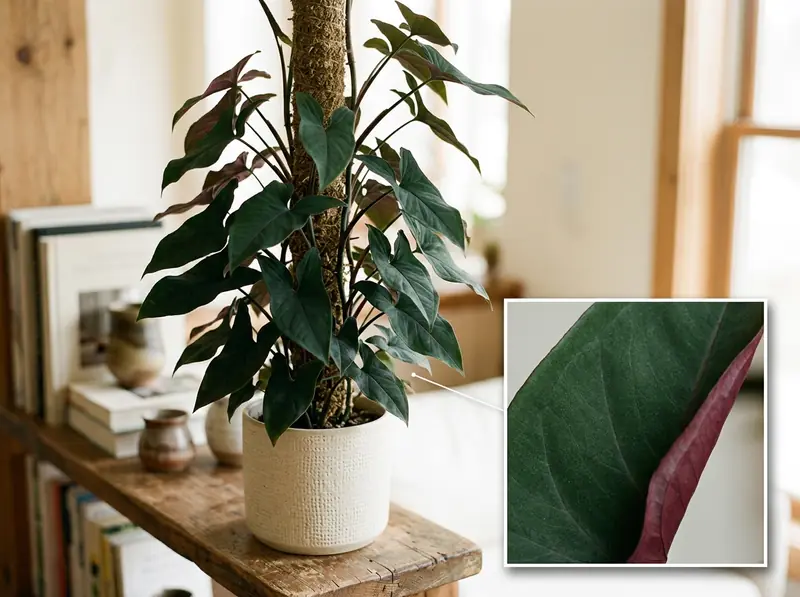
Llano Carti Road Syngonium
Syngonium erythrophyllum 'Llano Carti Road'
- Bright, indirect light
- Moderate watering
Pets: not yet checked AI-generated
 AI-generated
 AI-generated