
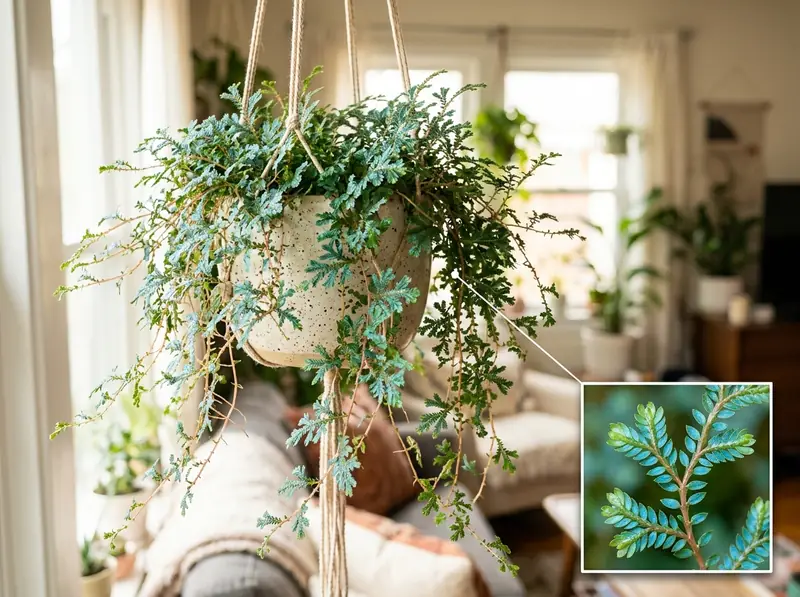
 AI-generated
Peacock Moss
Selaginella uncinata
Peacock moss is a soft, spreading, fern-relative groundcover with arching stems and an iridescent blue-green sheen. It is not a true moss and needs constant moisture and high humidity, so it does best in a terrarium, cloche, or humid bathroom. Keep it in gentle light and never let it dry out.
Saving is free with a KinClub account, and it works here and in the KinClub app. Sign up free
Care profile
- Light
- Medium lightLow → direct sun
- Water
- Keep moistAbout every 4 days
- Difficulty
- ModerateTricky → easy
- Coldest it tolerates
- 60°F
- Humidity
- High
- Mature size
- SmallSmall → tree-size
- Growth rate
- Fast
- How common
- CommonRare → everywhere
- Plant family
- Selaginellaceae
Pets and toxicity
Cats and dogs: not yet checked
Not yet checked against ASPCA — don't assume it's safe for pets.
No toxicity source on record for this plant yet. If a pet eats any houseplant, call your vet or an animal poison helpline.
How to care for Peacock Moss
Light
Give it bright shade to medium light, such as a spot a few feet back from an east window or near a north window. Avoid any direct sun, which scorches the delicate fronds.
Watering
Keep the soil evenly damp at all times, checking every 3 to 5 days, and never let it dry out fully. Use room-temperature rainwater, distilled, or filtered water if your tap water is hard, and avoid leaving the pot sitting in standing water.
Soil
Use a light, peat-based potting mix with some perlite or fine orchid bark that holds moisture but still drains. A slightly acidic mix works best.
Feeding
Feed lightly, about once a month in spring and summer, with a balanced liquid fertilizer diluted to quarter strength. Skip feeding in winter.
Repotting
Repot every year or two in spring, only when the mat has outgrown the pot, into a shallow pot just one size up. Its roots are shallow, so wide, shallow containers suit it better than deep ones.
Propagation
Lay 3 to 4 inch stem pieces on top of moist mix and pin them down gently, without burying. They root along the stem within a few weeks, especially under a clear cover for humidity.
Common problems
- Crispy brown fronds usually mean dry air or dry soil; raise humidity with a cloche or terrarium and keep the soil evenly damp.
- Brown, mushy stems at the center mean rot from soggy, stagnant soil; trim affected growth and improve air flow and drainage.
- Leggy, dull green growth means too little light; move it to a brighter spot without direct sun.
- Fine webbing or stippled fronds point to spider mites in dry air; rinse gently and raise humidity.
Similar plants
Same light needs and difficulty.
 AI-generated
 AI-generated
 AI-generated
 AI-generated