
 AI-generated
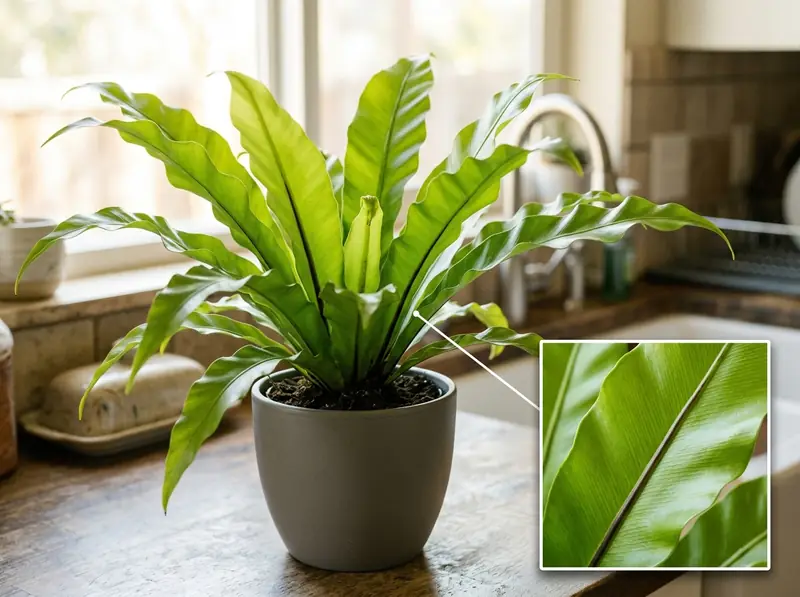
Bird's Nest Fern
Asplenium nidus
Bird's nest fern forms a rosette of bright green, wavy-edged, strap-like fronds rising from a central nest. It is easier to grow than most ferns and does well in a bright bathroom or a humid room out of direct sun. Keep the soil evenly damp and avoid pouring water into the center.
Saving is free with a KinClub account, and it works here and in the KinClub app. Sign up free
Care profile
- Light
- Medium lightLow → direct sun
- Water
- Keep moistAbout every 7 days
- Difficulty
- ModerateTricky → easy
- Coldest it tolerates
- 55°F
- Humidity
- High
- Mature size
- MediumSmall → tree-size
- Growth rate
- Moderate
- How common
- Very commonRare → everywhere
- Plant family
- Aspleniaceae
Pets and toxicity
Cats and dogs: not yet checked
Not yet checked against ASPCA — don't assume it's safe for pets.
No toxicity source on record for this plant yet. If a pet eats any houseplant, call your vet or an animal poison helpline.
How to care for Bird's Nest Fern
Light
Give it medium to bright-indirect light, such as a spot a few feet from an east window or in a bright bathroom. It tolerates fairly low light but grows slowly there. Keep it out of direct sun, which scorches the fronds.
Watering
Keep the soil lightly and evenly damp, like a wrung-out sponge, and never let it dry out completely or sit in water. This usually means watering about once a week, less in winter. Pour water around the edge of the pot rather than into the center of the rosette.
Soil
Use a light, airy, peat- or coir-based potting mix with added orchid bark and perlite, in a pot with drainage holes. The mix should hold moisture yet drain freely.
Feeding
Feed monthly in spring and summer with a balanced liquid fertilizer diluted to half strength. Skip feeding in fall and winter. This fern is sensitive to fertilizer burn, so err on the weak side.
Repotting
Repot only every 2 to 3 years, in spring, when roots fill the pot. Move up just one size, as it has a shallow root system and does not like being overpotted. Keep the crown at the same soil level.
Propagation
Bird's nest ferns do not make offsets or divide easily, and they are grown commercially from spores, which is slow and difficult at home. Most owners simply buy a new plant.
Common problems
- Brown, crispy frond tips: air is too dry or soil dried out. Mist is not enough; raise humidity with a humidifier or pebble tray and water more regularly.
- Yellowing fronds: usually overwatering or poor drainage. Let the top of the soil dry slightly and make sure the pot drains.
- Black or brown center of the rosette: water sitting in the crown. Water at the pot's edge and avoid misting the center.
- Scale or mealybugs on frond undersides: wipe off with a cloth dipped in rubbing alcohol or insecticidal soap; avoid oil sprays, which can damage fronds.
- Brown patches or bleached fronds: too much direct sun. Move to filtered light.
Similar plants
Same light needs and difficulty.
 AI-generated
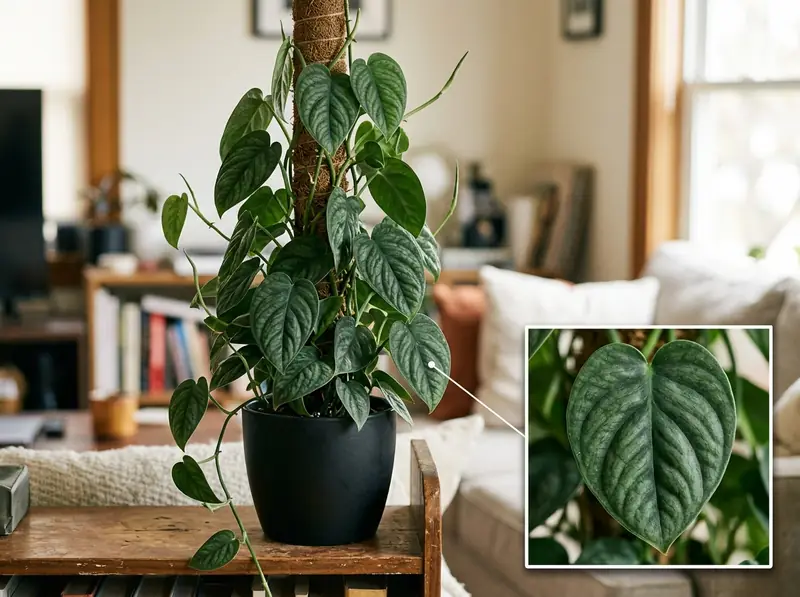
Mayari Scindapsus
Scindapsus mayari
- Medium to bright, indirect light
- Dry to moderate watering
Toxic to cats and dogs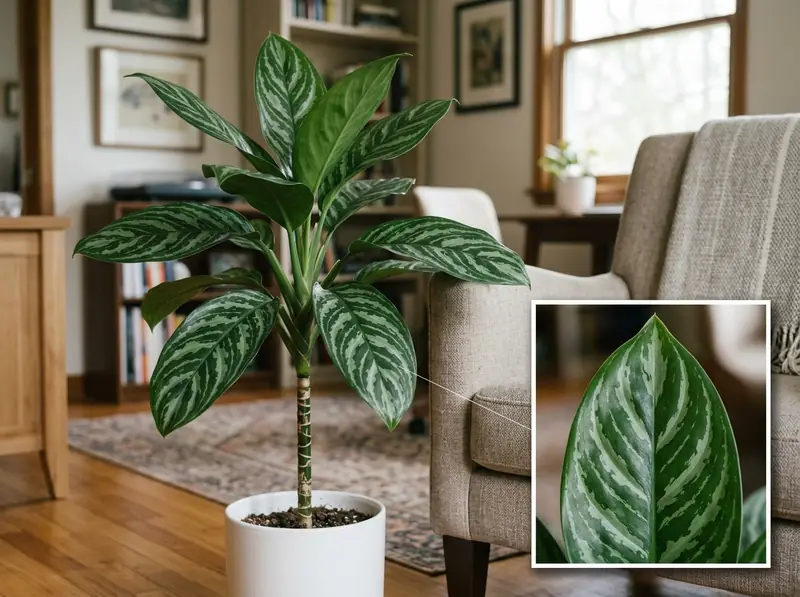 AI-generated
Queen of Dracaenas
Dracaena goldieana
- Medium to bright, indirect light
- Moderate watering
Toxic to cats and dogs AI-generated
 AI-generated