
 AI-generated
Penwiper Plant
Kalanchoe marmorata
Also known as Kalanchoe grandiflora, Kalanchoe kelleriana, Kalanchoe macrantha, Kalanchoe rutshuruensis, Kalanchoe somaliensis
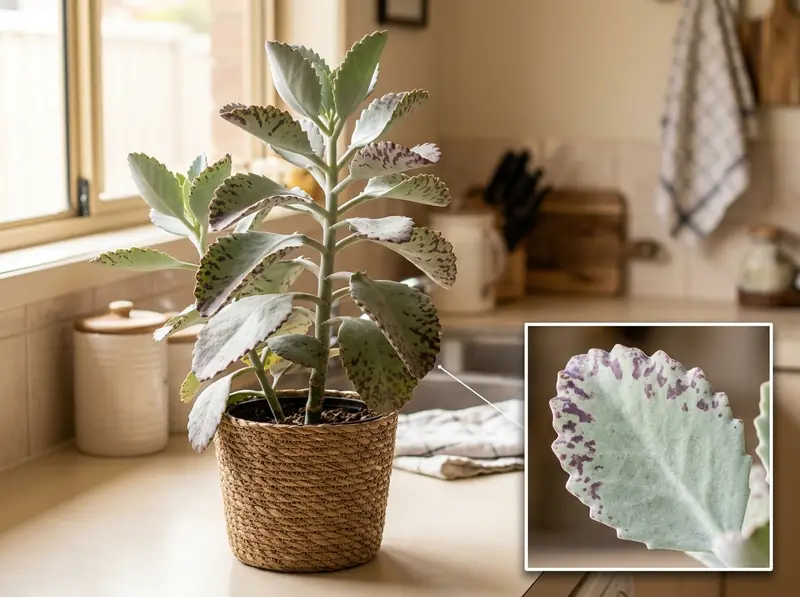
Penwiper plant is an upright succulent with large, scalloped, silvery-green leaves marked with purple-brown blotches. It is easy to grow on a bright windowsill and needs very little water. It can produce clusters of white tubular flowers in late winter or spring when it gets enough light.
Saving is free with a KinClub account, and it works here and in the KinClub app. Sign up free
Care profile
- Light
- Bright, indirect to direct sunLow → direct sun
- Water
- Let it dry outAbout every 14 days
- Difficulty
- EasyTricky → easy
- Coldest it tolerates
- 50°F
- Humidity
- Low
- Mature size
- Small to mediumSmall → tree-size
- Growth rate
- Slow to moderate
- How common
- CommonRare → everywhere
- Plant family
- Crassulaceae
Pets and toxicity
Toxic to cats
Keep away from cats. Call your vet or a pet poison helpline if a cat chews it.
Toxic to dogs
Keep away from dogs. Call your vet or a pet poison helpline if a dog chews it.
Source: ASPCA toxic and non-toxic plants. If a pet eats any houseplant, call your vet or an animal poison helpline.
How to care for Penwiper Plant
Light
Give it a bright spot with several hours of gentle morning or filtered sun, such as an east or lightly shaded south window. Avoid harsh midday sun through glass, which can scorch the leaves.
Watering
Water thoroughly, then let the soil dry out almost completely before watering again, about every 2 to 3 weeks in the growing season. Water only about once a month in winter.
Soil
Use a gritty cactus or succulent mix, or add about one-third perlite or coarse sand to ordinary potting soil. The pot must have drainage holes.
Feeding
Feed with a half-strength balanced or cactus fertilizer once a month in spring and summer. Do not feed in fall and winter.
Repotting
Repot every 2 to 3 years in spring, only into a pot 1 to 2 inches wider. Let the plant sit dry for a few days after repotting before watering.
Propagation
Take a leaf or stem cutting, let the cut end dry for a day or two, and set it on or in dry gritty mix. Water lightly once roots form, in 2 to 4 weeks. The plant also produces offsets at the base that can be separated.
Common problems
- Leggy, stretched stems: the light is too low, so move it to a brighter window and pinch back the tips.
- Mushy, yellowing leaves or a rotting stem base: the plant has been overwatered, so let the soil dry and cut off any rotten parts. Repot in fresh gritty mix if the roots are brown and soft.
- White cottony fluff in leaf joints: these are mealybugs, so dab them with rubbing alcohol on a cotton swab and repeat weekly until they are gone.
- White powdery coating on leaves: this is the plant's natural coating, not mildew, so avoid wiping or touching the leaves.
Similar plants
Same light needs and difficulty.
 AI-generated
 AI-generated
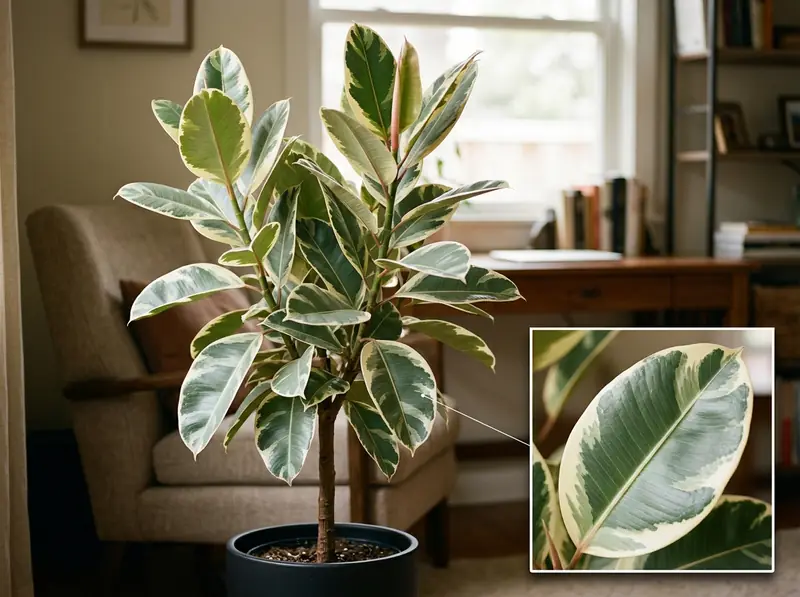
Tineke Rubber Plant
Ficus elastica 'Tineke'
- Bright, indirect light
- Moderate watering
Toxic to cats and dogs AI-generated
Chinese Money Plant
Pilea peperomioides
- Bright, indirect light
- Dry to moderate watering
Pets: not yet checked AI-generated
Christmas Cactus
Schlumbergera × buckleyi
- Bright, indirect light
- Moderate watering
Pets: not yet checked