
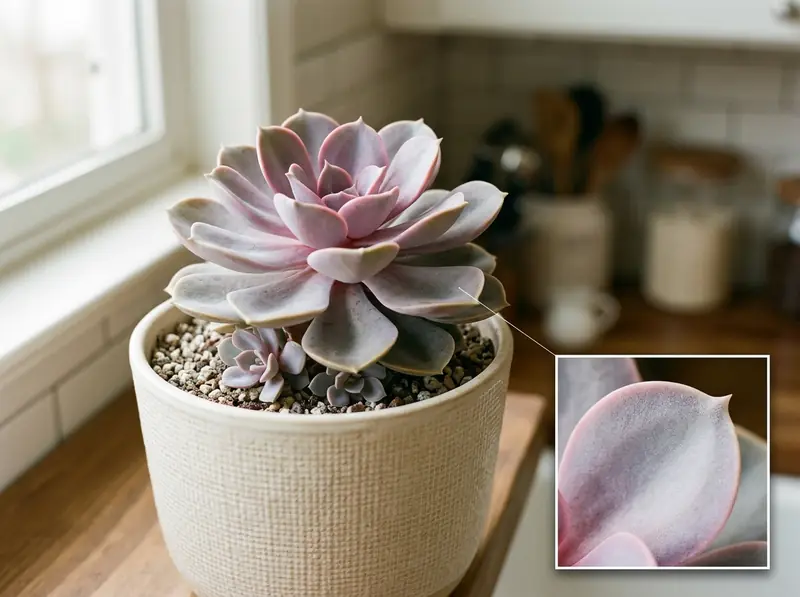
 AI-generated
Perle von Nürnberg Echeveria
Echeveria 'Perle von Nürnberg'
Perle von Nürnberg is a slow-growing echeveria hybrid with a tight rosette of plump, powdery grey leaves flushed with lavender and pink. It needs lots of direct sun and a gritty, fast-draining soil. It is easy to keep if you water sparingly, and it readily makes offsets.
Saving is free with a KinClub account, and it works here and in the KinClub app. Sign up free
Care profile
- Light
- Direct sunLow → direct sun
- Water
- Let it dry outAbout every 14 days
- Difficulty
- EasyTricky → easy
- Coldest it tolerates
- 40°F
- Humidity
- Low
- Mature size
- SmallSmall → tree-size
- Growth rate
- Slow to moderate
- How common
- Very commonRare → everywhere
Pets and toxicity
Cats and dogs: not yet checked
Not yet checked against ASPCA — don't assume it's safe for pets.
Source: ASPCA toxic and non-toxic plants. If a pet eats any houseplant, call your vet or an animal poison helpline.
How to care for Perle von Nürnberg Echeveria
Light
Give it at least 4-6 hours of direct sun, such as a south or west window, or bright light under a grow lamp. More light keeps the rosette tight and brings out the pink-purple tints.
Watering
Soak the soil thoroughly, then wait until it is completely dry, usually every 2-3 weeks in the growing season. In winter water only about once a month or less, just enough to keep the leaves from shriveling.
Soil
Use a gritty cactus or succulent mix, ideally with extra perlite or pumice (about half grit). Use a pot with a drainage hole; unglazed terracotta helps the soil dry quickly.
Feeding
Feed in spring and summer with a cactus fertilizer or a balanced one diluted to quarter or half strength, about once a month. Do not feed in fall and winter.
Repotting
Repot every 2-3 years in spring when offsets crowd the pot, into a container only slightly wider. Let the plant sit dry for a few days before watering after repotting.
Propagation
Twist off a healthy leaf, let the end callus for 2-3 days, and lay it on dry gritty soil, misting lightly once roots appear. Offsets (pups) can be cut off or pulled away, callused and potted up.
Common problems
- Stretching (etiolation): the plant is not getting enough light. Move it to a sunnier spot or add a grow lamp; the stretched growth will not shrink back but can be beheaded and re-rooted.
- Mushy, translucent leaves or a soft black stem: overwatering or poor drainage. Stop watering, and if the stem is rotting, cut above the damage, let it callus and re-root.
- White cottony clusters between leaves: mealybugs. Dab with cotton swabs dipped in rubbing alcohol and repeat weekly until gone.
- Lower leaves drying and papery: this is normal as the rosette ages, so just peel them off. If many leaves shrivel, the plant needs a thorough watering.
Similar plants
Same light needs and difficulty.
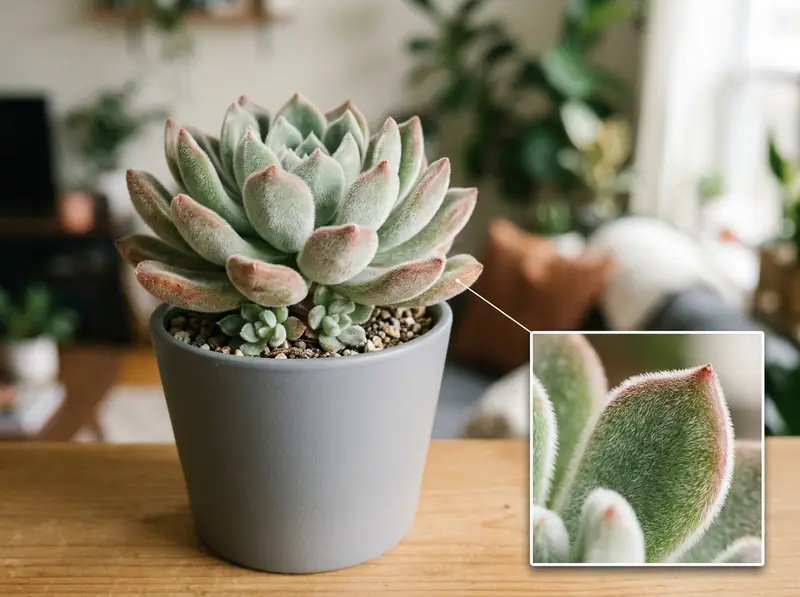 AI-generated
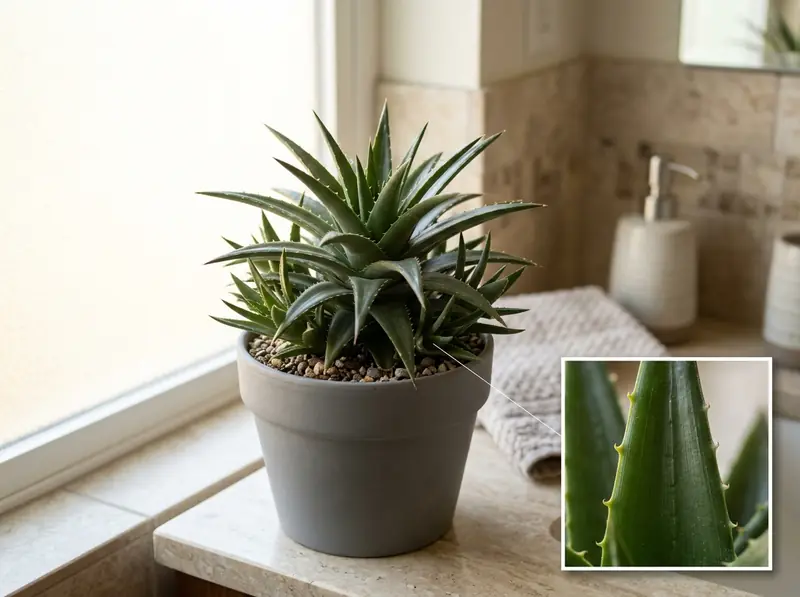 AI-generated
 AI-generated
 AI-generated