AI-generated image, not a photograph of this plant. Real plants look different depending on light, soil, temperature and age.
CactaceaeEnthusiast in stores
Peyote
Lophophora williamsii
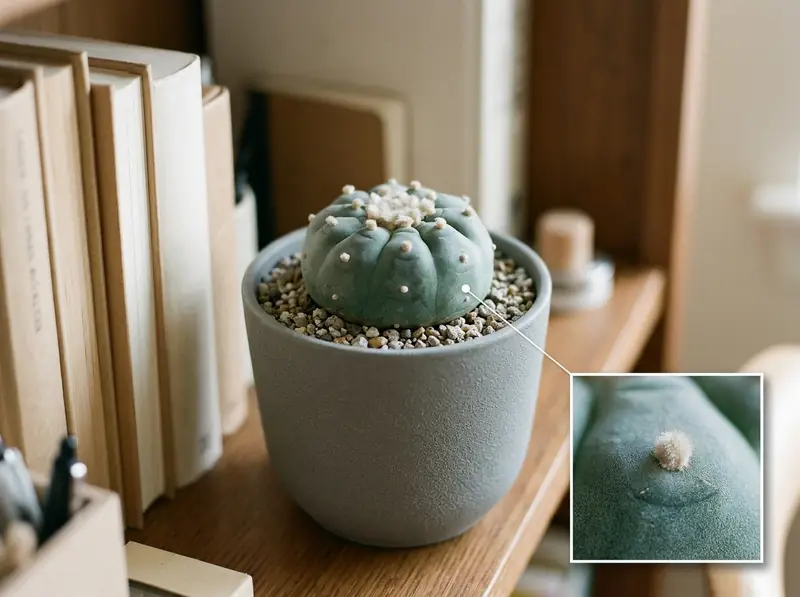
Peyote is a tiny, slow-growing, spineless cactus that forms a blue-green, flattened dome with soft tufts of hair. It needs lots of sun, very gritty soil, and infrequent watering, and does best with a cool, dry winter rest. It is easy to lose to overwatering but otherwise needs very little attention.
Pets: not yet checked
💡
Saving is free with a KinClub account, and it works here and in the KinClub app. Sign up free
🪴 Care profile
Light
Direct sunLow → direct sun
Water
Let it dry outAbout every 21 days
Difficulty
ModerateTricky → easy
Coldest it tolerates
40°F
Humidity
Low
Mature size
SmallSmall → tree-size
Growth rate
Slow
How common
EnthusiastRare → everywhere
Plant family
Cactaceae
🐾 Pets and toxicity
Cats and dogs: not yet checked
Not yet checked against ASPCA — don't assume it's safe for pets.
No toxicity source on record for this plant yet. If a pet eats any houseplant, call your vet or an animal poison helpline.
🌿 How to care for Peyote
Light
Give it several hours of direct sun daily, such as a south- or west-facing window. Introduce it to stronger sun gradually over a couple of weeks to avoid scorching.
Watering
From spring to early autumn, soak thoroughly only when the soil is completely dry, roughly every 2 to 4 weeks. Stop watering in winter while the plant rests in a cool spot.
Soil
Use a very gritty cactus mix, ideally about 70 to 80 percent mineral material such as pumice, perlite or coarse sand. Use an unglazed clay pot with a drainage hole.
Feeding
Feed sparingly, at most once or twice in the growing season, using a low-nitrogen cactus fertilizer at half strength. Do not feed in winter.
Repotting
Repot only every 3 to 4 years, or when it fills the pot, into a slightly larger, fairly shallow pot. Wait a week after repotting before watering so damaged roots can heal.
Propagation
Seed is the usual method, and it is slow, with seedlings taking years to reach size. Mature plants sometimes produce offsets, which can be cut off, callused for a week, and rooted in dry gritty mix.
Common problems
Rot at the base from overwatering: remove the plant, cut away all soft tissue, let it dry for several weeks and re-root it, though severe rot is often fatal.
Stretching or pale, thin growth from too little light: move to a sunnier spot gradually, since the stretched growth will not shrink back.
Mealybugs in the crown or roots: dab with cotton swabs dipped in rubbing alcohol and repeat weekly until gone.
Scorch spots after a sudden move into sun: move it back to lighter sun and re-acclimate slowly; the marks will remain but stop spreading.
Shriveling in summer: if the soil is dry, give a thorough soak; if the soil is damp, check the roots for rot.

 AI-generated
 AI-generated
 AI-generated
 AI-generated
 AI-generated