AI-generated image, not a photograph of this plant. Real plants look different depending on light, soil, temperature and age.
EuphorbiaceaeEnthusiast in stores
Pine Cone Plant
Euphorbia bupleurifolia
Pine cone plant is a small euphorbia whose swollen stem is covered in scaly, pine cone-like knobs, topped with a tuft of narrow green leaves. It is slow and best for a bright sill, with careful watering and a dry winter rest.
Pets: not yet checked
💡
Saving is free with a KinClub account, and it works here and in the KinClub app. Sign up free
🪴 Care profile
Light
Direct sunLow → direct sun
Water
Let it dry outAbout every 21 days
Difficulty
ModerateTricky → easy
Coldest it tolerates
50°F
Humidity
Low
Mature size
SmallSmall → tree-size
Growth rate
Slow
How common
EnthusiastRare → everywhere
Plant family
Euphorbiaceae
🐾 Pets and toxicity
Cats and dogs: not yet checked
Not yet checked against ASPCA — don't assume it's safe for pets.
No toxicity source on record for this plant yet. If a pet eats any houseplant, call your vet or an animal poison helpline.
🌿 How to care for Pine Cone Plant
Light
Bright light with some direct sun, such as an east or south window. Good light keeps the knobby stem tight and the leaf tuft full.
Watering
Water sparingly when the soil is fully dry, about every 3 weeks during the growing season. Keep it almost dry during the winter rest when the leaves drop.
Soil
A very gritty mix, such as cactus soil with about half pumice or sand, in a small pot with excellent drainage.
Feeding
Feed lightly 2 or 3 times in the growing season with a diluted cactus fertilizer.
Repotting
Repot rarely, every 3 to 4 years, in spring into a pot just slightly larger. The milky sap stings skin and eyes, so wear gloves and glasses when cutting or repotting, and rinse any sap off right away.
Propagation
Mainly grown from seed, which is slow; offsets are rare. Sow fresh seed in a gritty mix and keep it warm.
Common problems
Rot from overwatering, especially in the winter rest: water far less and keep it warm and dry.
Leaf drop in winter is normal dormancy, not a problem: wait for new leaves in spring.
Mealybugs in the knobby crevices: dab them with alcohol on a swab.

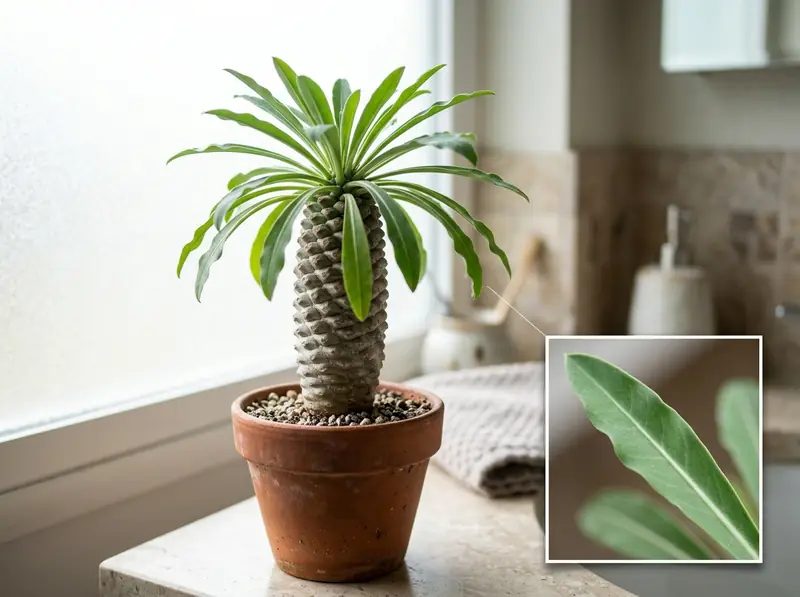 AI-generated
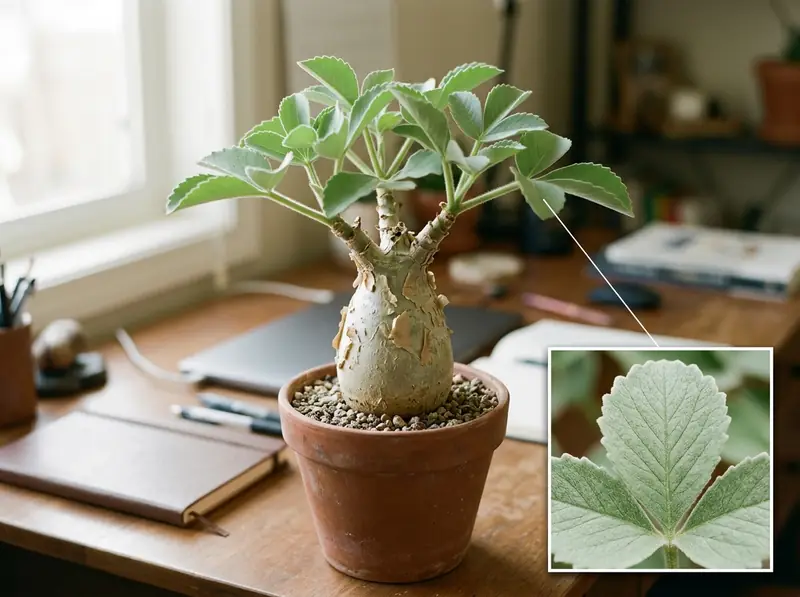 AI-generated
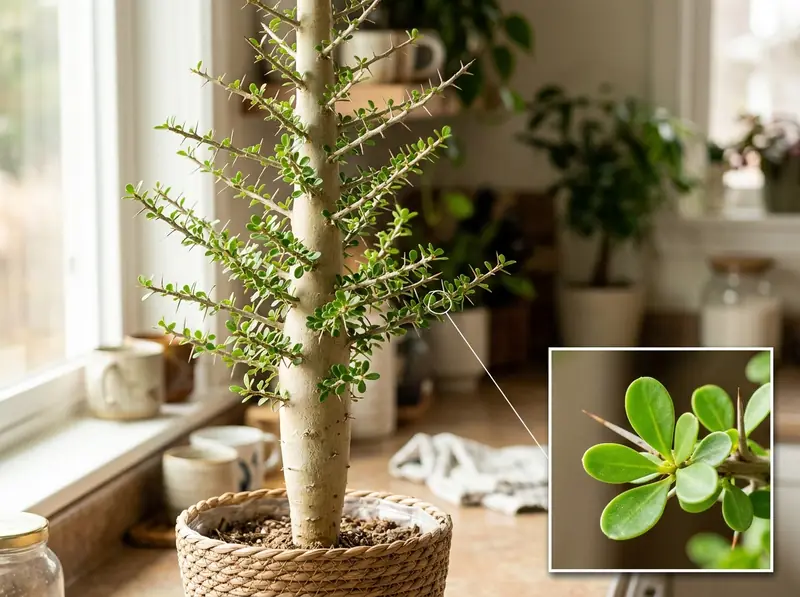 AI-generated
 AI-generated
 AI-generated