
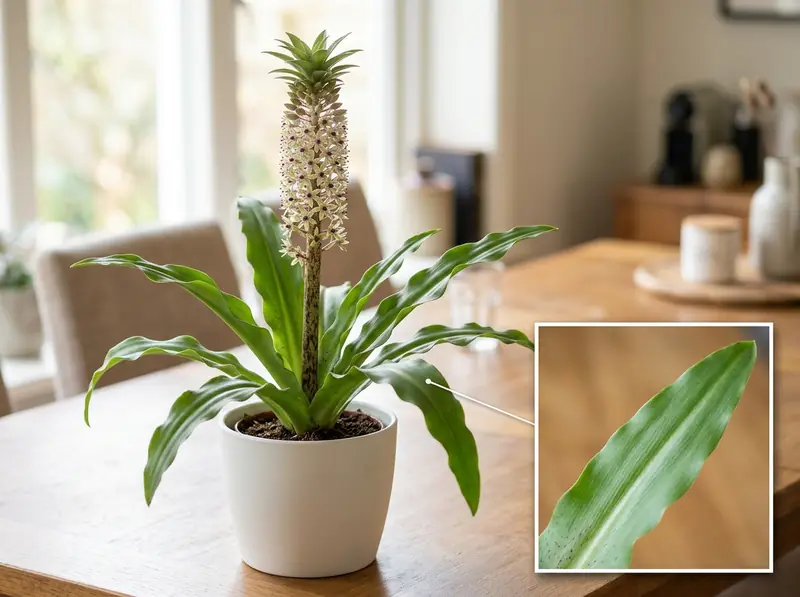
 AI-generated
Pineapple Lily
Eucomis comosa
Pineapple lily is a bulb that forms a rosette of strappy leaves and, in summer, a tall spike of starry flowers topped with a tuft of leaves, like a pineapple. It needs lots of sun, regular water while growing and a cool, dry winter rest. Plan on a bright window and a frost-free dormant spot.
Saving is free with a KinClub account, and it works here and in the KinClub app. Sign up free
Care profile
- Light
- Direct sunLow → direct sun
- Water
- Moderate wateringAbout every 7 days
- Difficulty
- Easy to moderateTricky → easy
- Coldest it tolerates
- 35°F
- Humidity
- Medium
- Mature size
- MediumSmall → tree-size
- Growth rate
- Moderate
- How common
- CommonRare → everywhere
- Plant family
- Asparagaceae
Pets and toxicity
Cats and dogs: not yet checked
Not yet checked against ASPCA — don't assume it's safe for pets.
No toxicity source on record for this plant yet. If a pet eats any houseplant, call your vet or an animal poison helpline.
How to care for Pineapple Lily
Light
Give it several hours of direct sun, such as a south or west window, during the growing season. In lower light it gets floppy and rarely flowers.
Watering
From spring to late summer, water thoroughly when the top inch of soil is dry, roughly weekly, and let excess drain away. Reduce watering as leaves yellow in autumn and keep the bulb dry through winter dormancy.
Soil
Use a well-draining potting mix with about one-third added coarse sand, perlite or grit. Plant the bulb with its neck just at or slightly below the soil surface.
Feeding
Feed every 2-3 weeks with a high-potash liquid fertilizer, such as tomato feed, at half strength from when growth is active until flowers fade. Stop feeding when leaves begin to die back.
Repotting
Repot in early spring, just as new growth starts, every 2-3 years or when the bulb crowds the pot. Choose a pot only 1-2 inches wider, as the bulb flowers best when snug.
Propagation
Separate offset bulbs in spring when repotting and pot them individually; they may take 2-3 years to flower. Seed and leaf cuttings also work but are slower.
Common problems
- Leaves flop and flower stalk leans: move to a sunnier spot and stake the stalk if needed.
- Bulb rot from wet soil, especially in winter: lift the bulb, cut away soft parts, dry it and repot in gritty mix.
- No flowers: usually too little light, too little feeding or too warm a winter rest; give full sun and a cool dry dormancy.
- Spider mites or mealybugs on leaves: wipe with a damp cloth or spray with insecticidal soap, repeating weekly.
Similar plants
Same light needs and difficulty.
 AI-generated
 AI-generated
 AI-generated
 AI-generated