
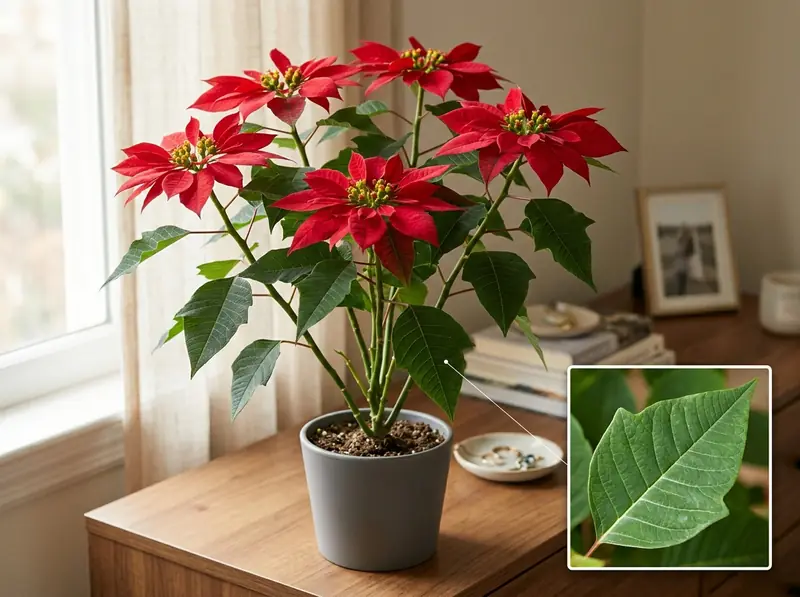
 AI-generated
Poinsettia
Euphorbia pulcherrima
Poinsettia is a holiday plant grown for its colorful bracts, which look like flowers and last for months indoors. It likes bright indirect light, warm rooms without drafts, and careful watering that never leaves it soggy. Getting it to color up again next year is possible but takes strict dark nights in autumn.
Saving is free with a KinClub account, and it works here and in the KinClub app. Sign up free
Care profile
- Light
- Bright, indirect lightLow → direct sun
- Water
- Moderate wateringAbout every 7 days
- Difficulty
- ModerateTricky → easy
- Coldest it tolerates
- 50°F
- Humidity
- Medium
- Mature size
- MediumSmall → tree-size
- Growth rate
- Moderate
- How common
- EverywhereRare → everywhere
- Plant family
- Euphorbiaceae
Pets and toxicity
Toxic to cats
Keep away from cats. Call your vet or a pet poison helpline if a cat chews it.
Toxic to dogs
Keep away from dogs. Call your vet or a pet poison helpline if a dog chews it.
Source: ASPCA toxic and non-toxic plants. If a pet eats any houseplant, call your vet or an animal poison helpline.
How to care for Poinsettia
Light
Give it at least 6 hours of bright light a day, such as a south, east or west window with filtered sun. Avoid contact with cold glass.
Watering
Water thoroughly when the top inch of soil feels dry, until water drains from the bottom, then empty the saucer. Never let the pot sit in water, and don't let it dry out completely.
Soil
Use a well-draining, peat- or coir-based potting mix with some perlite. The pot must have drainage holes.
Feeding
Feed with a balanced houseplant fertilizer at half strength every 2 to 4 weeks during spring and summer growth. Don't feed while the bracts are in color in winter.
Repotting
Repot in spring, after the bracts fade and the plant has been cut back, into a pot 1 to 2 inches wider. Plants sold in winter rarely need repotting right away.
Propagation
Take 4 to 6 inch stem tip cuttings in late spring or early summer, let the milky sap dry, dip in rooting hormone and root in moist mix in a warm spot. Wear gloves, as the sap irritates skin.
Common problems
- Leaves drop suddenly after purchase: caused by cold drafts or chill; keep it above 60°F and away from doors and vents.
- Yellowing lower leaves: usually overwatering or poor drainage; let the top inch dry and empty the saucer.
- Bracts won't recolor the next year: it needs about 14 hours of complete darkness nightly from October for 8 to 10 weeks, plus bright days.
- Tiny white flying insects under leaves: whiteflies; use yellow sticky traps and spray with insecticidal soap weekly.
- Gray fuzzy mold on bracts or stems: botrytis from damp, stagnant air; remove affected parts and improve airflow.
Similar plants
Same light needs and difficulty.
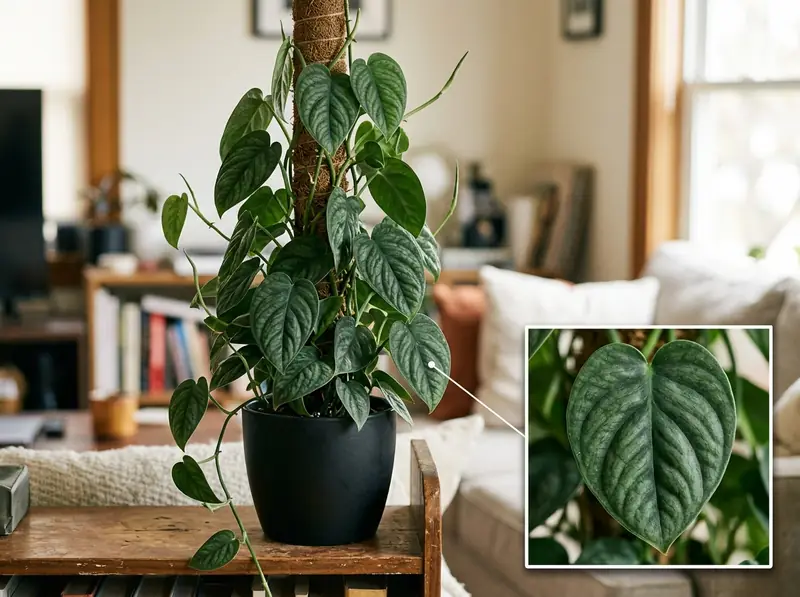 AI-generated
Mayari Scindapsus
Scindapsus mayari
- Medium to bright, indirect light
- Dry to moderate watering
Toxic to cats and dogs AI-generated
 AI-generated
 AI-generated