AI-generated image, not a photograph of this plant. Real plants look different depending on light, soil, temperature and age.
AraceaeEnthusiast in stores
Porte's Alocasia
Alocasia portei
Porte's alocasia grows a thick, bark-like trunk topped with deeply lobed, glossy green leaves, giving a palm-like look. It becomes a statement floor plant over several years. It wants warmth, bright light, and even moisture.
Toxic to cats and dogs
💡
Saving is free with a KinClub account, and it works here and in the KinClub app. Sign up free
🪴 Care profile
Light
Bright, indirect lightLow → direct sun
Water
Moderate wateringAbout every 7 days
Difficulty
ModerateTricky → easy
Coldest it tolerates
55°F
Humidity
Medium to high
Mature size
Large to tree-sizeSmall → tree-size
Growth rate
Moderate to fast
How common
EnthusiastRare → everywhere
Plant family
Araceae
🐾 Pets and toxicity
Toxic to cats
Keep away from cats. Call your vet or a pet poison helpline if a cat chews it.
Toxic to dogs
Keep away from dogs. Call your vet or a pet poison helpline if a dog chews it.
Bright indirect light is ideal, with a few hours of gentle morning sun at most. Keep it away from hot midday sun, which scorches the thick glossy leaves, and turn the pot occasionally.
Watering
Water when the top 2 inches are dry, about every 7 to 10 days in the growing season and less in winter. Use lukewarm water and let the pot drain fully.
Soil
Use a fast-draining aroid mix, such as potting soil with extra perlite and bark so roots stay airy.
Feeding
Feed every 4 weeks from spring through summer with balanced liquid fertilizer at half strength.
Repotting
Repot every 2 years in spring into a heavy pot only slightly larger, since it grows tall and top-heavy.
Propagation
Separate offsets or divide the base in spring; plants grown from corms root more slowly than those from offsets.
Common problems
Spider mites thrive in dry heated air; rinse leaves and treat with insecticidal soap.
Leaf drop in winter usually means cold drafts or wet soil; keep it above 55F.
Brown leaf edges point to low humidity or inconsistent watering.

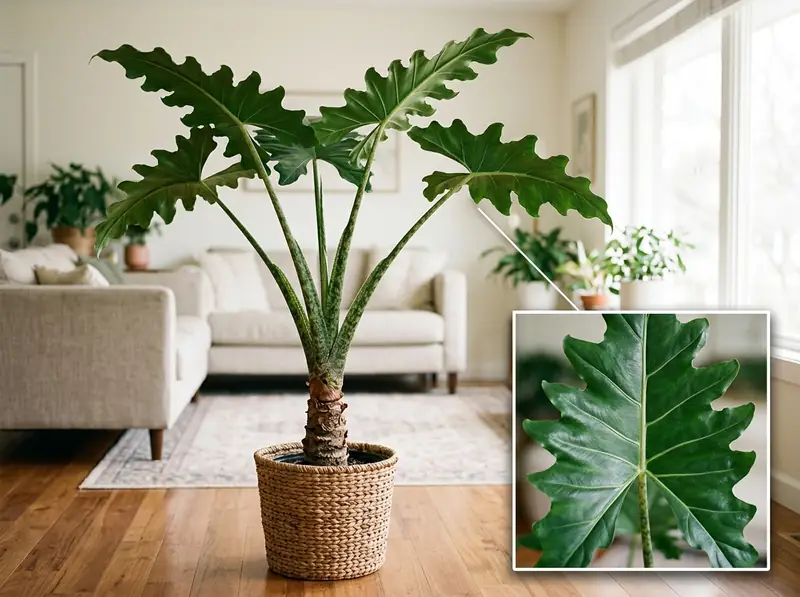 AI-generated
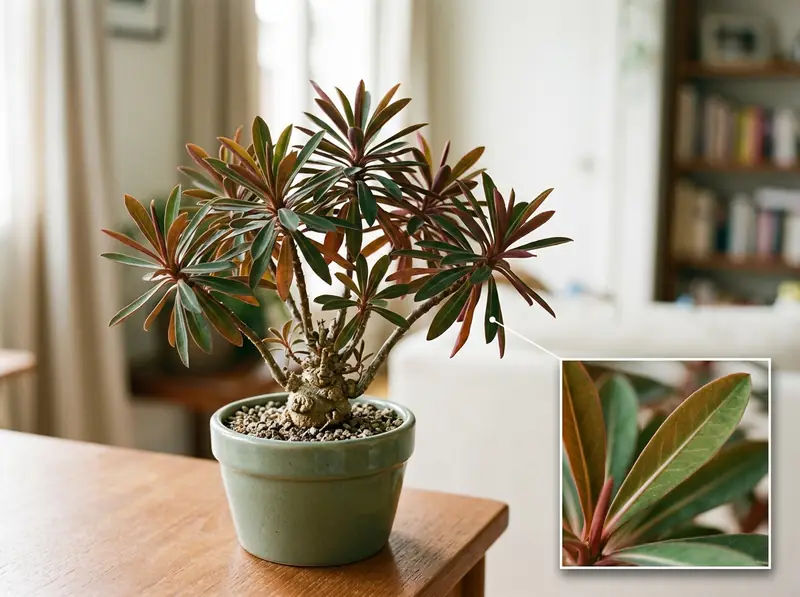 AI-generated
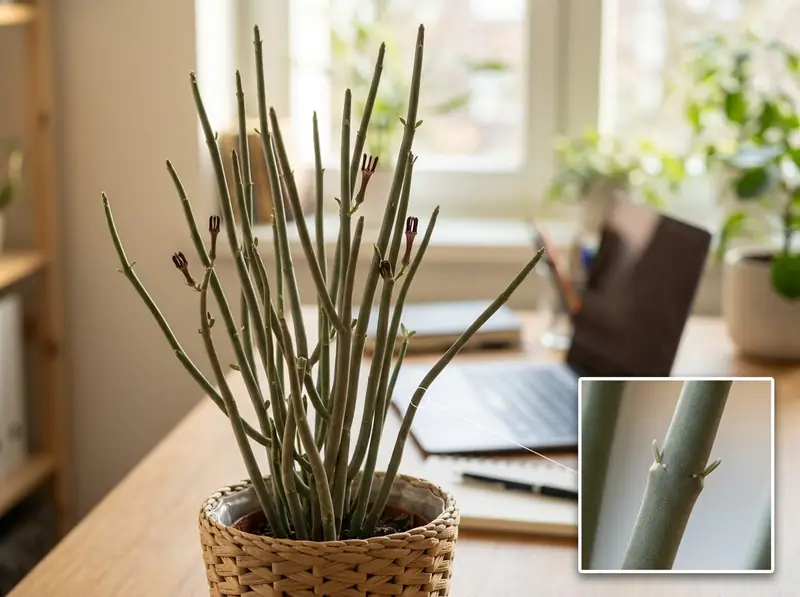 AI-generated
 AI-generated
 AI-generated