AI-generated image, not a photograph of this plant. Real plants look different depending on light, soil, temperature and age.
ApocynaceaeEnthusiast in stores
Pubera Hoya
Hoya pubera
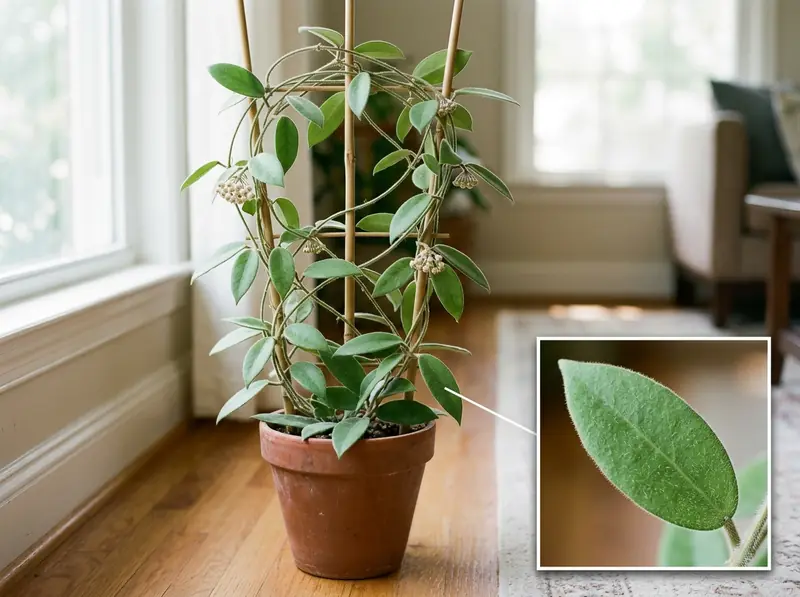
Hoya pubera is a climbing hoya with softly hairy stems and leaves and small clusters of flowers. Its fuzzy foliage prefers to stay dry when watered. Give it bright light, warmth and a trellis.
Pets: not yet checked
💡
Saving is free with a KinClub account, and it works here and in the KinClub app. Sign up free
🪴 Care profile
Light
Bright, indirect lightLow → direct sun
Water
Dry to moderate wateringAbout every 9 days
Difficulty
ModerateTricky → easy
Coldest it tolerates
60°F
Humidity
Medium to high
Mature size
Medium to largeSmall → tree-size
Growth rate
Moderate
How common
EnthusiastRare → everywhere
Plant family
Apocynaceae
🐾 Pets and toxicity
Cats and dogs: not yet checked
Not yet checked against ASPCA — don't assume it's safe for pets.
No toxicity source on record for this plant yet. If a pet eats any houseplant, call your vet or an animal poison helpline.
🌿 How to care for Pubera Hoya
Light
Bright, indirect light. Gentle morning sun is fine, but midday sun scorches its softly hairy leaves.
Watering
Water at the base when the top inch or two of mix is dry, about every 8-10 days in summer. Avoid wetting the foliage.
Soil
Chunky, fast-draining mix: roughly equal parts orchid bark, perlite and a little potting soil or coco coir. Roots need air around them.
Feeding
Feed every 3-4 weeks in spring and summer with a balanced fertilizer at half strength; skip it in winter. A bloom-booster with more phosphorus helps flowering.
Repotting
Repot only every 2-3 years, in spring, when roots fill the pot. Go up one size at most, since hoyas bloom best slightly rootbound.
Propagation
Take a 4-6 inch stem cutting with at least two nodes. Root it in water, moist perlite or sphagnum moss; roots appear in 3-6 weeks.
Common problems
Water sitting on hairy leaves causes spotting; water the soil and keep foliage dry.
Mealybugs hide in the fuzz and are hard to see. Inspect closely and treat with soap spray.
Leaf drop in winter often comes from cold drafts below 55 F. Move it somewhere warmer.

 AI-generated
 AI-generated
 AI-generated
 AI-generated
 AI-generated