Skip to content
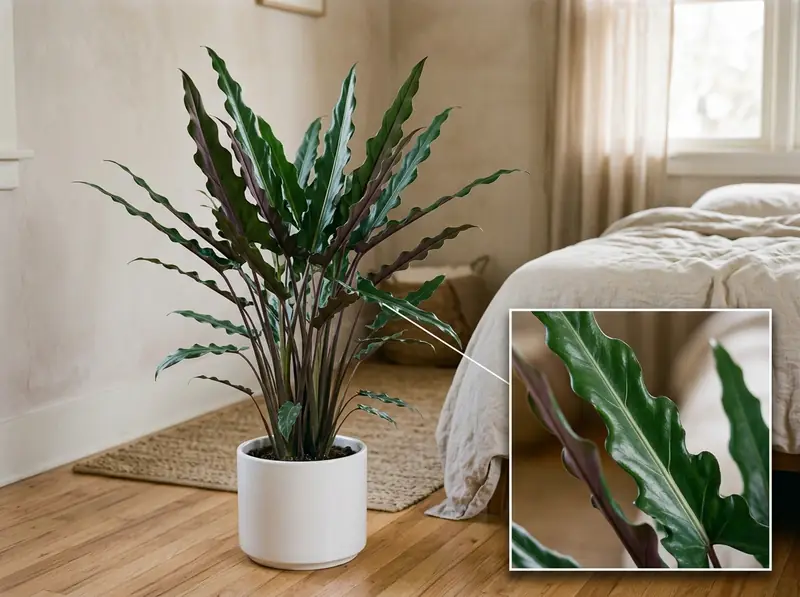
AI-generated image of Purple Sword Alocasia AI-generated
AI-generated image, not a photograph of this plant. Real plants look different depending on light, soil, temperature and age.
AraceaeRare in stores

Purple Sword Alocasia

Alocasia lauterbachiana

Also known as Alocasia wavriniana

Purple Sword is an Alocasia with long, wavy, sword-shaped leaves that are deep green on top and purple underneath. It grows about 2 to 3 feet tall and likes bright indirect light and humid, warm air.

Toxic to cats and dogs

Saving is free with a KinClub account, and it works here and in the KinClub app. Sign up free

Care profile

Light
Bright, indirect lightLow → direct sun
Water
Moderate wateringAbout every 7 days
Difficulty
ModerateTricky → easy
Coldest it tolerates
60°F
Humidity
High
Mature size
Medium to largeSmall → tree-size
Growth rate
Moderate
How common
RareRare → everywhere
Plant family
Araceae

Pets and toxicity

Toxic to cats

Keep away from cats. Call your vet or a pet poison helpline if a cat chews it.

Toxic to dogs

Keep away from dogs. Call your vet or a pet poison helpline if a dog chews it.

Source: ASPCA toxic and non-toxic plants. If a pet eats any houseplant, call your vet or an animal poison helpline.

How to care for Purple Sword Alocasia

Light

Bright, indirect light from an east window or a spot back from a south or west one. Direct sun scorches the long sword-shaped leaves.

Watering

Water when the top inch or two of soil is dry, about weekly in summer and every 10 to 14 days in winter. Keep it evenly moist, never soggy.

Soil

Chunky, fast-draining aroid mix: about 2 parts potting soil, 1 part orchid bark, and 1 part perlite. Soil should never stay waterlogged.

Feeding

Feed every 2 to 3 weeks in spring and summer with a balanced fertilizer at half strength. Skip it in fall and winter.

Repotting

Repot every 1 to 2 years in spring into a pot one size larger. Use a tall, stable pot, and divide offsets while repotting.

Propagation

Divide offset rhizomes and corms at repotting, keeping roots attached, and pot them up in damp mix. Keep warm and humid.

Common problems

  • Spider mites cause speckling on the narrow blades. Wipe leaves and spray insecticidal soap weekly until the webbing is gone.
  • Yellow leaves with soft stems mean wet soil. Allow the top inch to dry and check roots for rot.
  • Brown leaf tips come from dry air. Keep humidity above 50 percent with a humidifier or grouped plants.

Same light needs and difficulty.

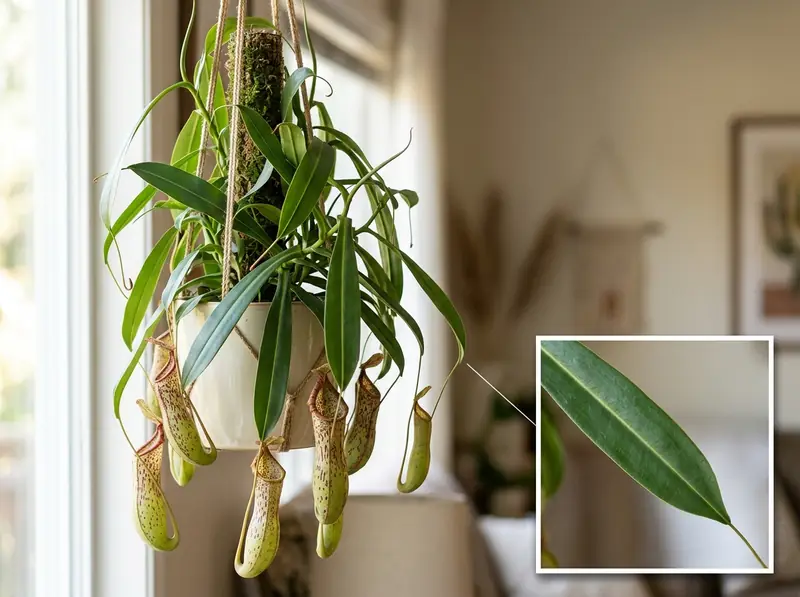
  • AI-generated image of Maxima Pitcher Plant AI-generated
    ✦ Rare find

    Maxima Pitcher Plant

    Nepenthes maxima

    • Bright, indirect light
    • Keep moist
    Pets: not yet checked
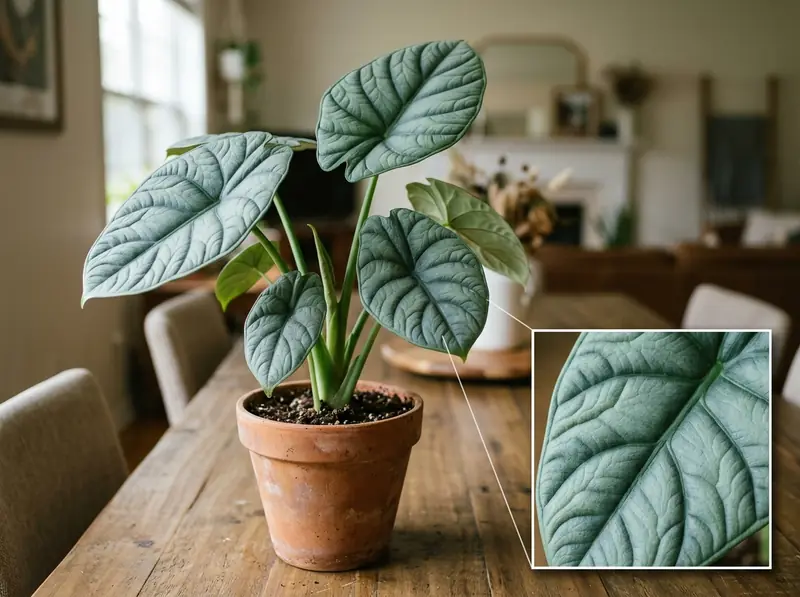
  • AI-generated image of Mayan Mask Alocasia AI-generated
    ✦ Rare find

    Mayan Mask Alocasia

    Alocasia 'Mayan Mask'

    • Bright, indirect light
    • Moderate to moist watering
    Toxic to cats and dogs
  • AI-generated image of African Violet AI-generated

    African Violet

    Saintpaulia ionantha

    • Bright, indirect light
    • Moderate watering
    Pets: not yet checked
  • AI-generated image of Boston Fern AI-generated

    Boston Fern

    Nephrolepis exaltata

    • Bright, indirect light
    • Keep moist
    Non-toxic to cats and dogs