
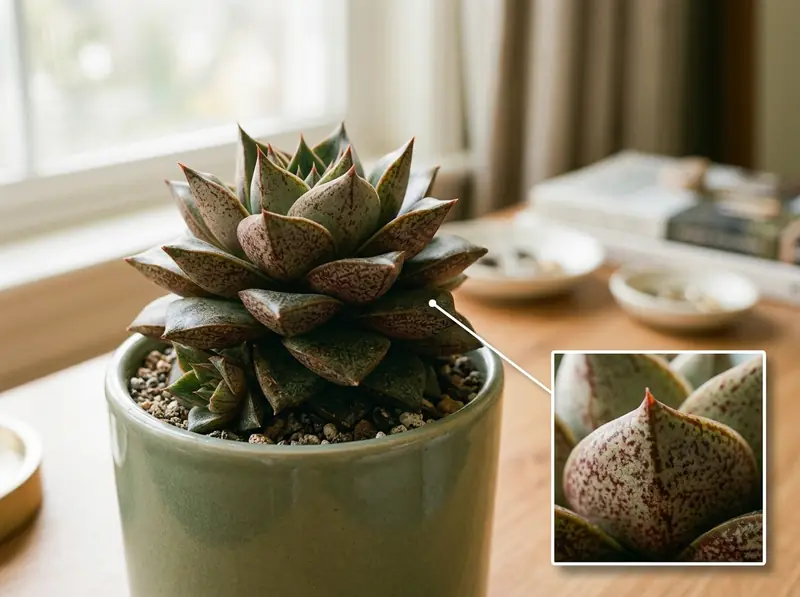
 AI-generated
Purpusorum Echeveria
Echeveria purpusorum
Echeveria purpusorum is a small, slow-growing succulent from Mexico. It forms a tight rosette of thick, pointed, grey-green leaves with reddish-brown markings and edges. It needs lots of sun, a gritty fast-draining mix and infrequent watering, which makes it an easy choice for a sunny windowsill.
Saving is free with a KinClub account, and it works here and in the KinClub app. Sign up free
Care profile
- Light
- Direct sunLow → direct sun
- Water
- Let it dry outAbout every 14 days
- Difficulty
- EasyTricky → easy
- Coldest it tolerates
- 40°F
- Humidity
- Low
- Mature size
- SmallSmall → tree-size
- Growth rate
- Slow
- How common
- CommonRare → everywhere
- Plant family
- Crassulaceae
Pets and toxicity
Cats and dogs: not yet checked
Not yet checked against ASPCA — don't assume it's safe for pets.
Source: ASPCA toxic and non-toxic plants. If a pet eats any houseplant, call your vet or an animal poison helpline.
How to care for Purpusorum Echeveria
Light
Give it at least 4-6 hours of bright light, including some direct sun, such as a south or west window. Without enough sun it stretches and loses its colour.
Watering
Soak the soil thoroughly, then wait until it is completely dry before watering again, usually every 2-3 weeks in summer. In winter, water only about once a month or less.
Soil
Use a gritty cactus or succulent mix, or mix regular potting soil with about half perlite or pumice. The pot must have drainage holes.
Feeding
Feed with a diluted cactus fertiliser (quarter to half strength) once a month in spring and summer. Do not feed in autumn and winter.
Repotting
Repot every 2-3 years, or when offsets crowd the pot, in spring. Use a shallow pot only slightly wider than the rosette, and wait a few days after repotting before watering.
Propagation
Twist off offsets or pull off a healthy leaf, and let the cut end dry for a few days. Set it on dry gritty soil, mist lightly when it is dry, and it will root in several weeks.
Common problems
- Stretched, leggy growth from low light: move it to a sunnier window and, if needed, behead the rosette and re-root it.
- Soft, mushy base from overwatering or poor drainage: unpot, cut away rotted tissue, let it dry for several days, and repot in fresh gritty mix.
- White cottony mealybugs in leaf crevices: dab them with cotton swabs dipped in rubbing alcohol and repeat weekly until gone.
- Dry lower leaves: this is normal as the plant ages, so gently pull them off to prevent pests and rot.
Similar plants
Same light needs and difficulty.
 AI-generated
 AI-generated
 AI-generated
 AI-generated