
 AI-generated
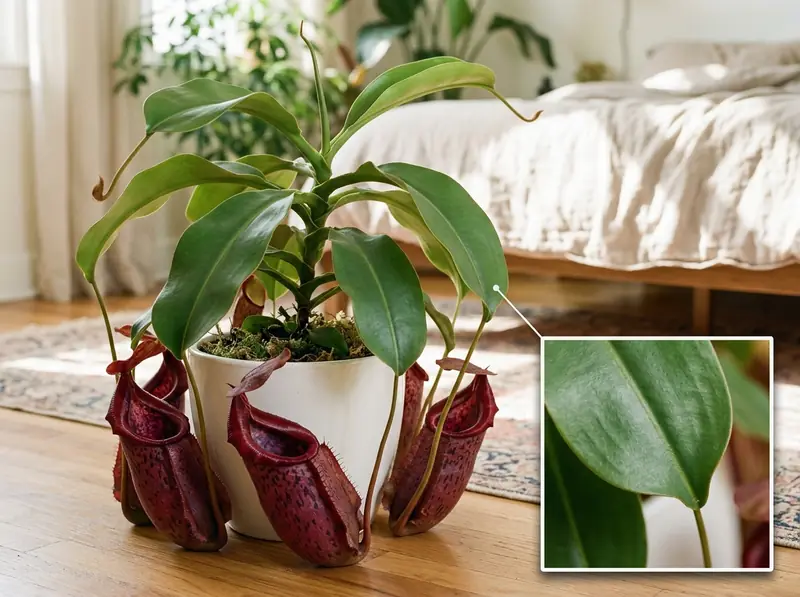
Rajah Pitcher Plant
Nepenthes rajah
Rajah pitcher plant is the giant of the Nepenthes world, a rare highland species from Borneo that forms huge pitchers and is best suited to experienced growers. It needs cool nights, very high humidity, strong light and pure water, which is easiest in a terrarium or grow tent. Growth is slow, and mature plants are expensive.
Saving is free with a KinClub account, and it works here and in the KinClub app. Sign up free
Care profile
- Light
- Bright, indirect lightLow → direct sun
- Water
- Keep moistAbout every 3 days
- Difficulty
- ChallengingTricky → easy
- Coldest it tolerates
- 45°F
- Humidity
- High
- Mature size
- MediumSmall → tree-size
- Growth rate
- Slow
- How common
- EnthusiastRare → everywhere
- Plant family
- Nepenthaceae
Pets and toxicity
Cats and dogs: not yet checked
Not yet checked against ASPCA — don't assume it's safe for pets.
No toxicity source on record for this plant yet. If a pet eats any houseplant, call your vet or an animal poison helpline.
How to care for Rajah Pitcher Plant
Light
Give very bright light: an east window, or a south/west window with some filtering, or 12-14 hours under a strong full-spectrum grow light placed 12-18 inches above the plant. Gentle morning sun is fine, but hot midday sun scorches the leaves.
Watering
Keep the medium constantly damp but not stagnant, and water from the top whenever the surface starts to dry, roughly every 2-4 days. Use only rainwater, distilled or reverse-osmosis water, and let excess drain freely.
Soil
Use a very airy, low-nutrient mix such as 2 parts long-fibre sphagnum moss or peat, 1 part perlite and 1 part orchid bark or coarse pumice. Never use regular potting soil or fertilised mixes.
Feeding
Little feeding is needed. Mist or dab a quarter-strength orchid fertiliser on the leaves once a month in the growing season, or put a tiny amount in a few pitchers. Do not fertilise the soil.
Repotting
Repot every 1-2 years in spring, only when roots fill the pot, into a pot 2 inches wider. Handle the roots gently and keep a deep, sturdy pot because this species gets large and top-heavy.
Propagation
Hard at home: it is usually grown from seed, which is slow and needs constant humidity. Stem cuttings with 2-3 leaves can work in sphagnum under high humidity but root slowly and unreliably.
Common problems
- Brown, crisping leaf tips: usually mineral buildup or dry air, so switch to pure water and raise humidity to 70% or more.
- No pitchers forming: light or humidity is too low, so move closer to a window or grow light and use a humidifier or enclosure.
- Plant struggles in heat: Rajah is a highland plant and dislikes nights above about 65°F, so provide a 10-15°F nighttime drop.
- Mealybugs or scale on stems and leaf bases: dab with cotton swab and rubbing alcohol, or use insecticidal soap, repeated weekly.
Similar plants
Same light needs and difficulty.
 AI-generated
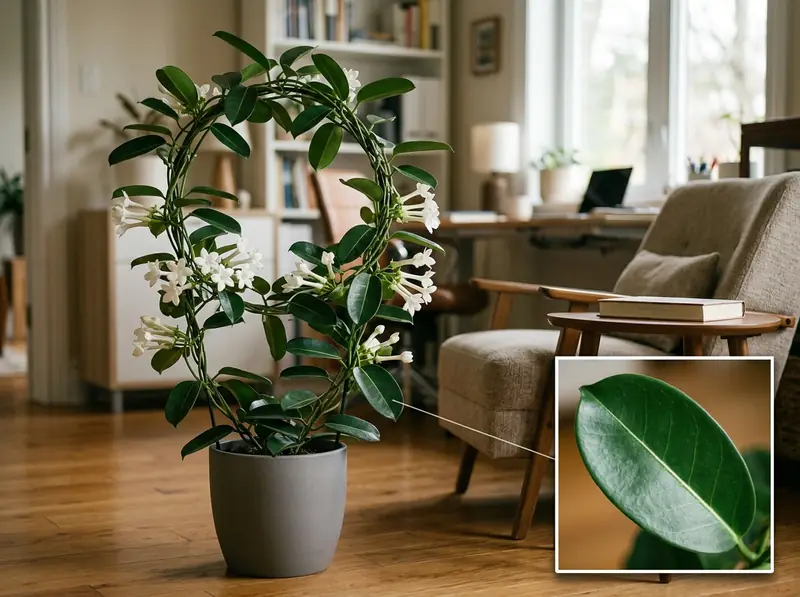
Madagascar Jasmine
Stephanotis floribunda
- Bright, indirect light
- Moderate watering
Non-toxic to cats and dogs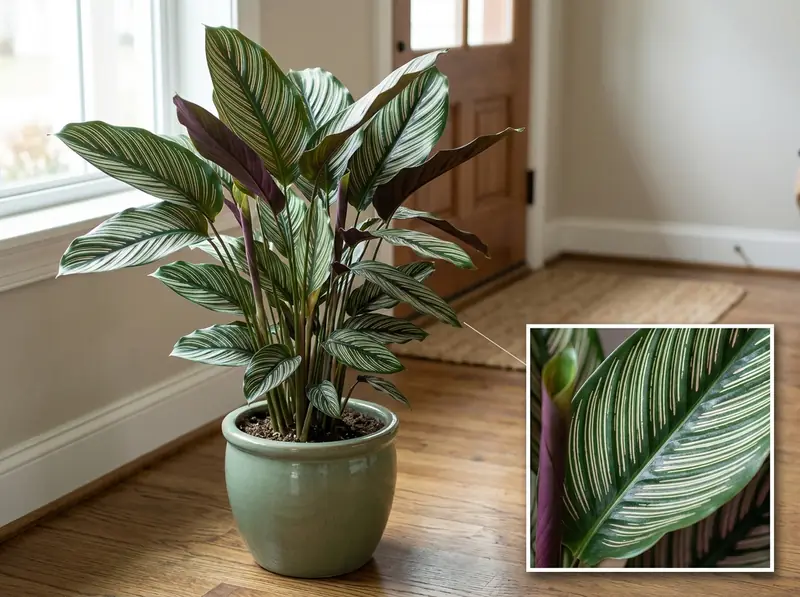 AI-generated
Majestica Calathea
Goeppertia majestica
- Medium to bright, indirect light
- Keep moist
Pets: not yet checked AI-generated
 AI-generated
Calathea Orbifolia
Goeppertia orbifolia
- Medium to bright, indirect light
- Keep moist
Pets: not yet checked