
 AI-generated
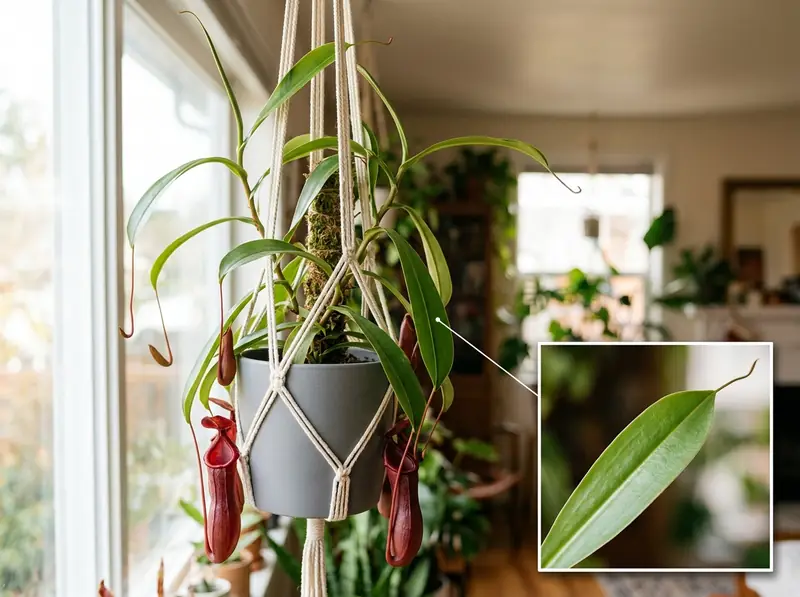
Red Pitcher Plant
Nepenthes sanguinea
Nepenthes sanguinea is a mid-elevation Malaysian climber with tall tubular pitchers that ripen to deep red. It adapts reasonably well to indoor conditions as long as it gets bright light and humid air.
Saving is free with a KinClub account, and it works here and in the KinClub app. Sign up free
Care profile
- Light
- Bright, indirect lightLow → direct sun
- Water
- Keep moistAbout every 3 days
- Difficulty
- ModerateTricky → easy
- Coldest it tolerates
- 50°F
- Humidity
- High
- Mature size
- MediumSmall → tree-size
- Growth rate
- Moderate
- How common
- RareRare → everywhere
- Plant family
- Nepenthaceae
Pets and toxicity
Cats and dogs: not yet checked
Not yet checked against ASPCA — don't assume it's safe for pets.
No toxicity source on record for this plant yet. If a pet eats any houseplant, call your vet or an animal poison helpline.
How to care for Red Pitcher Plant
Light
Bright indirect light, or 12 hours under a strong grow light. Some morning sun helps deepen the red color, but protect it from hot midday sun.
Watering
Keep media consistently damp, watering about every 3 days. Water with rain, distilled, or reverse-osmosis water only, because minerals in tap water build up and brown the leaf tips.
Soil
Use a nutrient-poor, airy mix: long-fiber sphagnum moss with about a third perlite or orchid bark. Avoid ordinary potting soil and added fertilizer granules, which burn the roots.
Feeding
Skip fertilizer in the pot. Once a month, mist the leaves lightly with orchid fertilizer diluted to quarter strength, or drop a few fish-food flakes or a small insect into a pitcher.
Repotting
Repot every 1 to 2 years in spring into fresh sphagnum and perlite, using a pot only 1 to 2 inches wider. Handle the fine roots gently and keep the plant in the shade for a week afterward.
Propagation
Take 3 to 4 inch stem cuttings with at least two leaves, dip in rooting hormone, and root in damp sphagnum under a clear dome. Expect 6 to 12 weeks, and a rooted cutting sulks for a while.
Common problems
- Green, uncolored pitchers mean low light; increase brightness gradually.
- Dry air causes brown tips and shriveled pitchers; run a humidifier to reach 60 percent or more.
- Aphids and scale cluster on new tendrils; rinse and treat with insecticidal soap.
Similar plants
Same light needs and difficulty.
 AI-generated
 AI-generated
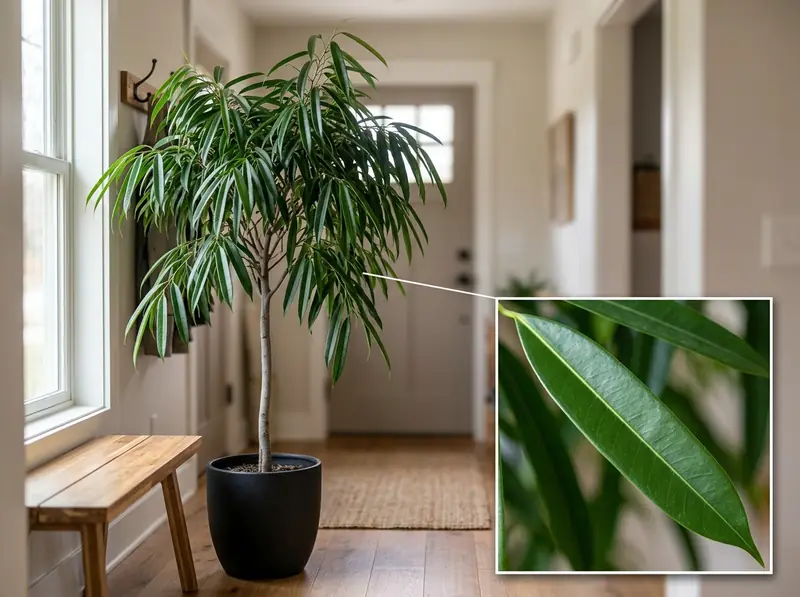
Alii Fig (Maclellandii)
Ficus maclellandii
- Bright, indirect light
- Moderate watering
Toxic to cats and dogs AI-generated
 AI-generated