
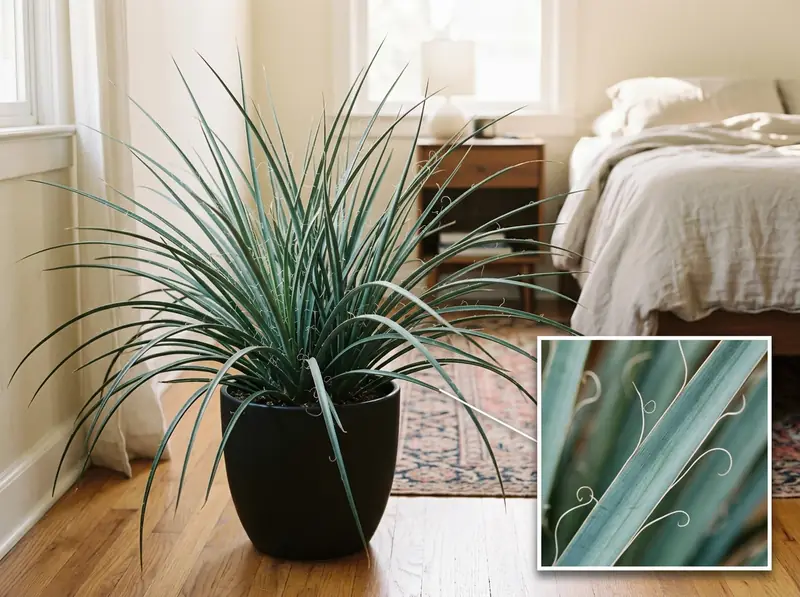
 AI-generated
Red Yucca
Hesperaloe parviflora
Also known as Yucca parviflora
Red yucca (Hesperaloe parviflora) is a clumping, grass-like succulent with arching, blue-green leaves from the American Southwest. Indoors it needs as much sun as you can give it and very little water, and it can be slow to flower.
Saving is free with a KinClub account, and it works here and in the KinClub app. Sign up free
Care profile
- Light
- Direct sunLow → direct sun
- Water
- Let it dry outAbout every 21 days
- Difficulty
- EasyTricky → easy
- Coldest it tolerates
- 20°F
- Humidity
- Low
- Mature size
- LargeSmall → tree-size
- Growth rate
- Slow
- How common
- EnthusiastRare → everywhere
- Plant family
- Asparagaceae
Pets and toxicity
Toxic to cats
Keep away from cats. Call your vet or a pet poison helpline if a cat chews it.
Toxic to dogs
Keep away from dogs. Call your vet or a pet poison helpline if a dog chews it.
Source: ASPCA toxic and non-toxic plants. If a pet eats any houseplant, call your vet or an animal poison helpline.
How to care for Red Yucca
Light
Needs full, direct sun for 6 or more hours, such as a south or west window or a bright sunroom. In low light it grows thin and floppy, and it will rarely flower indoors.
Watering
Water deeply when the soil has dried out completely, about every 3 weeks in summer and once a month or less in winter. It is very drought-tolerant and hates sitting wet.
Soil
Use a gritty cactus or succulent mix with extra pumice or coarse sand, in a heavy pot with a drainage hole. Sharp drainage prevents crown rot.
Feeding
Feed with a balanced fertilizer at half strength once or twice in spring and summer. Skip fall and winter.
Repotting
Repot every 2-3 years in spring, only when roots fill the pot. Choose a deep, heavy container, since the long roots and tall leaves tip a light pot.
Propagation
Divide the clump or remove offsets with some roots in spring, and pot them in gritty mix. Seed also works but is slow and takes years to reach size.
Common problems
- Soft, brown leaf bases mean crown rot: cut back on watering, and repot into dry, gritty soil.
- Floppy, dull green growth shows too little light, so move it into your sunniest spot or add a grow light.
- Brown, crisp leaf tips are common in dry soil or indoor heat: water deeper, less often.
- Scale and mealybugs can hide at leaf bases: wipe with alcohol and repeat weekly.
Similar plants
Same light needs and difficulty.
 AI-generated
 AI-generated
 AI-generated
 AI-generated