
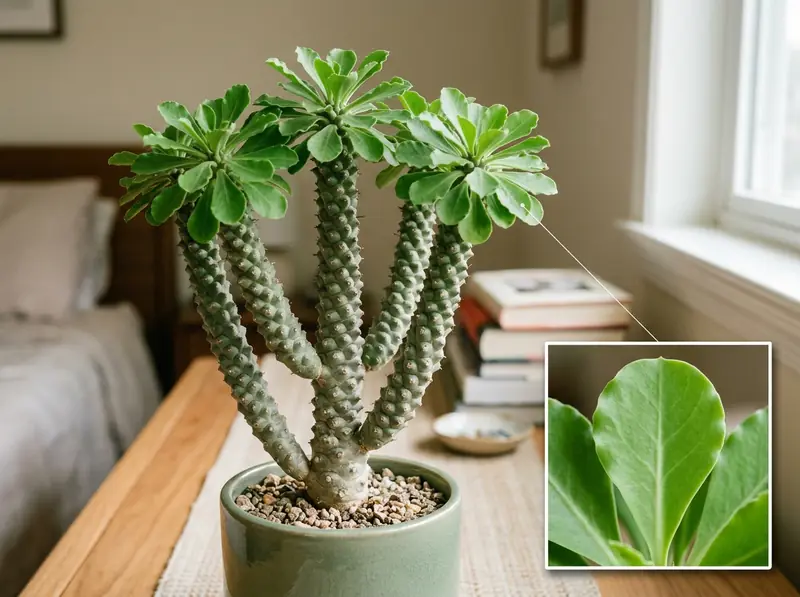
 AI-generated
Ritchie's Monadenium
Monadenium ritchiei
Ritchie's monadenium is an East African succulent with a thick, spiny, gray-green stem and clusters of leaves at the tip. It is a sturdy, slow-to-moderate grower that likes sun and dry feet, and lives happily for years in a pot.
Saving is free with a KinClub account, and it works here and in the KinClub app. Sign up free
Care profile
- Light
- Direct sunLow → direct sun
- Water
- Let it dry outAbout every 14 days
- Difficulty
- ModerateTricky → easy
- Coldest it tolerates
- 50°F
- Humidity
- Low
- Mature size
- Small to mediumSmall → tree-size
- Growth rate
- Slow to moderate
- How common
- RareRare → everywhere
- Plant family
- Euphorbiaceae
Pets and toxicity
Cats and dogs: not yet checked
Not yet checked against ASPCA — don't assume it's safe for pets.
No toxicity source on record for this plant yet. If a pet eats any houseplant, call your vet or an animal poison helpline.
How to care for Ritchie's Monadenium
Light
Prefers bright light with 3 or more hours of direct sun, such as a south or west window. In lower light it grows thin and leggy. Acclimate it gradually to summer sun to avoid scorch.
Watering
Water thoroughly when the soil has fully dried out, about every 2 weeks in summer and every 4 to 6 weeks in winter, when it can drop its leaves. Never let it stand in water.
Soil
Use a cactus and succulent mix with extra pumice or perlite, roughly 1 part potting mix to 1 part grit, in a pot with a drainage hole.
Feeding
Feed a cactus fertilizer at half strength once a month in spring and summer. Do not feed in fall and winter.
Repotting
Repot every 2 to 3 years in spring, in a heavy pot, because the top-heavy stems can topple. Handle with thick gloves.
Propagation
Take stem cuttings in spring or summer, let the cut end dry and callus for several days, then set in dry gritty mix and water lightly after a few weeks.
Common problems
- Winter leaf drop is common during a dry rest; water only sparingly.
- Soft, yellowing stems signal overwatering; let it dry completely and check drainage.
- Mealybugs collect in stem joints; dab with alcohol on a swab.
- Leggy growth is a sign of too little light; move it to your brightest window.
Similar plants
Same light needs and difficulty.
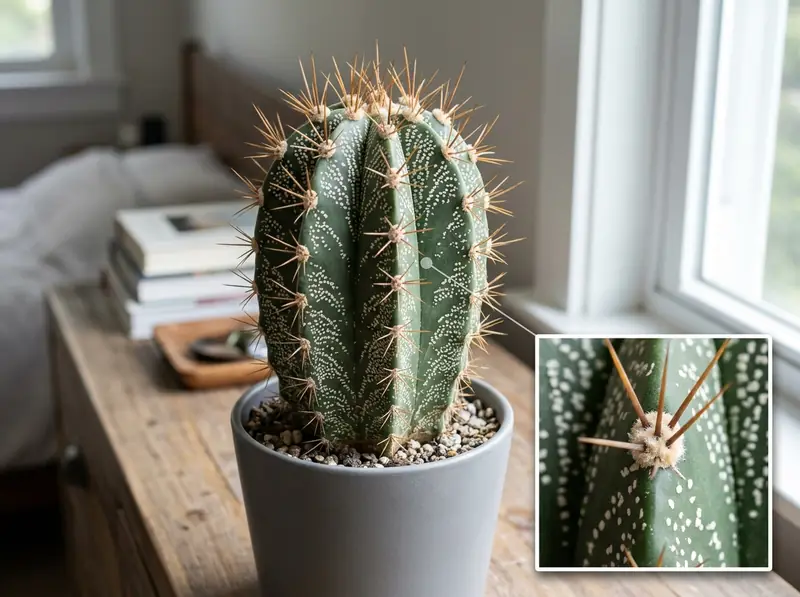 AI-generated
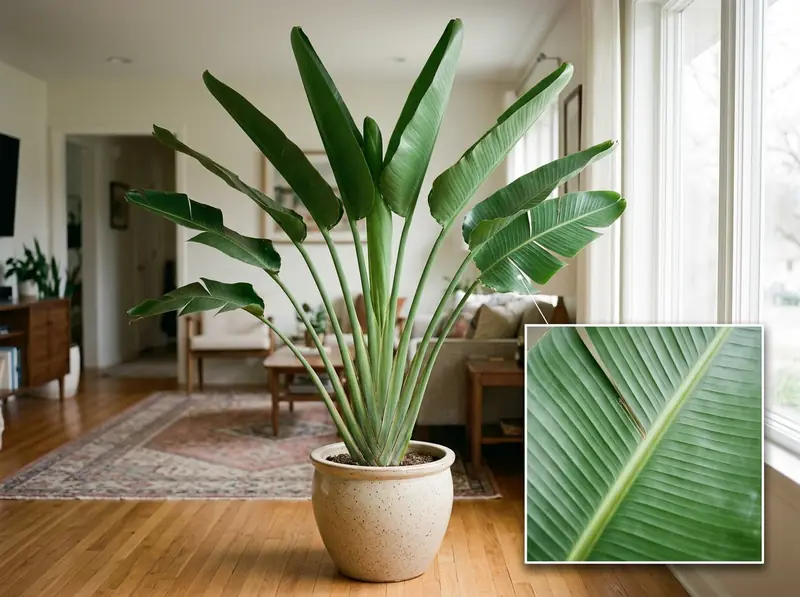 AI-generated
 AI-generated
 AI-generated