AI-generated image, not a photograph of this plant. Real plants look different depending on light, soil, temperature and age.
AizoaceaeEnthusiast in stores
Salt Lithops
Lithops salicola
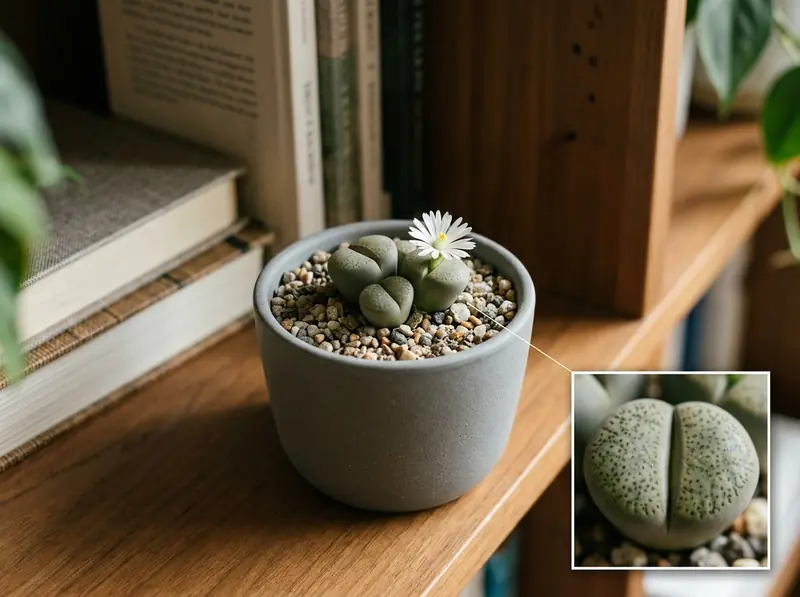
Salt Lithops is a tiny South African living stone. It has one or two pairs of grey-olive, flat-topped leaves with darker dotted windows, and in fall it bears a white daisy-like flower. It needs strong sun, gritty soil and very little water, and overwatering is its main hazard.
Pets: not yet checked
💡
Saving is free with a KinClub account, and it works here and in the KinClub app. Sign up free
🪴 Care profile
Light
Direct sunLow → direct sun
Water
Let it dry outAbout every 21 days
Difficulty
ModerateTricky → easy
Coldest it tolerates
40°F
Humidity
Low
Mature size
SmallSmall → tree-size
Growth rate
Slow
How common
EnthusiastRare → everywhere
Plant family
Aizoaceae
🐾 Pets and toxicity
Cats and dogs: not yet checked
Not yet checked against ASPCA — don't assume it's safe for pets.
No toxicity source on record for this plant yet. If a pet eats any houseplant, call your vet or an animal poison helpline.
🌿 How to care for Salt Lithops
Light
Give it at least 4-6 hours of direct sun, such as an unshaded south or west window. Bright light keeps the body compact and the colors true. Move it into stronger sun gradually to avoid scorch.
Watering
Water thoroughly only in its growing season, late summer to fall, roughly every 2-3 weeks once the soil is completely dry. Give little or no water in winter and spring while the old leaves are being absorbed and in summer dormancy.
Soil
Use a very gritty, fast-draining mix, about 70-80% mineral material such as pumice, coarse sand or grit, with a little cactus mix. Use a shallow pot with a drainage hole.
Feeding
Feeding is rarely needed. If you want to, use a quarter-strength low-nitrogen cactus fertilizer once or twice during fall growth only.
Repotting
Repot only every 2-4 years, when the clump fills the pot, in late winter to early spring. Use fresh gritty mix and let the roots sit dry for a week before watering.
Propagation
Seed is the usual method and is slow, taking years to reach size. Mature clumps can sometimes be divided carefully, but each head needs its own roots.
Common problems
Splitting or bloated body from too much water: stop watering until the plant is firm and wrinkled again, then water sparingly.
Mushy, yellowing body from rot: the plant is rarely saved, so remove any healthy heads, dry them and re-root in dry grit.
Stretched, pale growth from low light: move to a sunnier window gradually.
Cottony mealybugs at the base or roots: dab with 70% alcohol or drench the soil with a systemic treatment.

 AI-generated
 AI-generated
 AI-generated
 AI-generated
 AI-generated