
 AI-generated
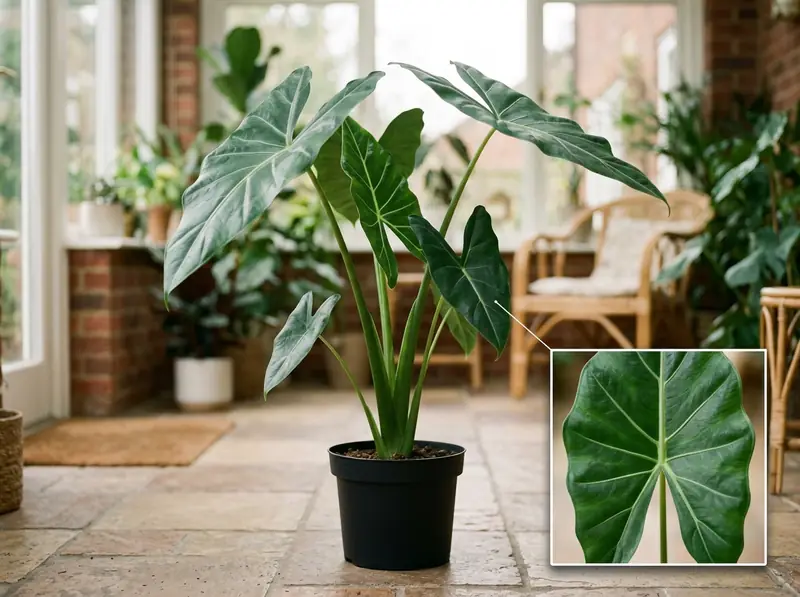
Sarawakensis Alocasia
Alocasia sarawakensis
Sarawakensis alocasia, a Borneo native, has glossy, arrow-shaped leaves with pale veins on upright stalks. It is a medium-sized, sculptural plant that likes warmth and steady humidity. Keep it evenly moist and out of drafts.
Saving is free with a KinClub account, and it works here and in the KinClub app. Sign up free
Care profile
- Light
- Bright, indirect lightLow → direct sun
- Water
- Moderate wateringAbout every 7 days
- Difficulty
- ModerateTricky → easy
- Coldest it tolerates
- 60°F
- Humidity
- High
- Mature size
- Medium to largeSmall → tree-size
- Growth rate
- Moderate to fast
- How common
- EnthusiastRare → everywhere
- Plant family
- Araceae
Pets and toxicity
Toxic to cats
Keep away from cats. Call your vet or a pet poison helpline if a cat chews it.
Toxic to dogs
Keep away from dogs. Call your vet or a pet poison helpline if a dog chews it.
Source: ASPCA toxic and non-toxic plants. If a pet eats any houseplant, call your vet or an animal poison helpline.
How to care for Sarawakensis Alocasia
Light
Provide bright indirect light, such as near an east window. Direct midday sun burns the glossy leaves, while a dim room makes the stalks lean and stretch.
Watering
Water when the top inch or two is dry, about weekly in summer and less often in winter. Use room-temperature water and never leave the pot standing in it.
Soil
Use a loose, airy aroid mix with perlite and bark so water drains within seconds.
Feeding
Feed monthly in the growing season with a balanced fertilizer at half strength.
Repotting
Repot every 1 to 2 years in spring, going up only one pot size.
Propagation
Divide offsets or corms at the base in spring and root them in damp, airy mix.
Common problems
- Spider mites and thrips cause stippled, silvery leaves; isolate the plant and treat with insecticidal soap.
- Browning edges point to dry air; raise humidity to 50 percent or more.
- Dormancy in cool winter rooms is common; keep it warm above 60F and water sparingly.
Similar plants
Same light needs and difficulty.
 AI-generated
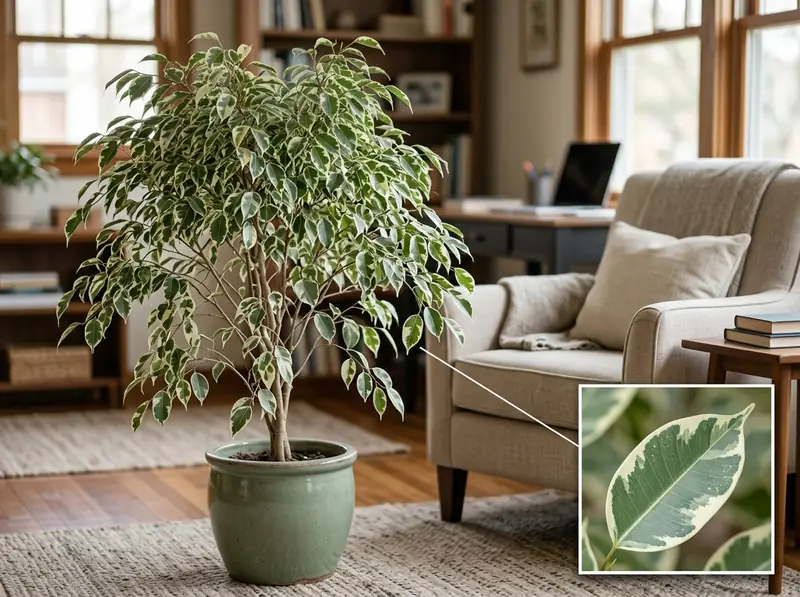
Variegated Weeping Fig
Ficus benjamina 'Variegata'
- Bright, indirect light
- Moderate watering
Toxic to cats and dogs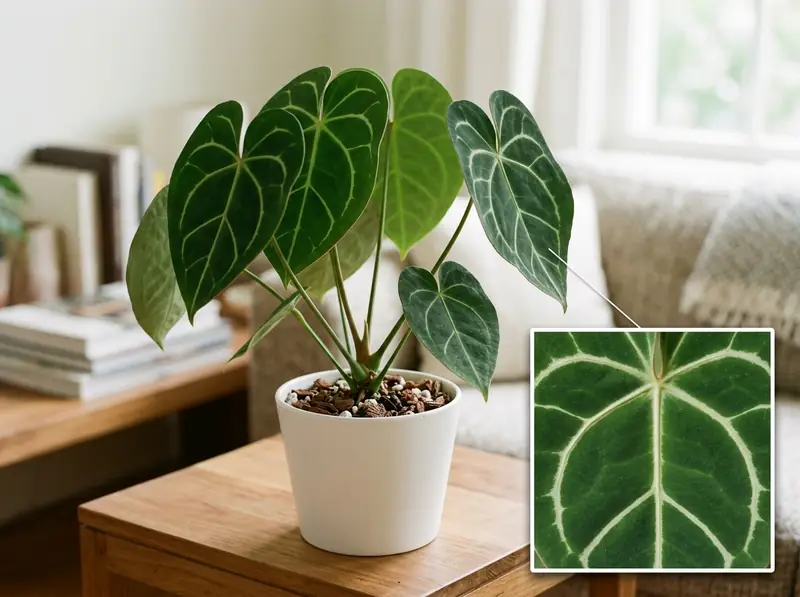 AI-generated
Velvet Cardboard Anthurium
Anthurium clarinervium
- Bright, indirect light
- Moderate watering
Pets: not yet checked AI-generated
 AI-generated